Advances in Engineering Advances in Engineering features breaking research judged by Advances in Engineering advisory team to be of key importance in the Engineering field. Papers are selected from over 10,000 published each week from most peer reviewed journals.

Significance
Polymers, an interesting class of materials, have attracted significant research attention in the past few years. They have been widely used to fabricate composites like engineering materials with exceptional mechanical, chemical and thermal properties. Polyetheretherketone (PEEK), a semicrystalline aromatic polymer derived from poly(aryl-ether-ketones) family, is a good example of an engineering polymer. Unlike other polymers, it exhibits remarkable mechanical properties and promising tribological properties, making it attractive alternative to metals in various high-performance engineering applications.
As a leading thermoplastic matrix candidate, PEEK has also found extensive applications in advanced composites, which require fillers such as carbonaceous fillers to enhance the matrix properties. In recent years, extensive research has been conducted to determine the implications of incorporating fillers into the PEEK matrix on their fabrication and mechanical performance. Interestingly, research revealed that fillers enhance the resulting materials’ combined mechanical, tribological and thermal properties. Unfortunately, like other polymers, PEEKs exhibit low environmental stability and ease of chemical degradation under ultraviolet (UV) irradiation resulting in discoloration and loss of mechanical properties. Direct UV absorption leads to the breakage of the aromatic ether bonds between the polymer chains. Additionally, despite the availability of different fillers, their use has trade-off effects on materials properties. These challenges present a great obstacle in the practical application of PEEK.
Titanium oxides (TiO2) are photo-responsive and semiconductor materials with relatively strong UV absorption. The UV wavelengths cause photochemical degradation of polymeric materials. Despite the high use of TiO2 fillers, there are limited studies on PEEK/TiO2 composites. To overcome the mentioned problems, Dr. Mario Bragaglia, Dr. Valeria Cherubini, Professor Francesca Nanni from the University of Rome Tor Vergata produced and characterized the extruded PEEK filaments filled with sub-micrometer titanium dioxide (TiO2). They also successfully enhanced the UV resistance of the composite matrix. Their work is currently published in the research journal, Composites Science and Technology.
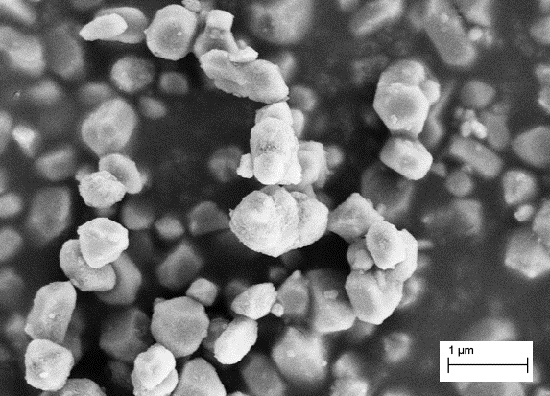
In their approach, PEEK and TiO2 powders were dried on the oven at 90 °C to remove moisture. The size and morphology of the TiO2 powders were determined via a combination of Field Emission Scanning Electron Microscopy and Energy Dispersive Spectroscopy. The PEEK/TiO2 composites were achieved via a planetary mixer and samples were extruded in a single screw extruder. UV aging behavior of the composite was analyzed. Finally, the influence of the TiO2 particles on the properties and ultraviolent resistance of the composites was evaluated.
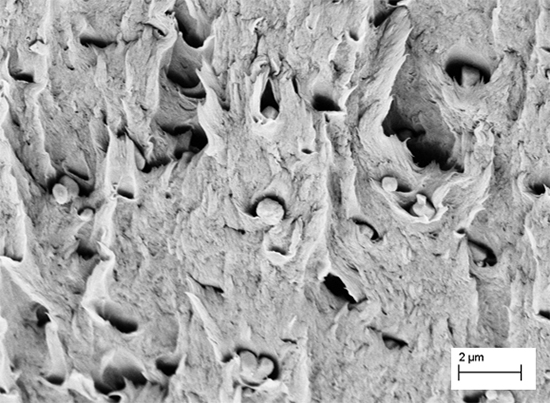
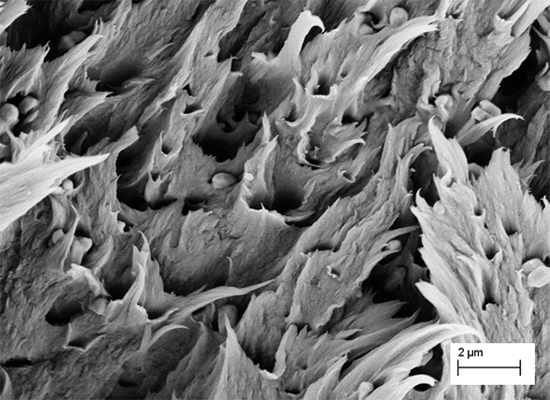
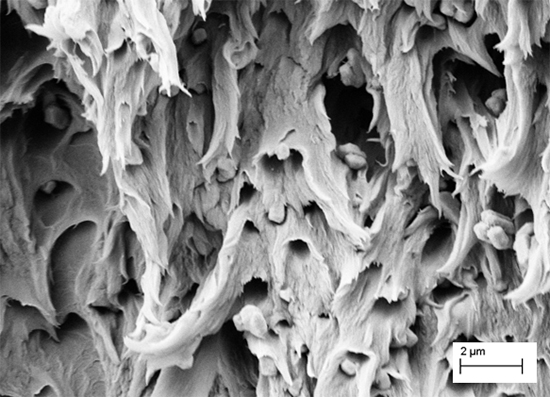
The authors found out that the addition of the TiO2 particles affected the failure mechanism, mechanical and crystallinity properties of the PEEK matrix. Whereas the filler enhanced the stiffness and elastic modulus properties of the resulting PEEK/TiO2 composite, its effect on the tensile strength was minimal. Crack growth propagation with surface fracture features demonstrated a linear relationship with the filler content. Moreover, it modified the rheology and viscosity of the matrix, indicating that it can be prepared through both conventional traditional and innovative techniques like three-dimensional (3D) printing. Compared to 1% and 3% filled samples, the 5% filled sample reported the maximum effects in reducing the photo-degradation effect on the composite, limiting it only to the skin without altering the mechanical properties after UV exposure.
In summary, the study reported the production and characterization of extruded filaments made of PEEK filled with TiO2 particles. The addition of TiO2 particles influenced the failure mechanism and mechanical properties of the resulting composite. UV aging testing results showed that TiO2 particles achieved high photo-degradation reduction at 5% volume concentrations. The formulation had no impact on the mechanical properties and failure mechanism of the composite. In a statement to Advances in Engineering, the authors explained the study insights help enhance the UV resistance of PEEK-TiO2 composites, thereby expanding their application in different fields, especially paints and pigments.
Reference
Bragaglia, M., Cherubini, V., & Nanni, F. (2020). PEEK -TiO2 composites with enhanced UV resistance. Composites Science and Technology, 199, 108365.