Advances in Engineering Advances in Engineering features breaking research judged by Advances in Engineering advisory team to be of key importance in the Engineering field. Papers are selected from over 10,000 published each week from most peer reviewed journals.

Significance Statement
Pultruded glass fiber reinforced polymer (GFRP) beams have been generally applied in the world of civil engineering due to their desired properties, among which the remarkable strength-to-weight ratio and resistance to environmental effects. However, deformability often represents a severe limitation to the design of GFRP structures. Fractures which occur at the web-flange joint when such elements are subjected to compressive loads remain a bane to technologists, which as a result led to implementation of various research based on experimental and numerical analysis.
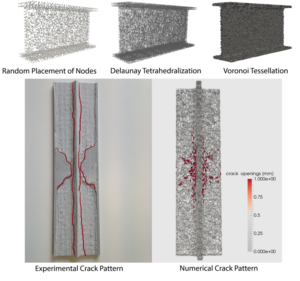
Dr. Alessandro Fascetti and Professor Nicola Nisticò from ‘Sapienza’ University of Rome in collaboration with Professor Luciano Feo and Dr. Rosa Penna from University of Salerno in Italy have shown a non-negligible dispersion in strength and stiffness values in the web-flange junction of GFRP I-beams. This phenomenon is due to the non-symmetric distribution of stresses in the member, resulting from the accumulation of micro-cracks affecting the local strength of the material. They presented a recently developed random discrete lattice approach to investigate the fracturing behavior of GFRP systems. The approach is of interest because it overcomes limitations of other methods previously used to investigate the damage in fiber reinforced polymers, such as the fracture energy regularization and mesh-induced crack path bias. The research work is now published in peer-reviewed journal, Composites Part B.
The authors’ numerical model was first validated by comparison with a classical three-dimensional elastic Finite Element simulation. Subsequently, the nonlinear mesoscale lattice model provided a detailed description of crack propagation and explanation of the experimental results.
With the fundamentals that the stiffness of the material at the mesoscopic level (i.e. the level of the lattice network) is higher than the macroscopic one, the strength values (in both tension and compression) of the lattice model were also found to be significantly higher than the corresponding macroscopic ones, which conforms well to previous theories and findings.
A good agreement was realized in this study between numerical and experimental results in terms of both force-displacement curves and crack paths at failure.
The developed numerical model in this study is capable of predicting the accurate features of pultruded glass fiber reinforced polymer (GFRP) I-beams.




Journal Reference
A. Fascetti1, L. Feo2, N. Nisticò1, R. Penna2, Web-flange behavior of pultruded GFRP I-beams: A lattice model for the interpretation of experimental results, Composites Part B 100 (2016) 257-269.
[expand title=”Show Affiliations”]- Sapienza Università di Roma, Dipartimento di Ingegneria Strutturale e Geotecnica, Via Eudossiana, 18, 00184 Roma, Italy
- Università degli Studi di Salerno, Dipartimento di Ingegneria Civile, Via Giovanni Paolo II, 132, 84084 Fisciano, SA, Italy
Go To Composites Part B