Advances in Engineering Advances in Engineering features breaking research judged by Advances in Engineering advisory team to be of key importance in the Engineering field. Papers are selected from over 10,000 published each week from most peer reviewed journals.

Journal Reference
Research on Chemical Intermediates, March 2014, Volume 40, Issue 3, pp 1003-1019.
Nikhil M. Parekh, Kalpana C. Maheria.
Department of Applied Chemistry, S. V. National Institute of Technology, Surat, 395007, Gujarat, India.
Abstract
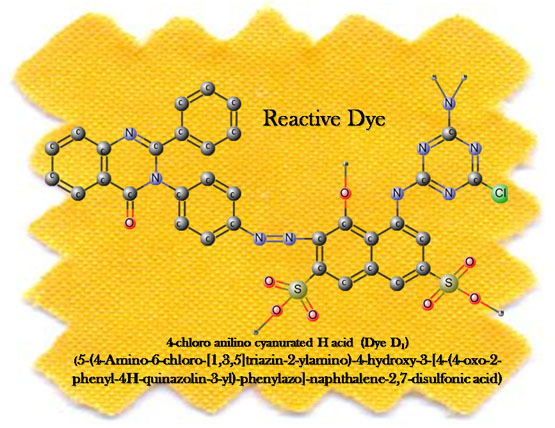
Heterocyclic quinazolinone-based hot brand monoazo reactive dyes were obtained by diazotization of 3-(4-aminophenyl)-2-phenylquinazolin-4(3H)-one and coupling with a variety of cyanurated coupling components. Their performance as reactive dyes was assessed on silk, wool, and cotton fabrics. The dyes were found to give a variety of color shades with very good depth and uniformity on the fibers. Purple, pink, brown, and yellow shades were obtained on fibers. The excellent exhaustion and fixation of these dyes indicates that they have good solubility and good affinity for the fabric. The color change observed for each dye is because of alternation of electrons and the presence of additional substituents. Absorption maxima (λmax) of all dyes were recorded in water. Introduction of electron-donating or electron-attracting groups at a suitable position in the coupler ring affected the absorption characteristic of the dyes. The compound having additional auxochrome (sulfonic groups) was found having higher λmax value. λmax value depends on the nature and position of coupling component used. The fastness of all the dyes on the fibers was found moderate to excellent. Colorimetric data (L*, a*, b*, C*, H*, and K/S) of the synthesized dyes were also studied in detail. Characterization of the synthesized dyes was in agreement with expected values.