Advances in Engineering Advances in Engineering features breaking research judged by Advances in Engineering advisory team to be of key importance in the Engineering field. Papers are selected from over 10,000 published each week from most peer reviewed journals.

Significance Statement
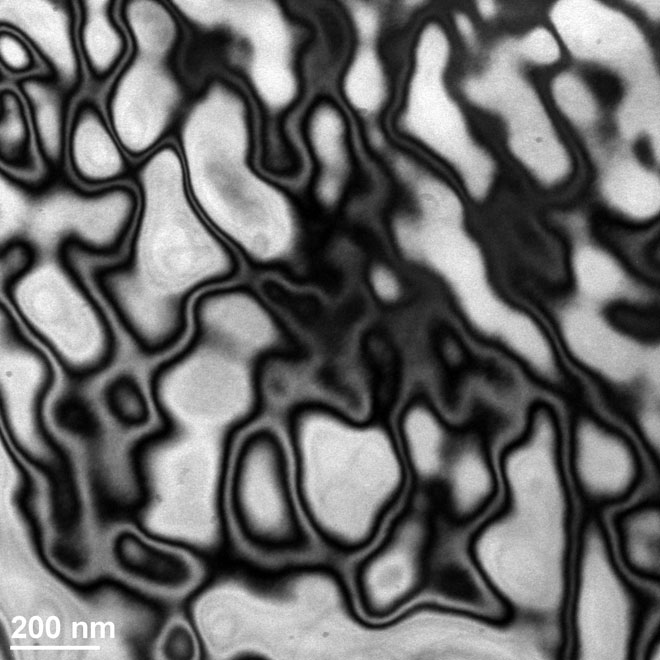
- Structure property of slowly-cooled Fe81Ga19 alloy has been studied in details (TEM-SAD, XRD, OM, DSC, MTGA, etc.): the attached TEM-photo shows the existence of the D03 ordered phase in the alloy.
- For the first time, we successfully studied Young’s, shear moduli, and damping capacity vs. field (up to 3 KOe) by the Impulse Excitation of Vibration (IEV) method.
- DE and DG effects of the Galfenol (Fe81Ga19) alloy have been studied.
- Magneto-mechanical coupling factor of slowly-cooled Fe81Ga19 alloy was studied.
- Enhanced yield strength of slowly-cooled Fe81Ga19 is due to D03 precipitation.

Journal Reference
Journal of Alloys and Compounds, Volume 651, 2015, Pages 544–550.
S.U. Jen1,, W.C. Cheng2, F.L. Chiang1,2
[expand title=”Show Affiliations”]- Institute of Physics, Academia Sinica, Taipei, Taiwan, 11529, Taiwan
- Department of Mechanical Engineering, NTUST, Taipei, Taiwan, 106, Taiwan
Abstract
In this study, we discussed the structural, magneto-mechanical, and damping properties of slowly-cooled polycrystalline Fe81Ga19 alloy. From the X-ray diffraction, transmission electron microscopy, and optical microscopy studies, we conclude that the alloy contains the disordered A2 and ordered D03 phases. Due to the D03 precipitation hardening effect, the yield strength (Y) of slowly-cooled Fe81Ga19 is about 950 MPa, much higher than that (about 500 MPa) of [100] single crystal Fe81Ga19. For the first time, both Young’s modulus (E) and shear modulus (G) were measured vs. magnetic field (H) up to 3 kOe by the impulse excitation of vibration method successfully: the ΔE and ΔG effects. The magneto-mechanical (flexure) coupling factor (KE) of the alloy, estimated from the ΔE effect, is 11.7%, and the (torsion) coupling factor (KG), from the ΔG effect, is 19.1%. The damping capacity, estimated by considering the magneto-elastic hysteresis mechanism alone, is 0.0076 only. The experimentally found total damping capacity is about 0.01–0.03. The latter should be larger than the former, because there are additional micro- and macro-eddy-current contributions to the total damping capacity.
Go To Journal of Alloys and Compounds