Advances in Engineering Advances in Engineering features breaking research judged by Advances in Engineering advisory team to be of key importance in the Engineering field. Papers are selected from over 10,000 published each week from most peer reviewed journals.

Significance Statement
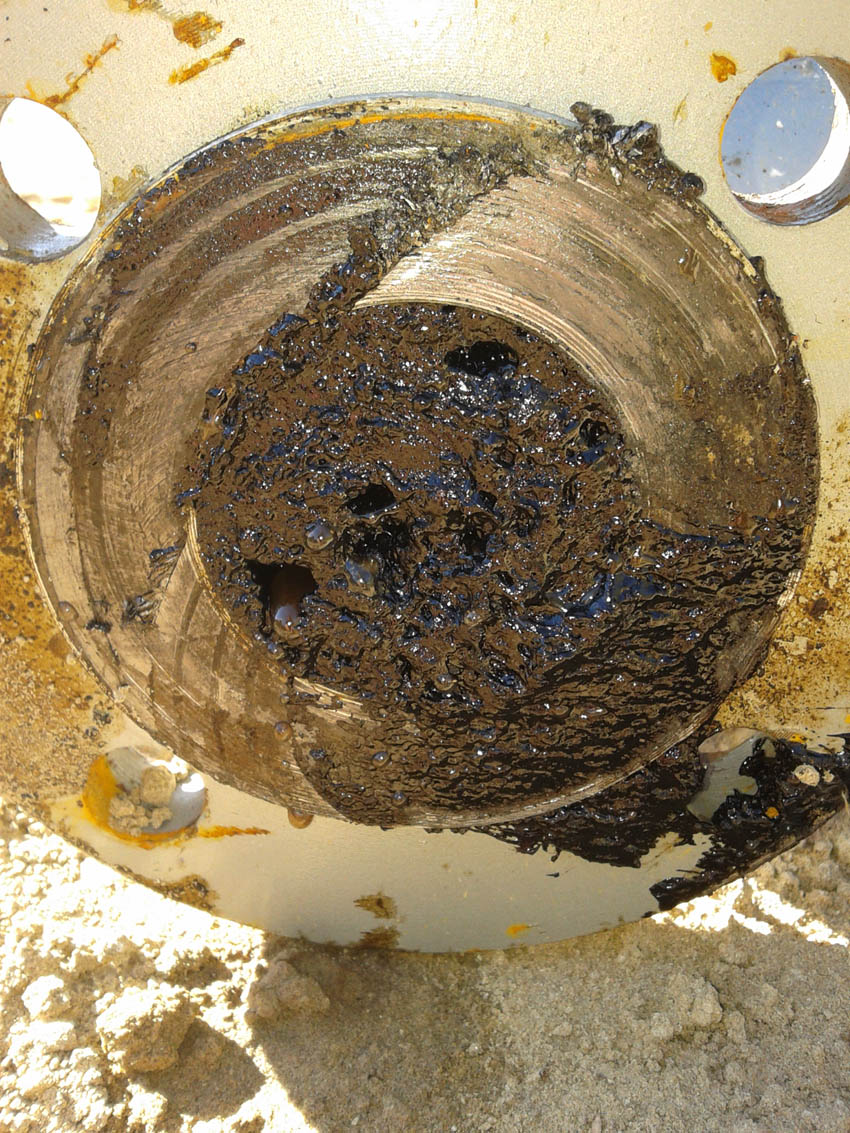
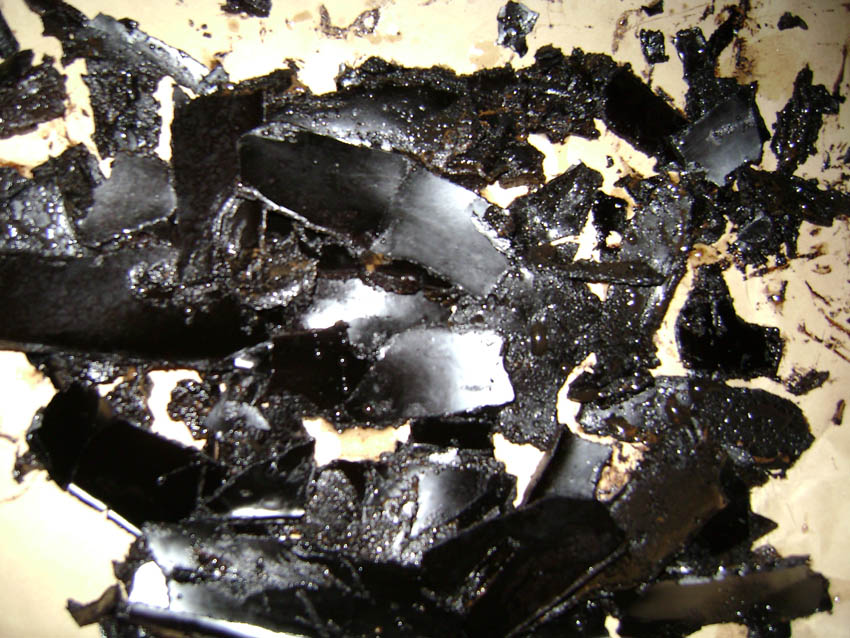
Gelation temperature has also been used in study of gelling deposition process of waxy oil under flow conditions. According to research, an unstable multiple emulsion of water-in-oil in water (W/O/W) can be observed after the inversion point. The resulting increase in water cut leads to low-temperature flow performance of mixture which can be improved by the activation effect from large amounts of free water inevitably. The transport of the produced liquid without heat tracing is known as multiphase cooling transportation.
Proposed numerical models in study of flow of waxy crudes and deposition of waxy crystal within pipelines have mostly been two-phase oil-water or single-phase oil-water with little on two-phase oil-gas flow.
Rheological analysis have been used in evaluating the stability and viscoelasticity of waxy emulsions with non-Newtonian behaviors in previous study which has shown physical understanding of the effect of thermal and shear histories on gelation phenomenon of wax-oil mixture.
In a recent article of Wang et al. (2016) and published in journal, Energy Fuels, investigated the effect of emulsified water on gelation for oil-water mixture conditions by characterization of viscoelasticity using a controlled-stress rheometer and a waxy crude oil from Daqing oilfield, China.
According to previous research also, two-phase oil-water flow has shown that presence of water relieves wax deposition significantly by changing the mass and heat transfer characteristics coupled with much longer period of point of blockage reach when compared with single-phase oil-flow.
For this experiment setup, using waxy crude oil from Daqing oilfield, the pour point and wax content was measured to be 35.30C and approximately 25% respectively. Differential scanning calorimeter DSC thermogram measured onset of waxes crystallization and its rate.
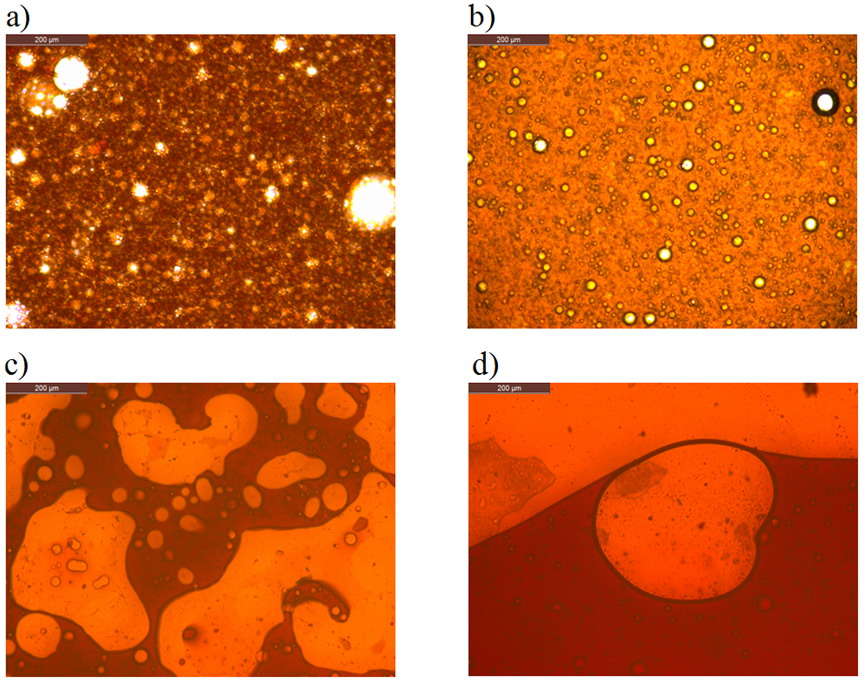
For rheological measurements, phase inversion characteristics of waxy fluid was first measured with actual produced water sampled from Daqing oilfield. Emulsifying structure was further confirmed by microscopic method while oscillatory shearing experiments were conducted for distinguishing the gelation behavior by controlled-stress rheometer. Storage modulus (G’) and loss modulus (G’’) measured under different oil-water conditions and relationship between viscoelastic modulus and temperature was established. Differential pressure method, an expansion of pressure drop method, an indirect method was used in determining deposit thickness (flow loops equipment).
Computational model applied was achieved after modification of existing single-phase flow deposition model. Thermodynamic model used was based on mathematical principle which focuses on explaining molecular diffusion mechanisms while hydrodynamic model used expanded from diffusion explanation and diffusivity definition which helps in understanding gelling deposition behavior in low-temperature transportation when considering two-phase oil-water.
Results from differential scanning calorimeter thermogram of waxy crude oil revealed 210J/g average value of paraffin crystallization heat was extracted. It was also observed that wax precipitation of crude oil had a stepped rise with temperature dropping presenting a small and narrow peak at around 450C and a large and broad peak at around 200C. Temperature below 200C resulted to linear decline of wax precipitation indicating that obvious heating effect related to wax crystal precipitation occurs at 450C and major exotherm exhibited near 200C.
Phase inversion property test revealed that apparent viscosity of two-phase increases with addition of water till it reaches water cut at 60-65%. Water-in-oil emissions was formed and reached phase inversion point after 65%. Further addition of water (W/O/W) led to drop of two-phase system viscosity and viscosity readings fluctuated above and below. Stability of emulsion broke down after inversion point as water dominates the continuous phase and transits from stable laminar flow to core-annular flow regime at 85-95% water.
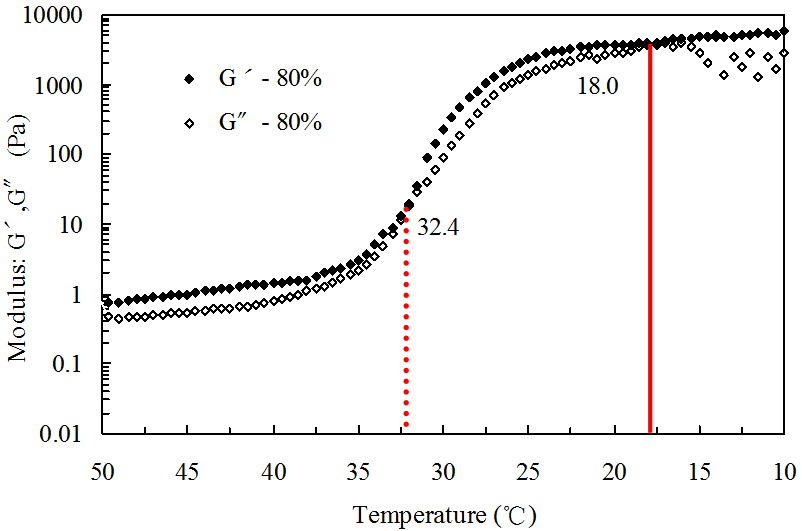
Effect of emulsion water on gelation revealed presence of water phase would not weaken gel formation. It was seen that two-phase exhibit certain degree of viscoelasticity during cooling. Viscoelasticity modulus had sharp increase with temperature dropping and gelation behavior aggravates until modulus became stable when storage modulus associated with loss modulus.
Computational model results showed excellent agreement with previous obtained understanding about effects of thermal diffusion in wax deposition predictions by Hoteit et al. Energy Fuels. 2008. It also showed good agreement with two-phase oil-water rheological measurement data.
Results from prediction with hydrodynamic method showed that gelling deposition rate gradually increases as temperature of two-phase flow in pipe decrease and vice versa.
Flow-loop experiments gave simulation results as difference in deposition rate obtained from both thermodynamic and hydrodynamic model predictions are within 20% error band of measurements. Comparison between quantitative predictions and measured data in flow-loop equipment obtained by the two computational methods closely match the large-scale flow-loop data.
This study developed another coexistent deposition mechanism gelation nucleation related to emulsification which provides an alternative explanation for existing wax deposition mechanism in oil-water flow.


Journal Reference
Zhihua Wang*1, Yang Liu1, Jiexun Li2 Xianglong Zhuge2, Lei Zhang1. Study on Two-Phase Oil−Water Gelling Deposition Behavior in Low-Temperature Transportation. Energy Fuels, 2016, 30 (6), pp 4570–4582.
[expand title=”Show Affiliations”]- Key Laboratory for Enhanced Oil & Gas Recovery of the Ministry of Education, Northeast Petroleum University, Daqing, Heilongjiang 163318, People’s Republic of China
- Daqing Oilfield Company Limited, Daqing, Heilongjiang 163002, People’s Republic of China
Go To Energy Fuels