Advances in Engineering Advances in Engineering features breaking research judged by Advances in Engineering advisory team to be of key importance in the Engineering field. Papers are selected from over 10,000 published each week from most peer reviewed journals.

Significance Statement
Researchers led by Professor Andreas Schütze from Saarland University in Germany designed a device capable of detecting ppb levels of volatile organic compounds. The research was in collaboration with the Fraunhofer Institute ICT, specialists in preconcentration methods, and Swiss industrial partner, SGX Sensortech SA, which specializes in air quality sensors and modules. The prototype was tested for its performance using benzene as a testing compound. A video of the technology is found in this link (http://www.sensindoor.eu/film).
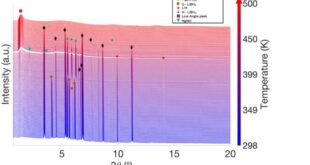
To detect such small concentrations of these gases without expensive and time-consuming analytical measurements like GC–MS analysis, solid state gas sensors can be used in combination with a novel pre-concentrator. In this investigation, metal organic framework materials have been characterized regarding their suitability as pre-concentrator materials for benzene, i.e., their adsorption potential at low temperatures and the desorption characteristics at elevated temperature were studied. For comparison, the adsorption potential was also tested for toluene. Metal organic frameworks showed a higher partition coefficient than Tenax®TA, a state-of-the-art commercial adsorbent material.
Schütze emphasizes: “The novel integrated microsystem combines sensitivity and selectivity comparable to analytical methods with the low-cost of sensor technology.” The study is now published in Sensors and Actuators B: Chemical.
The technology developed by the authors accurately and selectively measures hazardous volatile organic compounds and is expected to control and prevent Sick Building Syndrome, a major hazard both in the workplace and in private homes, by demand controlled ventilation.
The authors acknowledge funding received for the project from the European Union’s Seventh Framework Programme for research, technological development and demonstration under grant agreement No 604311, Project SENSIndoor.






Journal Reference
Martin Leidinger1, Max Rieger2,, Tilman Sauerwald1, Christine Alépée3, Andreas Schütze1. Integrated pre-concentrator gas sensor microsystem for ppb level benzene detection, Sensors and Actuators B: Chemical, Volume 236, 2016, Pages 988–996.
[expand title=”Show Affiliations”]- Lab for Measurement Technology, Saarland University, D-66123 Saarbrücken, Germany
- Fraunhofer Institute for Chemical Technology ICT, D-76327 Pfinztal, Germany
- SGX Sensortech SA, CH-2035 Corcelles-Cormondrèche, Switzerland
Go To Sensors and Actuators B: Chemical