 Advances in Engineering Advances in Engineering features breaking research judged by Advances in Engineering advisory team to be of key importance in the Engineering field. Papers are selected from over 10,000 published each week from most peer reviewed journals.

Significance Statement
Quantum control of ultracold molecules has been developed recently owing to the progress in the production and manipulation of ultracold molecules. It enables the synthesis of ultracold systems with internal degrees of freedom and displaying long-range dipole-dipole interactions. However, further search for an approach to create ultracold molecules is on in order to offer viable substitutes to the existing control scheme of stimulated Raman adiabatic passage.
Professor Svetlana Malinovskaya and her PhD student Gengyuan Liu from the Stevens Institute of Technology presented a method for the creation of ultracold molecules by adiabatic passage from the Feshbach state to the ground state using an optical frequency comb. The research work is published in peer-reviewed journal, Chemical Physics Letters.
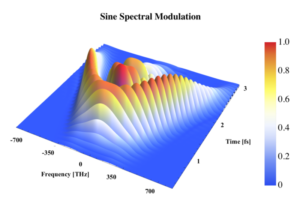
The authors considered a semi-classical model consisting of seven-level quantum system. The system was designed to interact with a classical phase-locked pulse train. The pulses are, however, spectrally modulated as sinusoidal functions. This model aims at describing the controllable internal dynamics of a molecule initiated from the Feshbach state and leading to molecular transition into the ultracold state. This seven-level system had a configuration formed by initial Feshbach state, five transitional, electronically excited rovibrational states and the final ultracold state. The rovibrational states are separated consistent with the one-dimensional harmonic oscillator solution that is an ideal approximation for the low laying molecular internal states. Frequency separation between the adjacent states corresponds to the vibrational frequency of the symmetrical mode in KRb molecule. The manifold of rovibrational states is considered in a bid to analyze the effect of rovibrational structure on population dynamics produced by a broadband frequency comb.
When interacting with the proposed seven-level system, the sine modulated pulse results in an adiabatic passage of population from the Feshbach state to the ultracold state through a series of logical pulses. The excited state manifold is insignificantly populated transitionally.
In order to gain insights into the dynamics of the population transfer to the final state by the spectrally sine modulated pulse train, the authors performed a dressed state analysis. They estimated the excited state manifold by a single vibrational state for a clear understanding of the passage. This approach was reasonable given that all the excited states were populated in a similar fashion consistent with the exact solution of the Schrödinger equation for the seven-level system.
In this paper, a new method was proposed for the controlled synthesis of molecules in an ultracold state using a single optical frequency comb with spectral modulation. A series of pulses that formed the frequency comb induced logical dynamics that resulted in complete population transfer of molecules to the ultracold state in a time scale much faster than the spontaneous decay. While sine modulation of spectral phase of the comb led to the creation of the quasi-dark dressed state, cosine modulation didn’t lead to the formation of the quasi-dark state.


Reference
Svetlana A. Malinovskaya and Gengyuan Liu. Harmonic spectral modulation of an optical frequency comb to control the ultracold molecules formation. Chemical Physics Letters, volume 664 (2016), pages 1-4.
Department of Physics and Engineering Physics, Stevens Institute of Technology, Hoboken, NJ 07030, United States.