Advances in Engineering Advances in Engineering features breaking research judged by Advances in Engineering advisory team to be of key importance in the Engineering field. Papers are selected from over 10,000 published each week from most peer reviewed journals.

Significance Statement
Hydrogen is a chemical energy carrier alternative to fossil fuels. It has the capacity to offer affordable, clean and reliable energy supply to satisfy growing global demands. Besides being a clean fuel producing water as the only by-product, hydrogen can be synthesized implementing renewable and natural energies and then it can be implemented in fuel cells to generate clean power for a number of applications.
Electric potential induced water splitting appears to be a promising method for the synthesis of highly pure hydrogen. Two main reactions take place in the electrochemical water splitting. These are oxygen evolution reaction and hydrogen evolution reaction, where oxygen evolution reaction is more energy demanding as compared to the latter. Oxygen evolution reaction is, therefore, the main contributor to energy losses owing to higher over-potential of the oxygen evolution reaction in water electrolysis.
Iridium-based materials are important catalysts for polymer electrolyte membrane water electrolysis owing to their unmatched stability as well as performance in the acidic environment of typical polymer electrolyte membranes. Unfortunately, their high cost restricts their large-scale implementation in industrial applications. Therefore, for improving their utilization, identifying a synthesis approach of nano-structured iridium oxide with an active surface area would play a pivotal role.
Muralidhar Chourashiya and Atsushi Urakawa at the Institute of Chemical Reseaerch of Catalonia (ICIQ) developed a one-step cost-effective solution combustion synthesis method to produce nano-structured iridium oxide and iridium oxide-based materials ideal for polymer electrolyte membrane electrolysis. Their work is published in Journals of Materials Chemistry A.
The authors applied iridium chloride as the sole source of iridium owing to the scarcity of its nitrates and thereafter adopted the solution combustion synthesis approach. They prepared phase-pure and nanostructured iridium oxide materials using excess of glycine, as a combustion fuel, and through the incorporation of an oxidizing additive. They also evaluated the effects of precursor solution composition on the structural attributes of the resulting iridium oxide as well as iridium oxide-based materials.
The researchers consequently incorporated these materials as anode catalysts into membrane electrode assemblies, evaluated their polymer electrolyte membrane water electrolysis performance, and compared the results with those of commercial membrane electrode assemblies in which IrRuO was applied as the anode catalyst.
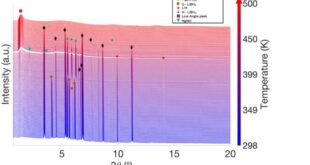
Chourashiya and Urakawa were able to obtain phase-pure iridium oxide in supported and unsupported forms by varying the preparative parameters in solution combustion synthesis and the kind of nitrate (i.e. the oxidizing) additive. They were also able to obtain nano-crystallites of iridium oxide in the range of 3.5nm-12nm nanoparticles through the solution combustion synthesis.
Iridium oxide incorporated and dispersed in amorphous alumina indicated a high surface area of 131m2/g and 1.78A/cm2 current density at 1.8V. This was comparable to the performance of state-of-the-art commercial membrane electrode made of IrRuOx under polymer electrolyte membrane water electrolysis.
The dispersion of the material in the catalyst ink applied for the synthesis of the membrane electrode assembly was superior to that of commercial iridium oxide nanoparticles and the amount of precious metal in the catalyst made by solution combustion synthesis could be attained by 45%wt as opposed to that in the commercial membrane electrode assembly.



Reference
Muralidhar G. Chourashiya and Atsushi Urakawa. Solution combustion synthesis of highly dispersible and dispersed iridium oxide as an anode catalyst in PEM water electrolysis. J. Mater. Chem. A, 2017, 5, 4774–4778.
Go To Journal of Materials Chemistry A