Advances in Engineering Advances in Engineering features breaking research judged by Advances in Engineering advisory team to be of key importance in the Engineering field. Papers are selected from over 10,000 published each week from most peer reviewed journals.

Significance Statement
Recording brain activity in e.g. Parkinson’s disease demands electrodes with special requirements to have the capacity to chronically interface with tissues and deliver a stimulus that is adequate to initiate an action potential. In addition, to improve their efficacy, it would be beneficial to minimize the electrode dimensions to a microscale and below in a bid to curtail tissue trauma and invasiveness, therefore realizing facile selectivity in stimulation and recording.
Unfortunately, reducing the electrode dimensions can limit electrical, biological, and mechanical performance. As the dimensions of the electrode are reduced, the charges passing per unit area also increases. This leads to an increase in electrode voltage and impedance, therefore reducing the total charge that can be delivered safely. For this reason, such electrodes call for alternative neutral interface materials which have the capacity to deliver charge densities that are larger than conventional materials which include iridium oxide, platinum and platinum-iridium.
Developing high surface area electrodes can be a good way of compensating for the limited electrode performance initiated by the reduction of the electrode dimensions. Enhancing an electrode surface by coating it with nanostructured materials has been indicated to have potential for improving the efficacy of neural electrodes.
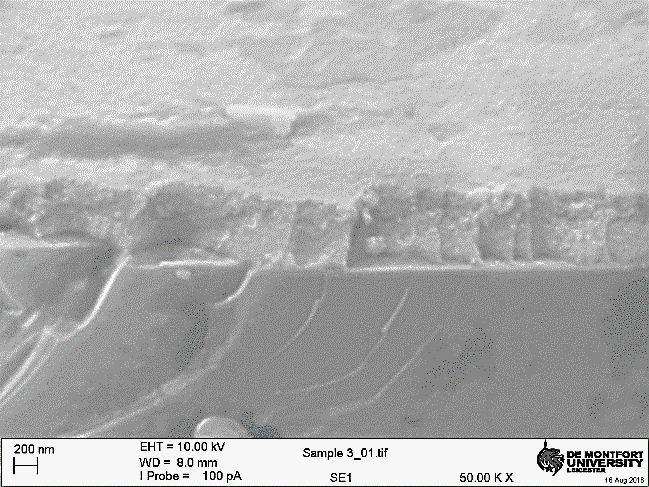
R.A. Sait and R. B. M. Cross at De Montfort University Leicester in the United Kingdom deposited titanium nitride thin films by non-reactive radio frequency sputtering that offered a straightforward method by optimizing radio frequency power and argon flow rate. The main aim of their study was to utilize the sputtered titanium nitride layer as a nucleation substrate for titanium nitride nanowires. Their work is published in Applied Surface Science.
The authors deposited titanium nitride films through non-reactive radio frequency magnetron sputtering towards the preparation of a novel titanium nitride nanowires neutral interface. They varied sputtering parameters of radio frequency power and argon flow rate in a bid to realize their effects on the structural, electromechanical and electrical attributes of the titanium nitride films.
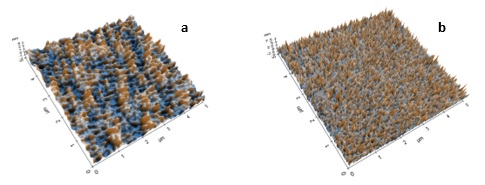
The authors observed that relatively higher kinetic energy species coupled with a low rate of deposition led to crystals oriented in the (111) and (200) planes. Characterization of the titanium nitride films indicated that surface roughness increased significantly with argon flow rate while it decreased slightly with radio frequency power. The authors explained the effects of sputtering parameters on resistivity in terms of defects initiated by re-sputtering effects and stoichiometry variation. They found resistivity increased as the nitrogen to titanium ratio reduced as a consequence of decreasing Argon flow rate. This was due to nitrogen depletion in the films, which led to defects in the material and incorporation of oxygen atoms.
Sait and Cross achieved the highest capacitance and largest water window for the optimized titanium nitride film at high radio frequency power and an argon flow rate where the films indicated a crystalline structure together with a low resistivity. Tuning resistivity and capacitance of the seeding layer may help to mediate the transduction of the action potential from an electrode coated with the optimized film. Titanium nitride films, functioning as a nucleation layer and having attributes of a crystalline structure, may yield high-quality and highly-aligned nanowires.
Titanium nitride nanowires could improve the mechanical, physical and electrochemical performance of neural electrodes and offer safer, more effective stimulation and recording over a longer period while keeping the electrode-neuron interface more robust and efficacious.


Reference
R.A. Sait and R.B.M. Cross. Synthesis and characterization of sputtered titanium nitride as a nucleation layer for novel neural electrode coatings. Applied Surface Science, volume 424 (2017), pages 290–298.
Go To Applied Surface Science