Advances in Engineering Advances in Engineering features breaking research judged by Advances in Engineering advisory team to be of key importance in the Engineering field. Papers are selected from over 10,000 published each week from most peer reviewed journals.

Significance
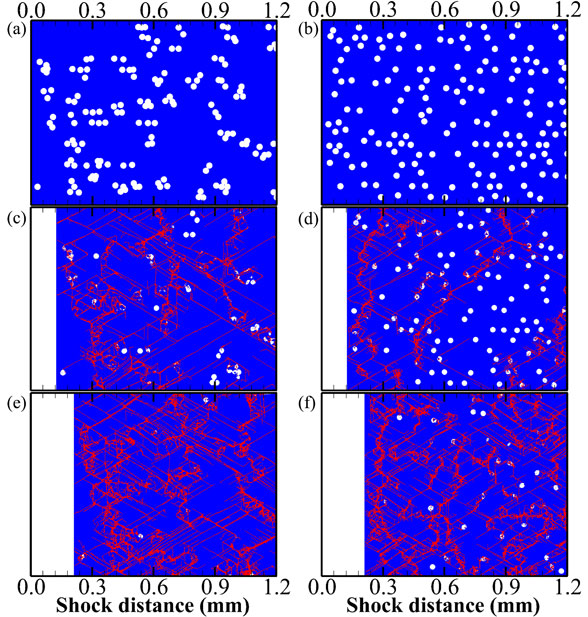
Porous ceramics have attracted the attention of researchers and scientists in the past few years. It has been widely used in engineering field such as gas filtration, insulation, and catalysts among others. However, more applications of porous ceramics are being uncovered today due to advancement in technology. These applications depend on the physical properties of the materials which are determined by the structural features. The work, therefore, focused on investigating how the properties of ceramics are affected by the distribution of pores in their structures, with an objective of improving shock performance of the PZT95 ferroelectric ceramic.
Dr. Hengchang Nie, and Professor Xianlin Dong at Shanghai Institute of Ceramics in collaboration with Dr. Yin Yu, and Professor Hongliang He at Institute of Fluid Physics in China used PZT95/5 ferroelectric ceramics to examine the effect of the distribution of pores on ceramics properties. They wanted to determine the influence of the pores distribution on shock compression. Their research work is now published in Journal of the American Ceramic Society.
From the experiments conducted by the research team, it was established that porous ceramics with disperse pores work better than those whose structures have agglomerated voids. They realized from simulations that the shock resistance and plasticity of the porous PZT95/5 ferroelectric ceramic were the significant contribution to its shock performance. The macroscopic response of the experimental results and the simulation results of mesoscopic features together showed the accuracy of the experiments and the research at large.
The research successfully found how the pores distribution affecting shock performance in porous PZT95/5 ferroelectric ceramics. The authors have also demonstrated how the structures of the ceramic materials especially disperse and agglomerated voids affect their physical properties. From the comparison between disperse and agglomerated pores, they concluded that distribution of pores significantly influenced the physical properties of the ceramics. On the other hand, simulations results showed that under shock pressures, mechanical failures can result in electrical failures in the ceramic materials.
Hengchang Nie and colleagues also observed that disperse pores has added advantage as compared to agglomerate pores as far as yielding strength is concerned. They also have significantly high Hugoniot elastic limit (HEL). Both porosity and pore distribution were considered the significant factors affecting the Hugoniot elastic limit. The study is critical in the field of ceramic materials. It has enabled an in-depth understanding of the contribution of the pores and other factors in determining the performance of the materials. These results will, therefore, contribute profoundly to the development of advanced porous materials for various applications in the field of engineering.

Reference
Nie, H., Yu, Y., Liu, Y., He, H., Wang, G., & Dong, X. (2017). Enhanced shock performance by disperse porous structure: A case study in PZT95/5 ferroelectric ceramics. Journal of The American Ceramic Society, 100(12), 5693-5699.
Go To Journal of the American Ceramic Society