Advances in Engineering Advances in Engineering features breaking research judged by Advances in Engineering advisory team to be of key importance in the Engineering field. Papers are selected from over 10,000 published each week from most peer reviewed journals.

Significance
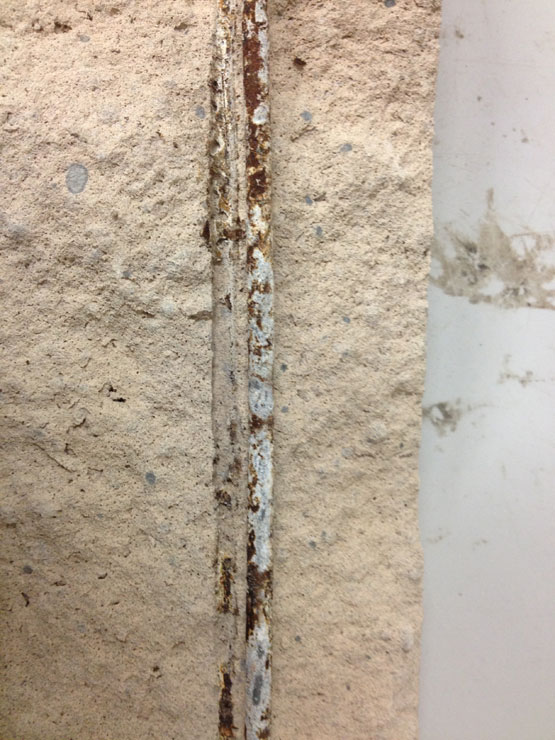
Pre-stressed concrete storage tanks and bund walls used to be common structures in the 1950’s to 1970’s period. They were constructed using the preload method where concrete was pre-stressed by repeatedly wrapping the layers of highly tensioned tendons, after which each layer was covered with gunite. Recent studies have shown that corrosion of the pre-stressing steel can lead to rupture. As a consequence, an explosive type failure is possible if the gunite is not able to absorb the transfer stress. Fortunately, zinc galvanizing can be used to increase the tendons resistance to corrosion although its smoothness can influence bond characteristics, as can corrosion-if extensive. Presently, these structures are still in use and are now at an age where deterioration due to corrosion of the pre-stressing steel is a distinct possibility thereby creating safety concerns.
Dr. Fin O’Flaherty and colleagues from the Centre for Infrastructure Management, Materials and Engineering Research Institute at Sheffield Hallam University in United Kingdom investigated the pre-stress transfer of ruptured pre-load tendons in gunite, both in the uncorroded and corroded state. They also provided analysis that would enable the inspection engineer to assess the likelihood of an explosive type failure by gathering design, construction and in-service information. This included cover to gunite, magnitude of pre-load, diameter and type of tendon and likely areas of corrosion and using these to estimate the transfer stress to the gunite at rupture of one or more tendons. Their work is now published in the research journal, Materials and Structures.
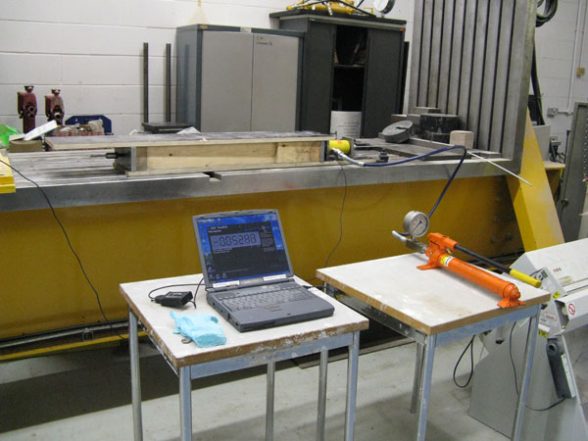
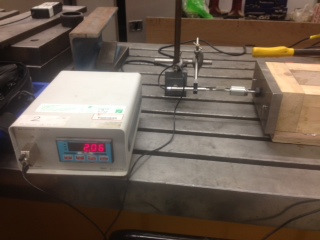
The research method used in their studies entailed laboratory testing, where sample tendons were pre-loaded in custom-built stressing molds and simulated gunite applied. The researchers involved in this study applied varying degrees of accelerated corrosion to the tendons. Eventually, the team determined the bond stress at transfer by measuring the contraction of the tendon during release of the pre-stress. The authors observed that a low bond stress was detected either as a result of the smooth zinc coating/uncorroded tendons or due to higher levels of corrosion. After a detailed comparison with design equations from Eurocode 2, the recommendations direct that the bond coefficient, the coefficient that takes into account the type of tendon and the bond situation, be reduced.
A theoretical analysis was then conducted on a single and double tendon rupture in a bund wall. They noted that the frictional resistance due to curvature between the ruptured tendon and gunite in the transmission length could be ignored for pre-load bund walls and storage tanks with large diameters. To this end, it was seen that the gunite was solely responsible for absorbing the transfer stress from a ruptured tendon. The analysis determined the minimum cover of gunite required to avoid overstressed gunite due to a single tendon rupture. However, a double rupture of two adjacent tendons with a specific pre-stress was likely to cause overstressing and possible explosive failure of the gunite.
Fin O’Flaherty and colleagues, therefore, successfully presented the determination and cross examination of the transfer stress from ruptured pre-load galvanized tendons in tanks and bund walls. The results obtained in their study have enabled various precautionary recommendations to be developed to eliminate the risk of sudden failure in pre-load bund walls

Reference
Fin O’Flaherty, Paul Lambert, Pal Mangat, Vincenzo Starinieri. Determination of transfer stress from ruptured pre-load galvanized tendons in tanks and bund walls. Materials and Structures (2017) 50:228
Go To Materials and Structures