Advances in Engineering Advances in Engineering features breaking research judged by Advances in Engineering advisory team to be of key importance in the Engineering field. Papers are selected from over 10,000 published each week from most peer reviewed journals.

Significance
Mathematics has been used in solving most of the problems in various fields such as engineering. It employs the use of different solving techniques comprising of the partial differential equations, ordinary differential equations, numerical analysis, calculus among others. Ordinary and partial differential equations have been preferred over the other solutions techniques for describing the boundary conditions of a distributed parameter circuit.
The ability of most of the available distributed parameters models to generate continuous semigroup and achieve expected exponential stability has been questioned. However, various studies conducted by different researchers recently have shown promising results. The parameters to be considered for analysis of such a circuit at any given boundary conditions include the current and voltage at well-defined particular time, conductance, resistance, and inductance. The system was represented using state-space representation techniques as well as frequency domain approach methods.
The study required using various mathematical assumptions especially relating to the physical parameters of the constructed circuit. The assumption was useful in predicting the decay rates of the C0-semigroup generated by the operator and whether or not they were exponentially stable. The assumptions also made the general analysis of the telegrapher’s equation much simpler including computations of the eigenvalues and spectrum analysis of the operator A as well as using other formulas from the results of other studies such as those obtained earlier by F.L Huang.
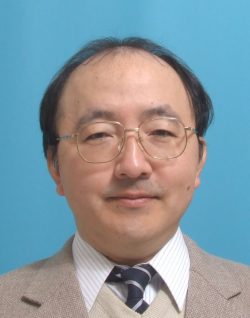
Professor Hideki Sano at Kobe University, Department of Applied Mathematics, Graduate School of System Informatics in Japan demonstrated the use of ordinary differential equations approach to describe the boundary conditions of the telegrapher’s equations of the distributed parameter circuit. This was in a bid to investigate the stability of the system under such conditions. Their research work is published in the journal, Systems &Control Letters.
Professor Sano successfully showed that under dynamic boundary conditions, it was indeed possible to exponentially generate stable C0-semigroup from the system operator used for the experiment. As a result, the system satisfactorily satisfied the spectrum growth condition that was expected from the distributed parameters.
The study successfully addressed the issues that had been raised from the previous research works concerning achieving the stability of the telegrapher’s equations. For instance, the decay rate which had remained an area of uncertainty before could be calculated much simple and accurately through taking the spectral bound of the system into consideration. Additionally, through the use of such conditions other essential aspects of the operator A such as finding the eigenvalues could be manipulated more effectively. Next, the spectral analysis of the systems operator yielded a positive result. In his research, Professor Sano used the results obtained from the previous research work done by Huang to demonstrate the relationship between the semigroup and the spectrum growth condition. Although the author experienced some difficulties in analyzing the system’s spectral under general physical parameters, he, however, hopes that with more research the problem will soon be solved.
Reference
Sano, H. (2018). Stability analysis of the telegrapher’s equations with dynamic boundary condition. Systems & Control Letters, 111, 34-39.
Go To
Systems & Control Letters