Advances in Engineering Advances in Engineering features breaking research judged by Advances in Engineering advisory team to be of key importance in the Engineering field. Papers are selected from over 10,000 published each week from most peer reviewed journals.

Significance
The demand for polymer nanocomposites has increased rapidly in the recent years due to their capabilities for use in several applications as well as their excellent properties. However, in a special way, a composite of graphene nanoplates and polypropylene have been given considerable attention by researchers. Graphene nano-platelets and graphene nanoplates are readily available, easy to process, cost-effective and exhibit excellent physical and mechanical properties hence can be used in broad applications such as polyolefins uses.
Due to their distinct mechanical, chemical and physical properties, a composite of the polypropylene and graphene nanoplatelet are expected to have even better properties than the individual material. Thus, various studies conducted today are focused towards investigating the properties of graphene nanoplatelet and polypropylene composites.
A group of researchers at the University of Waterloo, Department of Chemical Engineering in Canada led by Professor Aiping Yu investigated the thermal, electrical and mechanical properties of large sized polypropylene and graphene nanoplatelet nanocomposites. The graphene nano-platelets incorporated polypropylene nanocomposites were prepared by melt extrusion method followed by injection molding. Their research work is currently published in the research journal, Composites Part B.
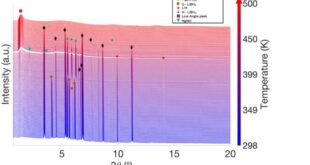
The authors investigated crystalline effects of graphene nano-platelets on the polypropylene matric using X-ray diffraction and differential scanning calorimeter techniques. For measuring the electrical conductivity of the specimens, a four-point probe was used. The polypropylene composites contained different graphene nano-platelets contents which were all prepared by melt extrusion and injection molding techniques.
The authors also observed that the crystallization of the polymer matrix was enhanced by the graphene nano-platelets composite due to heterogeneous nucleation. The high aspect ratio and the larger size of the graphene nano-platelets resulted in a low percolation threshold standing at 2.99%. It also led to an increase in the electrical conductivity both in the through-plane and n-plane.
Generally, the graphene nano-platelets composite exhibited limited mechanical properties. This behavior was resulted to by the fact that the graphene nano-platelets exhibits an inferior degree of dispersion and interfacial interaction with polypropylene. Electrical conductivity, on the other hand, is significantly enhanced. This was attributed to the choice of relatively large sizes of graphene nano-platelets However, to achieve a polypropylene / graphene nano-platelets composite with better mechanical and physical properties, it is important to use fillers with a high degree of dispersion and interfacial interactions.
A comparison between Young’s moduli results obtained experimentally and that predicted by the Halpin-Tsai equation showed fewer improvements in tensile and flexural strengths. It also showed that the compounding process influenced the morphology and aspect ratio of the graphene nano-platelets composite. The study by Yun-Seok Jun and colleagues will help advance various industries such as electronics, automobile and green technology which uses the polypropylene / graphene nano-platelets composites since they exhibit excellent mechanical, electrical and physical properties.


Reference
Jun, Y., Um, J., Jiang, G., Lui, G., & Yu, A. (2018). Ultra-large sized graphene nano-platelets (GnPs) incorporated polypropylene (PP)/GnPs composites engineered by melt compounding and its thermal, mechanical, and electrical properties. Composites Part B: Engineering, 133, 218-225.
Go To Composites Part B: Engineering