 Advances in Engineering Advances in Engineering features breaking research judged by Advances in Engineering advisory team to be of key importance in the Engineering field. Papers are selected from over 10,000 published each week from most peer reviewed journals.

Significance
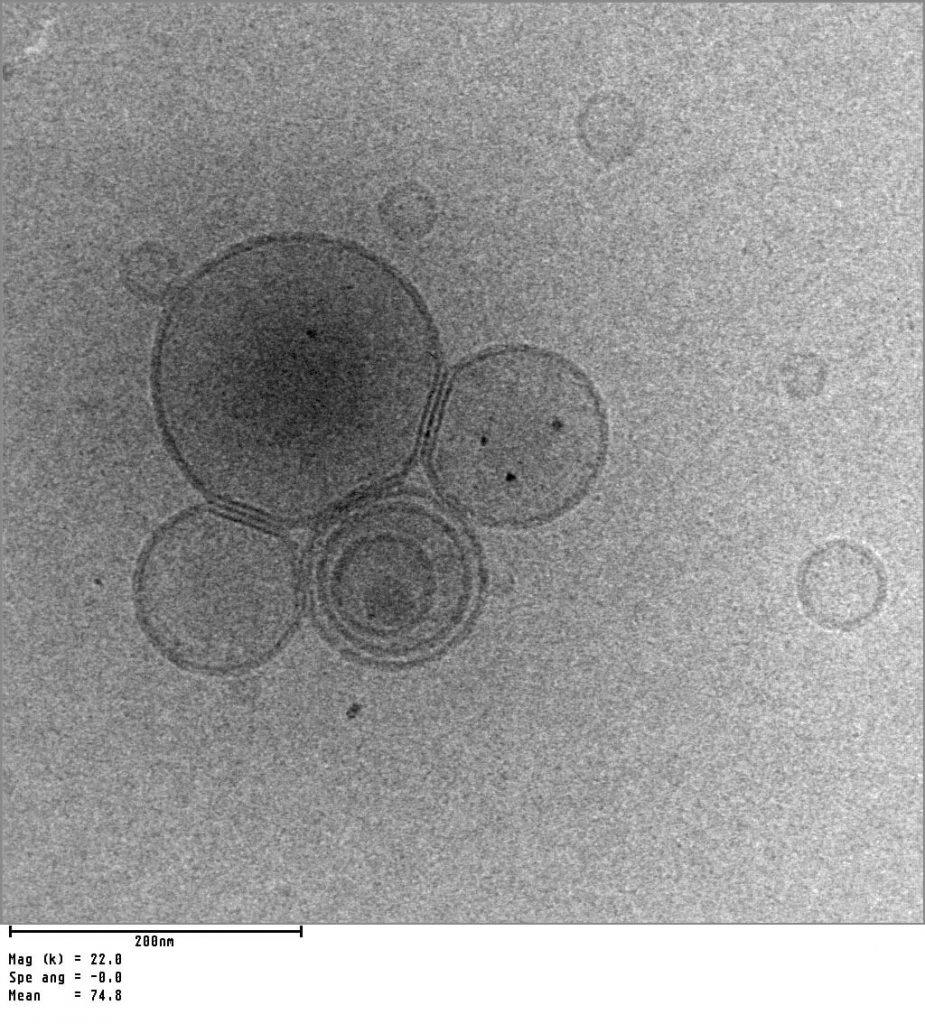
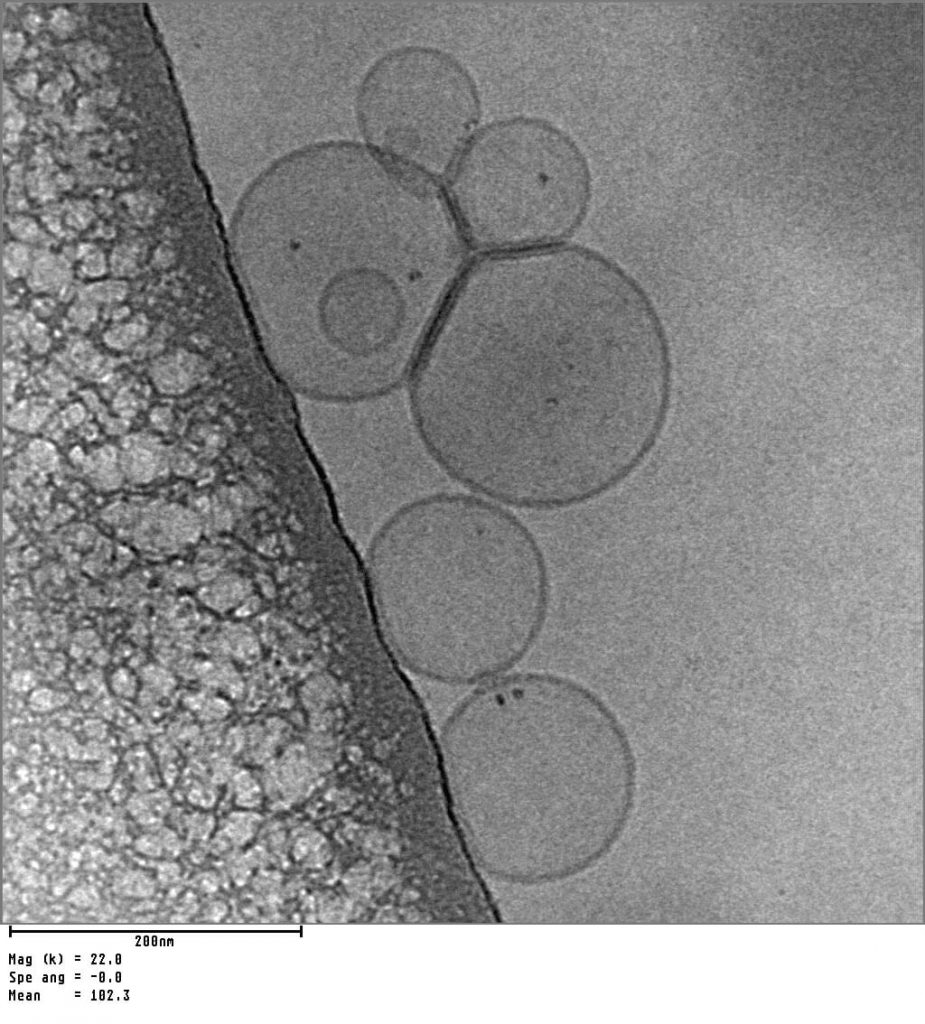
Tissue mimetics, self-assembly of multi-compartment vesicles and lipid-based drug delivery are some of the technological benefits that can be ripped if one was to control the adsorption of lipid vesicles onto lipid structures. Recent studies have already established that the adhesion of electrically charged lipid vesicles and subsequent formation of multi-vesicle aggregates can be induced by multivalent rod-like counterions. Such progress has enabled the fabrication of theoretical models of vesicle adhesion onto homogeneous solid surfaces that mainly focus on the membrane bending contribution. Furthermore, the attraction between like-charged planar surfaces mediated by multivalent point-like or spatially extended ions has been modeled extensively based on simulations and field-based approaches. Unfortunately, an application of these models to the adhesion between lipid vesicles is yet to be actualized.
Recently, North Dakota State University researchers Professor Sylvio May and Dr. Guilherme Volpe Bossa in collaboration with Dr. Tereza Pereira de Souza at Sao Paulo State University in Brazil presented a theoretical model to explain the adhesion between two like-charged lipid vesicles mediated by rod-like counterions. In addition, they determined the degree of adhesion between two identical vesicles from the balance of attraction due to electric double layer forces and repulsion due to vesicle bending. Moreover, they also focused on estimating the effect of membrane bending fluctuations, depletion interactions and van der Waals attraction. Their work is currently published in the research journal, Soft Matter.
Briefly, the research method employed commenced with the development of a model that allowed the enclosed vesicle volume to freely adjust, with the area of the vesicle membrane being fixed and remaining as a constant. Next, the researchers adopted a recently developed mean-field theory to describe the electrostatic attraction, which arises from the bridging of the rod-like counterions between the two like-charged vesicles. Lastly, they assessed the influence of the bending fluctuation-induced entropic repulsion, depletion forces between the apposed vesicle membranes induced by the rod-like counterions and van der Waals attraction between the vesicles.
The authors observed that their model was able to predict the dependence of vesicle adhesion exclusively from material or molecular parameters such as vesicle size and charge, bending stiffness of the membrane, effective length and net charge of the added rod-like counterions, as well as concentrations of rod-like counterions and additional salt content. Better still, their model was able to demonstrate that the demixing of charged lipids between the adhesion region and the un-complexed parts of the vesicles had only minor impact on the degree of adhesion.
In a nutshell, Sylvio May and colleagues presented an in-depth assessment of the adhesion between two charged lipid vesicles mediated by rod-like counterions using a recently proposed model for the electric double layer. Generally, they observed that the attraction between the vesicles arose due to bridging of the adhering membranes via the rod-like counterions. Altogether, despite the fact that the underlying electrostatic model is strictly valid only in the linear Debye–Huckel limit and for not too long rods, its predictions are consistent with recent experimental observations. More so, the predictions obtained here are in qualitative agreement with recent experimental findings.



Reference
Guilherme Volpe Bossa, Tereza Pereira de Souza, Sylvio May. Adhesion of like-charged lipid vesicles induced by rod-like counterions. Soft Matter, 2018, volume 14, page 3935.
Go To Soft Matter