Advances in Engineering Advances in Engineering features breaking research judged by Advances in Engineering advisory team to be of key importance in the Engineering field. Papers are selected from over 10,000 published each week from most peer reviewed journals.

Significance
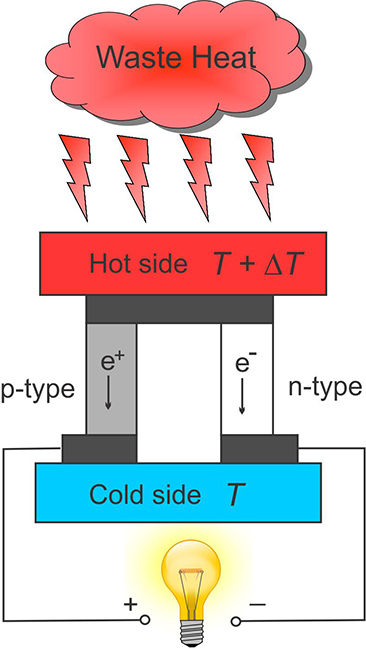
Renewable energy sources are promising solution for enhancing sustainability through efficient energy conservation. Going with the current trends, the development of efficient energy conservation has attracted significant attention of researchers. In particular, thermoelectric materials exhibiting high Seebeck effects have been deemed suitable materials for enhancing energy efficiency owing to their excellent electrical and thermal properties. In a recently published literature, lead chalcogenide compounds, a type of thermoelectric material, have been utilized in various power generation applications. Unfortunately, their viability is questionable due to the presence of the lead compounds. This is due to the global mitigation measures to limit the use of lead and lead products in an attempt to reduce emissions of hazardous compounds into the environment. Therefore, the development of lead-free thermoelectric materials is highly desirable.
Generally, several lead-free thermoelectric materials such as tin chalcogenides and tin tellurides have been developed. However, their limitations due to poor mechanical properties and high hole density have resulted in poor thermoelectric performance of these materials. Alternatively, recent research has demonstrated the feasibility of doping with efficient electron donors with the ability to reduce the hole carrier concentration. Consequently, further investigation of the thermoelectric properties in doped tin tellurides is necessary to optimize their performance.
To this note, Masoud Aminzare and Professor Yurij Mozharivskyj from McMaster University in collaboration with Dr. Yu-Chin Tseng from Natural Resources Canada and Anbalagan Ramakrishnan and Dr. Kuei-Hsien Chen from the Institute of Atomic and Molecular Sciences in Taiwan looked carefully on the thermoelectric properties of doped tin tellurides. In particular, they investigated the various metallic dopants in tin tellurides and their corresponding influence on the microstructure, mechanical and thermoelectric performance. Their research work is currently published in the journal, Sustainable Energy and Fuels.
In brief, the research team explored the thermoelectric properties of Ni-, Co- Zn- and Ge-doped tin tellurides phases. Fundamentally, they utilized melting-quenching and spark plasma sintering techniques to prepare the new cation doped tin tellurides samples. They aimed at overcoming the disadvantages of tin tellurides including low Seebeck effect and high hole concentration that hinder their thermoelectric performance.
The authors observed that the Co, Ni, and Zn were only slightly soluble in the structure with a solubility range of 0-0.01 while on the other hand, the germanium displayed higher solubility and lead to the uniform microstructures in the Ge-doped samples. In addition, lower lattice thermal conductivities and improved charge transport properties were recorded in Co-, Zn-, Ni- and Ge-doped samples. In case of the Co-, Zn- and Ni-containing samples, the appearance of impurity phases further reduced thermal conductivity and resulted in high ZT values.
In summary, Professor Yurij Mozharivskyj and his colleagues studied thoroughly the effects of single metal doping on the thermoelectric properties of tin tellurides and consequently reported the lowest ever lattice thermal conductivities. Furthermore, the doping-related impurities exhibited potential effects on carrier mobility, Seebeck coefficient, and lattice thermal conductivity. Altogether, the study provides vital information that will be of great importance in enhancing the thermoelectric material efficiency. Furthermore, it will enable further improvements through co-doping and nanostructuring approaches.

Reference
Aminzare, M., Tseng, Y., Ramakrishnan, A., Chen, K., & Mozharivskyj, Y. (2019). Effect of single metal doping on the thermoelectric properties of SnTe. Sustainable Energy & Fuels, 3(1), 251-263.
Go To Sustainable Energy & Fuels