Advances in Engineering Advances in Engineering features breaking research judged by Advances in Engineering advisory team to be of key importance in the Engineering field. Papers are selected from over 10,000 published each week from most peer reviewed journals.

Significance
The use of water-soluble copolymers in multiple applications has rapidly increased over the past decades. In the construction and building industry, for example, the high viscosity of the mixture has resulted in low concrete performance. However, the addition of poly (MAA-co-PEGMA) copolymers otherwise known as superplasticizers has been identified as a promising solution for reducing the mixing water for a given density. Even though superplasticizer agents have been widely used in the construction industry, there is a great need to improve their performance, structure, and characteristics to fit the ever-changing construction needs.
Developed in the late nineteenth century, polycarboxylic ethers (PCEs) with a comb-like structure have highly improved the concrete performance by allowing large water reduction in the mixing process. Recently, their chemical structure has been improved to solve various problems associated with acidic monomers to meet specific market demands. Presently, two main processes: esterification and free radical copolymerization are commonly used to synthesis polycarboxylic ethers. Unfortunately, they cannot produce polycarboxylic ethers with desirable microstructure, which is a vital factor affecting concrete performance.
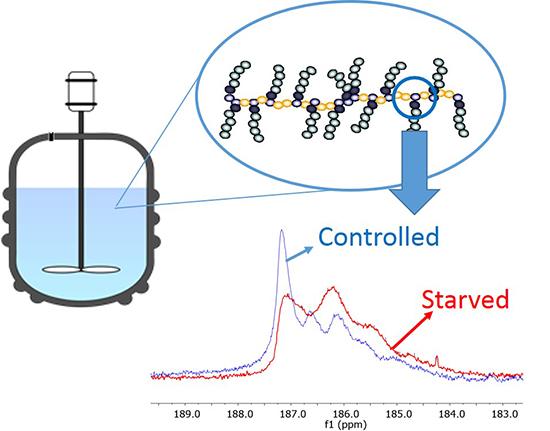
In a recent paper published in the Polymer Chemistry journal, University of the Basque Country researchers: Iñaki Emaldi (PhD candidate), Dr. Shaghayegh Hamzehlou, Dr. Edurne Erkizia, Dr. Jorge Sanchez Dolado, Dr. Agustin Etxeberria, and led by professor Jose Ramon Leiza investigated the interaction between the comb-like copolymers on the surface of cementitious materials. Fundamentally, the authors employed am open-loop control strategies: monomer starved and optimal addition methods to produce homogenous composition copolymers.
To ensure effective optical feeding strategies for copolymerization of MAA and PEGMA5 in alkaline aqueous solution, a detailed kinetic knowledge on the copolymerization process was necessary. Thus, a detailed mathematical model was developed. Based on the batch copolymerization experimental kinetic data, the unknown kinetic parameters were estimated. Next, the model was used to develop optimal feedings strategies. Eventually, its feasibility in synthesizing poly (MAA-PEGMA5) copolymers with uniform composition within the shortest possible reaction time was demonstrated and compared with the copolymers obtained using the conventional monomer-starved conditions.
Copolymer composition is a very essential feature controlling the charge density of the macromolecules in aqueous solutions. From the experiments, the authors demonstrated the inability of the monomer starved feed strategy and batch copolymerization method to produce homogenous copolymers. This was attributed to the deviation of a substantial copolymer chain fraction from the desired composition. This drawback was, however, addressed by the introduced mathematical model. As such, poly (MAA-PEGMA5) copolymers with desired homogenous compositions i.e. 2/1, 3/1 and 4/1 compositions were successfully synthesized. This was also achieved within the shortest reaction time as compared to the copolymers synthesized through conventional processes.
In addition to enhancing the homogeneity of copolymer composition, the strategy also significantly reduced the processing time. The study will, therefore, pave way for synthesizing MAA-co-PEGMA5 copolymers with high precision composition control. This will additionally lead to a proper understanding of the effects of microstructural features in aqueous solution and their corresponding interaction with cementitious particles thus advancing their construction applications.






Reference
Emaldi, I., Hamzehlou, S., Erkizia, E., Sanchez Dolado, J., Etxeberria, A., & Leiza, J. (2019). Modelling and control of the microstructure of comb-like poly (MAA-co-PEGMA) water-soluble copolymers. Polymer Chemistry, 10(8), 1000-1009.
Go To Polymer Chemistry