Advances in Engineering Advances in Engineering features breaking research judged by Advances in Engineering advisory team to be of key importance in the Engineering field. Papers are selected from over 10,000 published each week from most peer reviewed journals.

Significance
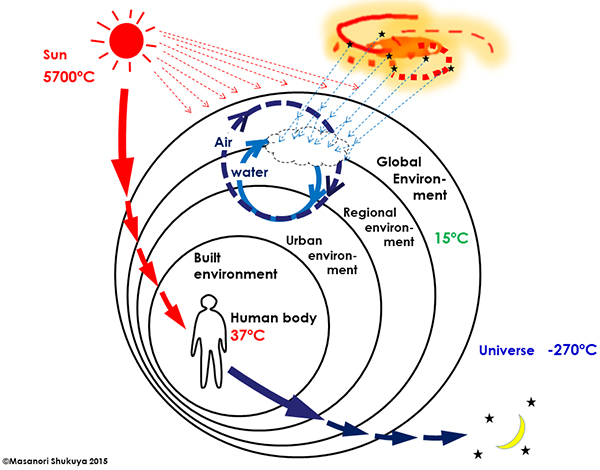
Exergy analysis provides a holistic approach for understanding and improving the performance of the energy transfer systems relative to their surrounding environments. It has become considerably important in the built environment, such as building envelopes, to enhance the efficiency of the thermodynamic processes of these systems. A good example is the exergy analysis of space heating/cooling systems and their thermodynamic processes, one of the most active study areas. Interestingly, most exergy analyses are conducted based on steady-state assumptions for a detailed understanding of the exegetic behaviors of the systems in different conditions. However, this assumption may be inappropriate for exergy analysis of built environments considering the effects of thermal storage that have been significantly ignored in the current studies.
By neglecting the storage-related physics, steady-state exergy analyses fail to provide the desired insights into the transient exergy processes and behaviors that are important in evaluating the exergetic performance of the built environment. Moreover, such findings may not be thermodynamically accurate due to the lack of physics integrity and neglecting the changes in the boundary conditions and environmental temperatures. The limitations of the steady-state exergy analysis can also be partially attributed to the low thermal conductivity and high heat capacity of the materials surrounding the built environmental space. Therefore, for built environment systems where transient processes are considered important, unsteady-state exergy analysis is deemed more appropriate for accurate results.
On this account, Professor emeritus Masanori Shukuya from Tokyo City University together with Dr. Wonjun Choi and Professor Ryozo Ooka from the University of Tokyo conducted unsteady-state exergetic analysis of internally and externally insulated building envelopes subjected to time-varying boundary conditions. Their study was based on a complete methodology capable of numerically solving the entropy, energy and exergy equations considering the integrity of the thermodynamic processes and their exergy storage. Their original article is currently published in the International Journal of Heat and Mass Transfer.
In their approach, the research team commenced their research work by exploring the importance of unsteady-state analysis for built environment systems. The numerical method developed in their previous study was used to analyze the transient exergetic behavior of the two building envelopes. The authors also compared the spatiotemporal exergetic behaviors and performance of the envelopes from the microscopic and macroscopic perspectives. Lastly, the importance of unsteady-state behavior in the developing and operating thermal systems and the physics behind the associated results were detailed.
The authors found a sharp contrast in the exergetic behavior of the building envelopes. The internally insulated envelope exhibited a significantly higher energy flow, higher consumption rate and higher exergy energy discharge into the surrounding environment. In contrast, larger exergy storage was reported in internal layers of the externally insulated envelopes, resulting in improved space-heating/cooling-system performance. The smaller stored energy in the internally insulated enveloped was attributed to the direct effects of the environmental temperature changes. Overall, the externally insulated envelope demonstrated superior performance over the internally insulated envelope. Some of the factors affecting the obtained results included the indoor space utility and the setpoint, indoor and environment temperatures of the system.
In summary, the study compared the unsteady-state exergy performance of internally and externally insulated building envelopes using complete unsteady-state entropy, energy and exergy equations. Compared to the dynamic exergy or steady-state analysis, unsteady-state analysis proved suitable for analyzing systems with low thermal conductivity and large heat capacity because it considered the physics associated with exergy storage. Based on the results, unsteady-state exergy analysis of the built environment allows for effective control of the inflow and outflow of energy to improve the efficiency of building energy systems. In a statement to Advances in Engineering, Professor Masanori Shukuya, the corresponding author explained the study would advance sustainable building thermal design allowing for efficient operation of energy systems that better suit to human well-being.

Reference
Choi, W., Ooka, R., & Shukuya, M. (2020). Unsteady-state exergetic performance comparison of externally and internally insulated building envelopes. International Journal of Heat and Mass Transfer, 163, 120414.