Advances in Engineering Advances in Engineering features breaking research judged by Advances in Engineering advisory team to be of key importance in the Engineering field. Papers are selected from over 10,000 published each week from most peer reviewed journals.

Significance
Polymers have emerged as promising candidates for addressing the limitations of existing conventional materials. For example, fiber-reinforced polymer (FRP) bars are gradually replacing conventional deformed steel bars owing to their widespread application in concrete structures, especially those susceptible to harsh environments. The increasing popularity and application of FRP bars are attributed to their unique and outstanding properties, including high corrosion resistance, high strength-to-weight ratio, and outstanding mechanical properties.
Among the existing reinforcing fibers, glass FRP (GFRP) bars are commonly used in conventional concrete structures because of their mechanical properties and economic benefits. This ensures the cost-effective production of GFRP bars with desirable properties for different applications. Other advantages of GFRP over other fibers like carbon and aramid include transparency to radio frequencies and magnetic fields and electrically and thermally non-conductive.
Compared with deformed steel bars, GFRP bars not only have different surface characteristics but also exhibit lower elastic modulus. To this end, the bond behavior of steel bars with concrete is relatively different from that of FRP bars with concrete. Nevertheless, there are very few studies on the bond behavior between FRP bars and concrete, even though the bond strength between the concrete and the GFRP bar remains one of the most important design parameters in applying GFRP bars.
The lap splice test has proven effective in determining the bond stress distribution between concrete and FRP/steel bars. However, there are limited lap splice tests involving GFRP bars. The existing studies have reported the potential influence of various parameters on the bond strength of GFRP, although only a limited number of parameters have been discussed. Additionally, the dependence of the bond strength on the stirrups of GFRP bars remains underexplored despite its practical implications.
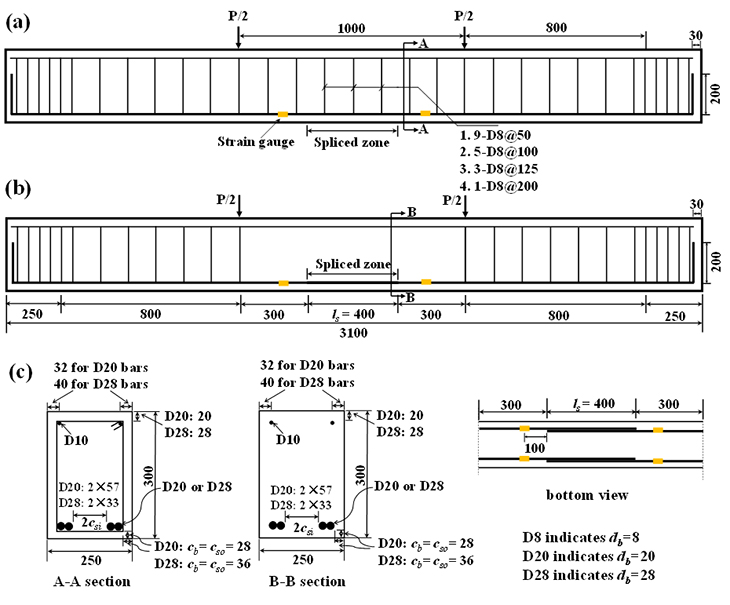
On this account, Dr. Cheng Wu and Professor Gao Ma from Hunan University in collaboration with Professor Hyeon-Jong Hwang from Konkuk University investigated bond performance of GFRP bars in concrete, considering the effects of stirrups on the bond behavior. To accomplish this, they performed lap splice tests on 17 GFRP bars and 5 deformed steel bars. The test parameters consisted of stirrups spacing along the bar splice length, bar diameter, type of spliced bar, and loading type. The failure mode, load-deflection relationship, bond strength as well as the effect of other design conditions were evaluated. Their work is currently published in the journal, Engineering Structures.
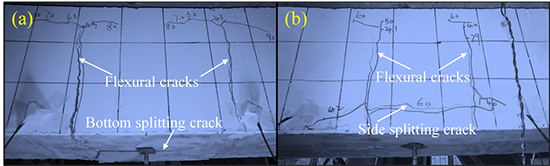
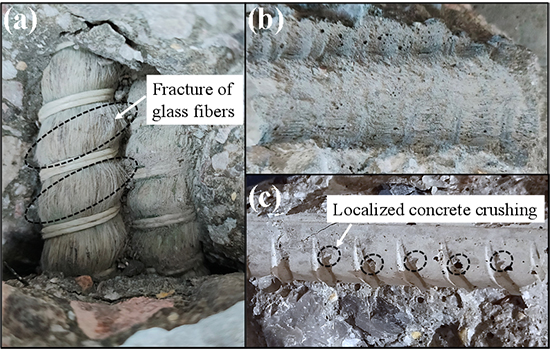
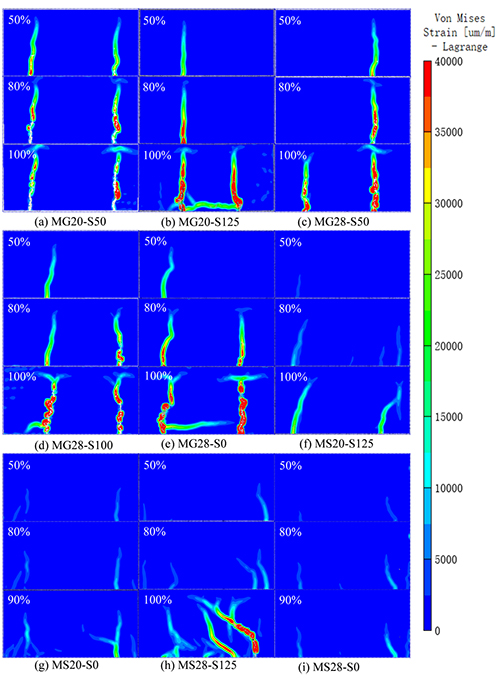
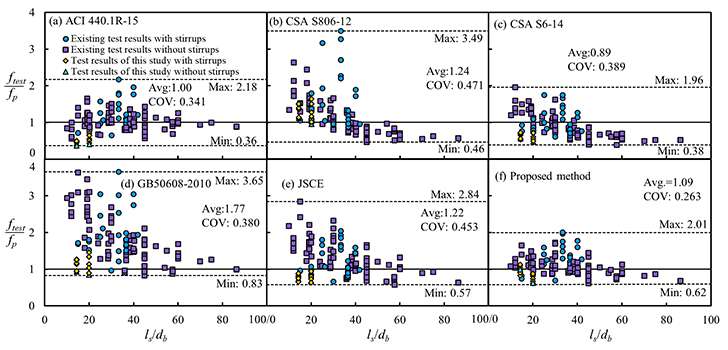
The authors reported that all the tested beam specimens consisting of GFRP bars exhibited splitting bond failure. Results revealed that the presence of stirrups widened the crack width and increased the bond strength of GFRP bars, which decreased with increased stirrup spacing. The stirrups-induced bond strength contribution was more substantial in GFRP beam bars with a diameter of 20 mm than those with a diameter of 28 mm. Additionally, the bar diameter was found to affect the bond strength. As a result, the authors recommended the use of more stirrups in the FRP concrete structures with larger diameters. The test results were predicted with remarkable accuracy using the proposed method.
In summary, the effects of stirrups on the bond performance of GFRP bars in concrete is reported. The proposed and current design methods were applied to the test results and outcomes compared to validate the feasibility of the proposed method and the bond strength of GFRP bars. Moreover, the digital image correlation proved effective in studying the crack evolution in samples that failed by splitting failure. In a statement to Advances in Engineering, Professor Gao Ma explained that the findings increase our understanding of the bond behavior of GFRP bars and would contribute to improving their properties for different practical applications.



Reference
Wu, C., Hwang, H., & Ma, G. (2022). Effect of stirrups on the bond behavior of lap spliced GFRP bars in concrete beams. Engineering Structures, 266, 114552.