Advances in Engineering Advances in Engineering features breaking research judged by Advances in Engineering advisory team to be of key importance in the Engineering field. Papers are selected from over 10,000 published each week from most peer reviewed journals.

Significance
Battery Electric Vehicle (BEV) adoption and the widespread use of photovoltaic (PV) electricity are essential components of climate change mitigation strategies. These technologies offer significant environmental benefits by reducing greenhouse gas emissions in the transportation and electricity sectors. However, if not managed properly, their large-scale deployment can lead to challenges such as increased peak evening electricity demand and overgeneration of electricity during midday. Climate change mitigation efforts necessitate transitioning to less carbon-intensive technologies for personal vehicle travel and electricity generation. Both sectors are interconnected, and technological transitions in one sector can have implications for the sustainability, cost-effectiveness, and stability of the other. As such, a coordinated approach to electrifying transportation and decarbonizing electricity is crucial. Unmanaged adoption of BEVs and PV can strain the electricity grid, leading to various issues. If the charging patterns of an electrified transportation system coincide with peak residential electricity demand, the grid may reach its generation and distribution limits. This situation could result in transformer blowouts, electricity shortages, or the need to rely on expensive peaking plants to meet the demand. This risk is particularly prevalent during higher-demand summer months when peak charging aligns with peak residential electricity demand in the early evening. Furthermore, decarbonizing the electricity sector through intermittent sources like solar and wind energy presents its own set of challenges. Solar energy, for example, can lead to overgeneration during midday, followed by a decline in the evening hours. This pattern, often referred to as the “duck curve,” poses difficulties in terms of curtailed solar electricity and the inefficient ramp-up of fossil-fuel-powered plants to meet the evening peak demand. Overgeneration and increased evening peak demand caused by the rise in BEVs can exacerbate these challenges, necessitating additional underutilized generation capacity to meet the peak loads. This phenomenon not only increases the costs of electricity relative to current rates but also lowers the value of PV installations while potentially increasing emissions due to inefficiencies in plant operation and delayed retirement of fossil-fuel-powered plants. Furthermore, any increase in electricity prices would raise the life-cycle costs of BEVs compared to conventional vehicles, potentially becoming a barrier to further electrification of the transport sector.
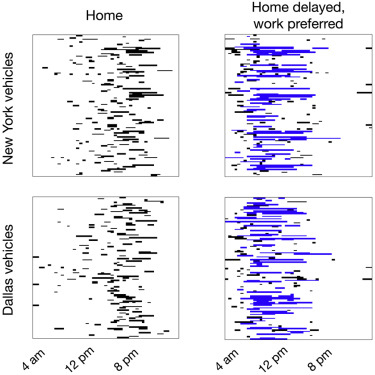
The adoption of battery BEVs and PV electricity generation plays a crucial role in mitigating climate change. However, if left unmanaged, the large-scale deployment of these technologies can lead to challenges such as increased peak evening electricity demand and overgeneration of electricity during midday. Dr. Zachary Needell, Dr. Wei Wei, and led by Professor Jessika Trancik from the Institute for Data, Systems, and Society at the Massachusetts Institute of Technology examined these risks and explore how they can amplify or mitigate each other. They also proposed strategies to address these challenges without requiring changes in travel behavior or new technologies like vehicle-to-grid capabilities and networked chargers. The research work is now published in the peer-reviewed Journal Cell Reports Physical Science.
Implementing delayed home charging and workplace charging requires an acceleration of BEV adoption compared to current rates. However, the benefits are substantial. By reducing peak loads and utilizing excess solar energy, these strategies can help lower electricity costs, enhance the value of PV installations, and minimize emissions from inefficient plant operation and delayed retirement of fossil-fuel-powered plants. Moreover, the life-cycle costs of BEVs compared to conventional vehicles can be reduced. Importantly, these strategies do not rely on complex technologies or travel behavior changes, making them easily accessible and implementable. They align with existing demand management strategies piloted by utilities and do not require expensive upgrades to the power system or vehicle-to-grid capabilities. By emphasizing low-tech solutions, this approach enables effective charging management without introducing significant delays in travel activities.
According to the authors, to achieve climate change mitigation goals, it is essential to integrate the adoption of BEVs and PV electricity generation while managing their impact on electricity costs and grid stability. Delayed home charging and workplace charging emerge as effective strategies to mitigate peak demand and overgeneration challenges. These solutions can be implemented without major technological advancements or travel behavior changes, making them accessible and feasible. Coordinating transportation and electricity decarbonization policies is crucial to unlock the synergies between BEVs and PV, accelerate their adoption rates, and maximize the benefits of these sustainable technologies. By focusing on both present and future scenarios, the authors provided insights for policymakers, technology developers, and investors to guide strategic decision-making in a rapidly evolving energy landscape.
In conclusion, to achieve climate change mitigation goals, it is essential to integrate the adoption of BEVs and PV electricity generation while managing their impact on electricity costs and grid stability. The research team proposed strategies of delayed home charging and workplace charging emerge to mitigate peak demand and overgeneration challenges. These solutions can be implemented without major technological advancements or travel behavior changes, making them accessible and feasible. Coordinating transportation and electricity decarbonization policies is crucial to unlock the synergies between BEVs and PV, accelerate their adoption rates, and maximize the benefits of these sustainable technologies. By focusing on both present and future scenarios, the authors provided insights for policymakers, technology developers, and investors to guide strategic decision-making in a rapidly evolving energy landscape. The successful implementation of these strategies will contribute significantly to a more sustainable and low-carbon future.

Reference
Zachary Needell, Wei Wei, Jessika E. Trancik. Strategies for beneficial electric vehicle charging to reduce peak electricity demand and store solar energy. Cell Reports Physical Science, 2023; 4 (3): 101287 DOI: 10.1016/j.xcrp.2023.101287