 Advances in Engineering Advances in Engineering features breaking research judged by Advances in Engineering advisory team to be of key importance in the Engineering field. Papers are selected from over 10,000 published each week from most peer reviewed journals.

Significance
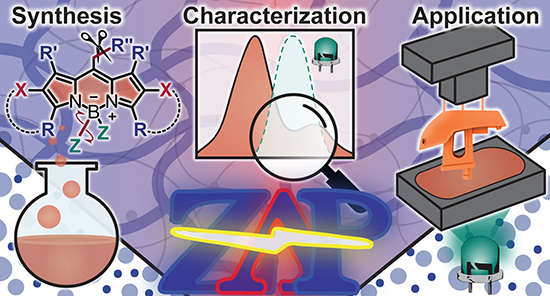
While the intersection of photochemistry and additive manufacturing has seen a remarkable acceleration in recent years, significant obstacles remain—particularly when it comes to the light sources used to drive polymerization. Traditionally, ultraviolet (UV) light has been the default tool for triggering the transformation of liquid resins into solid structures. It works well, but at a cost. High-energy UV light can damage functional groups, limit the diversity of compatible monomers, and impose strict safety and engineering requirements. More troublingly, its use poses challenges for emerging applications that involve fragile materials, sensitive biological environments, or high-refractive-index systems where UV light is either absorbed too readily or causes unwanted side reactions. To this end, a research team under the guidance of Dr. Zachariah A. Page (ZAP) at The University of Texas at Austin reconsidered the foundational assumptions of how light-induced polymerizations are designed and provided a comprehensive report of their findings in Accounts of Chemical Research. The authors of this account—Dr. Lynn Stevens, Nirvana Almada, and Dr. Hyeong Seok Kim—described the problem with a question that’s deceptively straightforward but technically demanding: can visible or near-infrared (NIR) light, which is lower in energy and generally safer, serve as a viable alternative to UV in high-performance 3D printing systems? Over the years, ZAP group researchers focused on crafting photoreactive species with finely tuned electronic properties—molecules that could absorb longer wavelengths and still generate reactive intermediates with sufficient efficiency. But designing new molecules was only part of the challenge. These systems also needed to remain effective under ambient conditions, tolerate oxygen, and operate within the practical constraints of modern printing hardware.
The authors began by describing research on BODIPY-based chromophores—small, synthetically modular dyes—tuned to respond to visible and even NIR light. They introduced a range of structural modifications, including halogen substitutions, twisted aromatic groups, and nitrogen bridgeheads, each selected for its ability to influence intersystem crossing dynamics, prolong excited-state lifetimes and by this directly shaped how these molecules behaved under light exposure, dictating their efficiency in radical initiation or base release.
To probe these new systems, the researchers relied on UV-Vis absorption and FTIR spectroscopy. The former helped map excitation profiles, while the latter provided a window into polymerization kinetics in real time. Halogenated BODIPYs, for instance, showed a dramatic increase in reactivity—under green light, brominated variants outperformed their unmodified counterparts by more than an order of magnitude. Moreover, they found the effect to be reproducible and mechanistically sound which, reinforces the connection between molecular electronics and functional performance. Furthermore, the researchers found that twisted-aryl derivatives allowed for heavy-atom free green-light induced polymerizations. Lastly, they observed azaBODIPYs bearing electron-rich substituents pushed polymerization into the 850 nm range—a region many had previously written off as energetically insufficient for such processes.
Parallel to their work on radical systems, the researchers turned to non-radical routes using photobase generators (PBGs). They synthesized coumarin- and BODIPY-linked TMG derivatives, incorporating these into resins for thiol–ene and thiol–isocyanate reactions. They showed that some of these systems cured completely in just seconds under visible light—a remarkable feat. However, a few PBGs revealed a mix of competing mechanisms, with both radical and ionic polymerizations occurring simultaneously. To counter the competing mechanisms, they introduced TEMPO as a radical scavenger, which allowed them to isolate and quantify the true anionic contributions. Perhaps the most compelling validation came when these chemistries were embedded into DLP 3D printing workflows. Using visible light sources alone, the team produced complex structures with sub-100 μm resolution at build rates reaching 45 mm per hour. Notably, they achieved successful ambient-air printing by adding small amounts of multifunctional thiols to suppress oxygen inhibition which historically was considered a persistent bottleneck. In a particularly elegant demonstration, they implemented a triplet fusion upconversion mechanism to trigger polymerization with green light, yielding high-fidelity prints using minimal light intensity.
In conclusion, Professor Zachariah Page and his team at UT Austin successfully developed a suite of photoinitiators and photobase generators that enabled rapid, high-resolution 3D printing using visible and NIR light opposed to traditional UV. Their work overcomes key barriers like oxygen inhibition and limited material compatibility, allowing multimaterial fabrication under ambient conditions. This represents a major advance in photopolymer chemistry and it is expected to expand the possibilities for safer, faster, and more versatile additive manufacturing. We think what the new research achieves not just a substitution of one wavelength for another but reengineering of the system from the molecular level up—making visible and even NIR light chemically viable for rapid, high-resolution printing. This is important because it means we now have access to light sources that are less damaging, more cost-efficient, and far more compatible with delicate or light-sensitive materials. In practice, this unlocks applications that were previously out of reach.
One thing that stands out is the way the chemistry was designed with a clear eye on implementation. It’s easy to get caught up in photoinitiator design and lose sight of how things behave in a real device. But here, the team didn’t stop at showing that the reactions “work.” They tested them in full DLP setups, optimized for layer resolution, curing speed, and oxygen tolerance. This attention to practical parameters gives the work more than academic value—it suggests readiness for translation into industry. Also intriguing is their demonstration of multimaterial printing through spectral selectivity. By using initiators that absorb different regions of the visible spectrum, they could direct polymerization spatially—essentially painting functionality into a single print. This kind of control, previously limited to complex post-processing, is now possible mid-print, which feels like a genuine shift in how we might build multifunctional structures going forward. Finally, there’s the oxygen problem—typically the Achilles’ heel of radical photopolymerizations in air. Rather than sidestepping it with an inert environment, the ZAP research group tackled it head-on using thiol additives and showed that ambient printing doesn’t have to come at the cost of fidelity or speed. All in all, the new work moves us closer to a future where additive manufacturing isn’t dictated by old optical limitations. Instead, it opens the door to printing systems that are responsive, adaptable, and tuned precisely to the materials we actually want to use.




Reference
Stevens LM, Almada NT, Kim HS, Page ZA. Visible-Light-Fueled Polymerizations for 3D Printing. Acc Chem Res. 2025 ;58(2):250-260. doi: 10.1021/acs.accounts.4c00680.
