Advances in Engineering Advances in Engineering features breaking research judged by Advances in Engineering advisory team to be of key importance in the Engineering field. Papers are selected from over 10,000 published each week from most peer reviewed journals.

Significance
Trying to capture how fluids, heat, or small particles move through irregular materials has always been a thorny problem in chemical engineering, and what surprises me is how unsettled it remains. Natural porous systems such as fractured rock, soil, even living tissue rarely offer the symmetry we wish they did. Even manufactured composites, which one might expect to behave in a more predictable fashion, tend to reveal hidden irregularities when examined carefully. Anyone who has wrestled with these systems knows the tension: models need simplification to be useful, yet experiments keep reminding us how unruly the real world is. Researchers have toggled between two approaches, and both feel incomplete. The first is to impose structure, describing the medium as a tidy lattice or a packing of identical spheres. The mathematics there is clean and the solutions can be beautiful, but the results rarely survive confrontation with experiments. The second is to accept the disorder, to build stochastic networks or fractal-like structures that resemble nature’s messiness. This certainly looks closer to reality, but it comes at a cost—the equations become so unwieldy that optimization is more theoretical than practical, like trying to chart fog. This unresolved back-and-forth leaves a simple but persistent question: can geometry be represented in a way that acknowledges reality without crushing the analysis under its own weight? Too much abstraction, and the governing features of flow or diffusion vanish. Too much fidelity, and the model drowns in detail. The implications stretch far beyond theory. From groundwater cleanup to drug delivery and energy storage, predicting transport in disordered media is central to engineering. What is missing is a framework that sits between the extremes: one that is realistic enough to matter, yet simple enough to steer design. Until such a description emerges, the transport of fluids, heat, and particles through heterogeneous structures will remain an open puzzle for the field. To this account, new research paper published in Chemical Engineering Science and led by Professor Joel Plawsky, graduate student Alex Rishty, and Professor Corey Woodcock from the Howard P. Isermann Department of Chemical and Biological Engineering at the Rensselaer Polytechnic Institute, the researchers developed a transport model based on chiral aperiodic tilings, specifically using the Spectre monotile as the foundational geometry. By selectively removing walls in these tilings and running detailed finite element simulations, they created structures that generated diverse flow fields, high particle capture efficiencies, and efficient solute dispersal. Their work showed that tortuous pathways induced by geometry alone could achieve capture rates approaching ninety percent without sacrificing permeability.
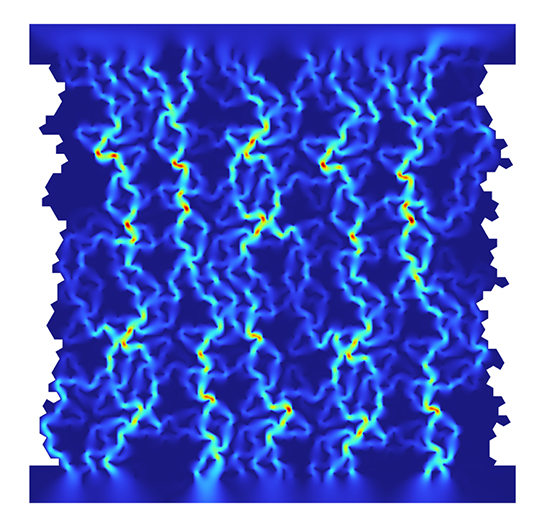
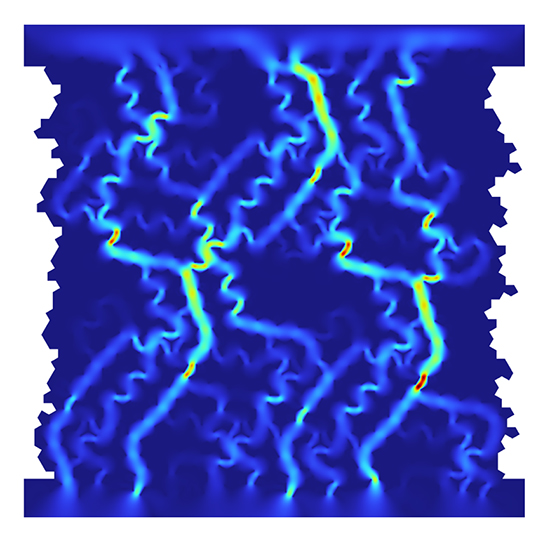
The research team approached the problem by constructing a two-dimensional chiral aperiodic tiling using the recently discovered Spectre monotile. Each tile was defined with fourteen potential walls, and the scientists probed transport by removing specific wall pairs in a uniform manner across the entire lattice. This decision may seem mechanical, but it allowed them to separate randomness introduced by geometry itself from randomness imposed by algorithmic choices. Once the tiling was cut into a finite geometry and provided with a distributed inlet and outlet, finite element simulations became the stage where flow and particle dynamics could be observed in detail. Water at room temperature was passed through the structure, and the resulting flow fields were solved across hundreds of thousands of elements. The outcome was a series of patterns that defied simple classification: in some configurations, flow wove into braided paths that forced fluid to double back on itself, while in others it tunneled into sharp channels reminiscent of real filtration membranes. A particularly striking observation was that the geometry dictated whether flow explored nearly all available space or remained confined to preferential pathways.
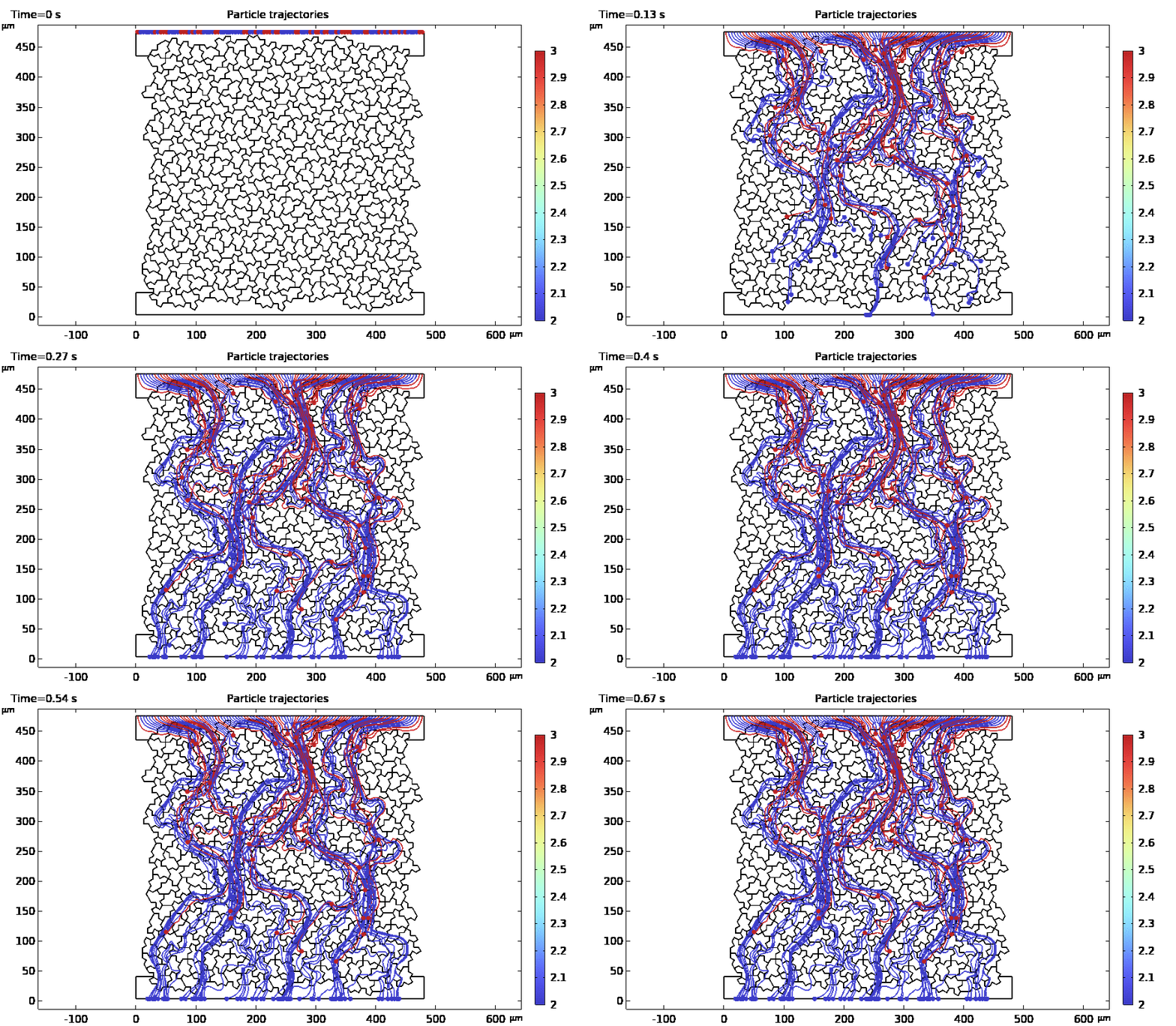
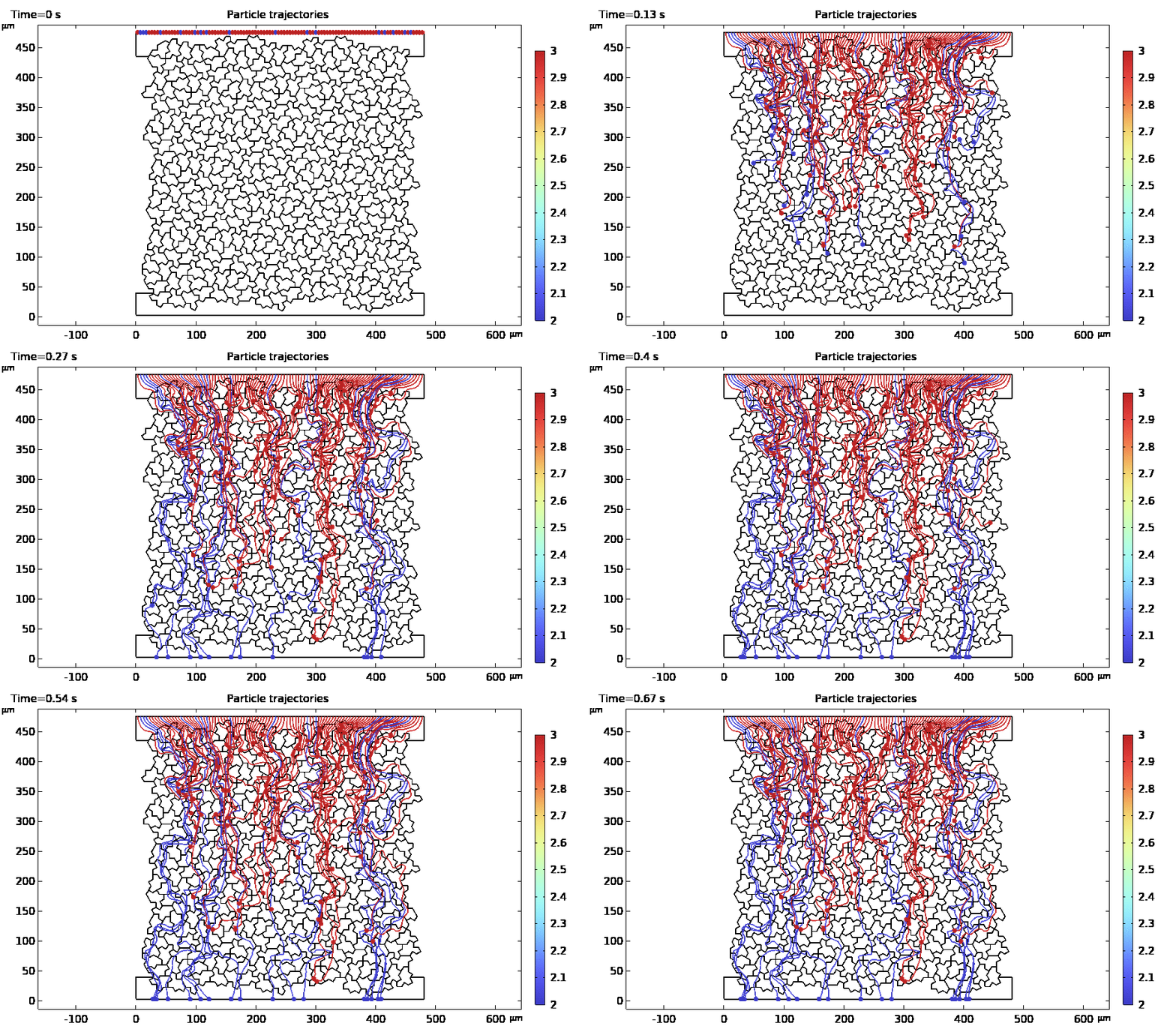
The researchers then calculated deviations of local velocity from the system average in an effort to quantify these impressions and found that when outlet walls were positioned close to the inlets, the flow became uneven and concentrated, producing regions of intense velocity. Conversely, when outlet walls were far apart, the system distributed flow more evenly, lowering velocity deviations and increasing overall permeability. This outcome illustrates how a simple change in geometric choice can transform a system from one that suffers maldistribution into one that achieves broad dispersal. Their results revealed that permeability rose when inlets and outlets were more separated, a principle that seems intuitive but had rarely been demonstrated so clearly in the context of aperiodic tilings. Afterward, the team explored particle capture. They released one-micron silica particles into the simulated flow and tracked their trajectories with only drag forces and weak van der Waals interactions included. The hypothesis was that repeated encounters with tortuous walls might enhance capture even when pores were several times larger than the particles themselves. The authors’ results confirmed this expectation and capture efficiencies reached up to 88% in some configurations, which is much higher than the 17% observed in comparable regular maze structures. The distinction lay in how the aperiodic tiling forced particles to wander, encounter obstacles, and lose their chance of escape. Notably, capture did not strongly correlate with permeability. They achieved high capture even in systems that allowed significant fluid throughput, suggesting that efficiency need not require sacrificing flow. The final step of the study was to take the two-dimensional tiling and extend it into three dimensions, asking whether the same dispersal properties would persist once depth was introduced. In simulations that tracked millions of discrete elements, the researchers injected a concentrated solute at the inlet and followed its progress. Instead of clustering or channeling, the solute spread quickly and evenly throughout the architecture.
In a nutshell, Professor Joel Plawsky’s group demonstrated that the geometry of a material, rather than its chemistry or pore size, can dictate how particles and fluids behave as they move through it. By working with chiral aperiodic tilings, the team also showed that it’s possible to create deterministic patterns that never exactly repeat, and yet still guide transport in predictable ways. This idea feels almost paradoxical—using disorder that isn’t random to achieve control. It gives engineers a completely different set of design tools for membranes, filters, or catalytic supports where flow control is critical. What we also believe really stands out is the performance they achieved with capture efficiencies near 90% observed even when the pores were several times larger than the particles themselves. That shouldn’t happen under standard size-exclusion logic, which makes the finding all the more interesting. The explanation seems to lie in how these aperiodic geometries force repeated encounters with the walls, effectively increasing residence time without closing off the pathways. Implications of these findings for instance in catalytic materials, such tortuous flow could enhance surface contact and reaction yields. In heat exchangers, the same concept might even out temperature gradients. And in biomedicine, scaffolds patterned in this way could distribute nutrients and oxygen more uniformly through engineered tissues.

Reference
Joel L. Plawsky, Alex J. Rishty, Corey Woodcock, Transport through a chiral tiling: The effect of Aperiodicity on flow and particle capture, Chemical Engineering Science, Volume 304, 2025, 121020,