 Advances in Engineering Advances in Engineering features breaking research judged by Advances in Engineering advisory team to be of key importance in the Engineering field. Papers are selected from over 10,000 published each week from most peer reviewed journals.

Significance Statement
Top-table nuclear fusion reactions in the chemical physics laboratory have been driven by high-energy dynamics of Coulomb exploding deuterium containing nanostructures produced through femtosecond, near-infrared ultra-intense laser pulses. The need for nuclear fusion initiated by surface chemical reactions is accelerated by several experimental as well as conceptual failures.
Failed attempts recorded previously have been because there is no evidence to support any practical mechanism of nuclear fusion in the energy domain of chemical reactions. However, there has emerged compelling theoretical as well as experimental evidence for table-top nuclear fusion driven by Coulomb explosion of nanostructured assemblies, for instance, nano-droplets and clusters that are driven by ultra-intense femtosecond lasers. The ultra-intense laser pulses for producing sufficient Coulomb explosion for these nanostructures have been characterized by high intensities of more than 1021 Wcm-2, which can be generated from the available Terawatt and Petawatt lasers.
The interaction of nanometer-sized components with the ultra-intense near-infrared lasers leads to outer and inner ionization of nanostructures, which is then followed by Coulomb explosion that generates high-energy ions in the domain of nuclear physics.
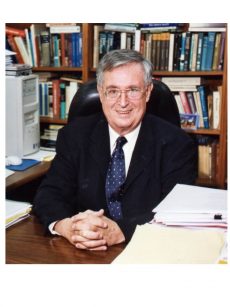
Professor Joshua Jortner and Professor Isidore Last at Tel Aviv University investigated the conditions favoring the attainment of high efficiencies for table-top conversion of laser energy to nuclear energy mediated by Coulomb explosion dynamics for molecular droplets. Their computational and theoretical analysis for fusion of deuterium with 7Li, 6Li, and deuterium atoms within the source-target design led to the highest efficiencies for table-top nuclear fusion achieved to date. Their research work is published in Chemical Physics Letters.
In the source-target reaction design, the source was composed of deuterons generated by Coulomb explosion of deuterium nano-droplets, impinging on a hollow target with 7Li, 6Li and deuterium atoms. Jortner and Last considered fusion reactions with the highest cross-sections in the required energy domain. The cylindrical target entailed 7Li or 6Li for deuterium reaction with lithium isotopes, and deuterium film or deuterated polyethylene polymer.
The authors demonstrated the improvement of 4-6 order of magnitude of the conversion efficiency of laser energy to nuclear energy for the proposed source-target design within a source of deuterium nano-droplets compared to low experimental values within the nanoplasma produced by Coulomb explosion of deuterium.
Their theoretical and computational analysis posted the achievement of high fusion efficiencies in the range of 109 J-1, as well as energy conversion coefficient in the range of 10-2-10-3, for the fusion reaction of deuterium with 7Li, 6Li and deuterium atoms within the source-target reaction design. These values constitute the highest table-top fusion reaction yields and efficiencies recorded to date. The source-target design with an exploding nano-droplets source initiated by a superintense laser and a hollow cylinder target, offered the most efficient device for the table-top conversion of laser energy to nuclear energy.
The results obtained in their study will motivate a future comparison between the theoretical-computational outcomes recorded by the authors and experimental reality.
Reference
Joshua Jortner and Isidore Last. Records for conversion of laser energy to nuclear energy in exploding nanostructures. Chemical Physics Letters, volume 683 (2017), pages 281–285.
Go To Chemical Physics Letters