Advances in Engineering Advances in Engineering features breaking research judged by Advances in Engineering advisory team to be of key importance in the Engineering field. Papers are selected from over 10,000 published each week from most peer reviewed journals.

Significance
Polyurethanes are so embedded in modern technology. They are used in the cushioning foams in buildings and vehicles to tough protective coatings in electronics and even adhesives used in biomedical devices, and indeed their reach is enormous. The appeal lies in their tunable chemistry: by adjusting the structure of the polymer network, one can obtain materials that are soft and elastic or rigid and highly resistant to heat. That flexibility has underpinned decades of commercial success. However, it is precisely this established chemistry—rooted in reactions between polyols and diisocyanates—that has become increasingly hard to justify. Diisocyanates, despite their usefulness, are toxic and moisture-sensitive, and their continued use raises occupational safety and environmental concerns that are no longer easy to ignore. To overcome these challenges, scientists have turned to polyhydroxyurethanes (PHUs). These are formed by reacting cyclic carbonates with amines, thereby sidestepping isocyanates altogether. PHUs carry a dense distribution of hydroxyl groups, which encourages hydrogen bonding and introduces the possibility of reversible exchange reactions. Such features make them natural candidates for materials that can be recycled or even self-heal after damage. The difficulty, however, lies in performance. Strongly crosslinked PHUs can resist deformation but often lose the mobility required for healing, whereas flexible versions repair themselves but lack the mechanical strength expected in demanding settings. Attempts to resolve this trade-off have produced only partial solutions. Plant-derived monomers, for example, fit the desire for renewable sourcing but yield disappointingly weak materials, rarely exceeding 10 MPa in tensile strength. Other systems exploit dynamic covalent bonds such as disulfides, which improve healing speed but introduce thermal instability. The community has therefore struggled to deliver a PHU that is simultaneously strong, healable, and recyclable. Without this balance, applications in adhesives or high-temperature coatings remain out of reach.
To this account, new research paper published in Polymer Chemistry and conducted by PhD candidate Jie Liu, Pengcheng Miao, Associate Professor Xuefei Leng, Yidi Li, Wei Wang, and Professor Yang Li from the Dalian University of Technology, the researchers developed a new class of bio-based polyhydroxyurethanes derived from daidzein, designed to overcome the long-standing trade-off between strength and self-healing. By integrating rigid aromatic rings from daidzein with flexible PDMS chains and controlled crosslinking, they created networks that reached tensile strengths up to 28.3 MPa while still healing rapidly at 150 °C. These materials also demonstrated excellent recyclability and high-temperature adhesive performance on wood and glass, highlighting both their practical utility and environmental advantages.
The authors began with the preparation of a key daidzein-derived monomer. The researchers first converted daidzein to an epoxide, and then, through reaction with carbon dioxide, obtained a bis-cyclic carbonate. This two-step process not only highlighted daidzein’s potential as a renewable feedstock but also generated reactive carbonate groups ideally suited for ring-opening with amines. Structural verification was thorough: NMR spectra and mass spectrometry confirmed the expected product, showing high purity and an impressive 85% yield. These results gave confidence that the monomer would serve as a reliable platform for subsequent network formation. With the monomer in hand, they proceeded to network construction. The carbonate was reacted with aminopropyl-terminated PDMS and a tri-amine crosslinker, the reaction staged carefully under controlled heating. By varying the amount of crosslinker, they produced a family of polymers spanning a range of densities. FTIR spectra provided a straightforward confirmation: the carbonate signal disappeared, while new broad bands corresponding to hydroxyl and urethane groups emerged—clear evidence of successful polyhydroxyurethane formation.
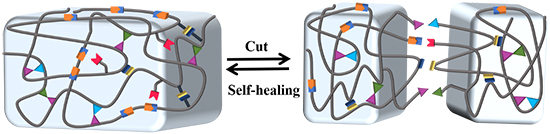
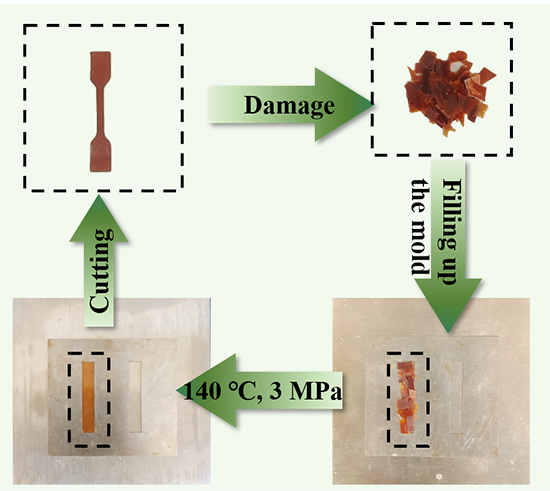
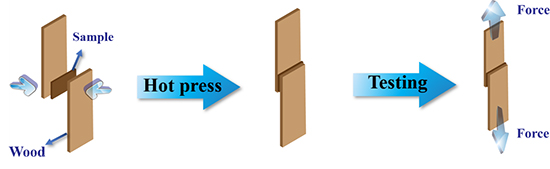
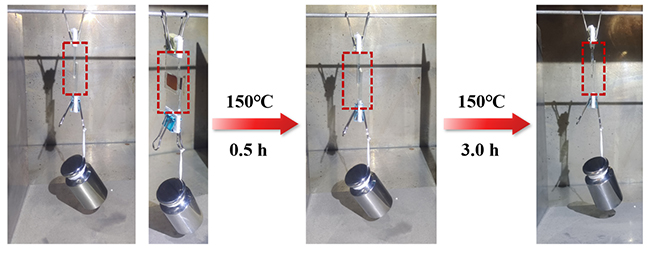
The researchers afterward performed dynamic mechanical analysis and showed that lightly crosslinked networks displayed two distinct transitions, one associated with the flexible PDMS segments and another arising from daidzein-rich domains. As crosslink density increased, these merged into a single, higher transition, reflecting the stiffening of the overall structure. Thermogravimetric analysis reinforced the materials’ promise: all samples remained stable above 290 °C, and their high char yields at 800 °C pointed to the combined stabilizing influence of aromatic rings and siloxane bonds. Tensile testing, however, was the most revealing. At the low end, a flexible formulation stretched to 250% but bore just 6.2 MPa, while the most heavily crosslinked sample supported 28.3 MPa, though with only 29% elongation. This represented a step change in performance, surpassing earlier bio-based PHUs, which rarely exceeded 10 MPa. The group next asked whether these strong networks still retained dynamic character. Stress-relaxation experiments provided the answer. All samples exhibited faster bond exchange at elevated temperature, and although highly crosslinked variants relaxed more slowly, they remained dynamic. Activation energies were lower than many reported PHU systems, consistent with the mobility introduced by PDMS segments. In practical healing tests, scratches disappeared within minutes at 150 °C, and re-tested samples regained up to 94% of their original strength. Replacing PDMS with a simple diamine sharply reduced recovery rates, underscoring the importance of siloxane flexibility. Finally, they demonstrated recyclability and adhesion. Hot-pressing of fragments restored nearly full properties even after several cycles, and chemical recycling in pressurized ethanol completely depolymerized the network within a day. Re-cured films matched the originals in strength. Adhesive tests were equally encouraging: lap shear values reached 6.4 MPa on wood and 3.4 MPa on glass, with bonds stable under water immersion and at 150 °C—evidence of real practical potential.
The significance of the research work of Dalian University of Technology scientists lies in its demonstration that sustainability and mechanical performance do not have to be opposing goals in polymer chemistry. The authors successfully by starting with daidzein, showed that it is possible to go beyond incremental gains. They achieved tensile strengths exceeding 28 MPa alongside catalyst-free self-healing, a combination that directly challenges the idea that renewable PHUs must remain mechanically weaker than their petroleum-based analogues. Indeed, the structural rationale is equally noteworthy. The incorporation of daidzein’s rigid aromatic framework together with flexible PDMS chains produced networks in which toughness and molecular mobility could coexist. This kind of design principle, where rigidity and flexibility are deliberately interwoven, has the potential to inform a much broader set of polymer systems. It suggests that rather than treating strength and adaptability as a trade-off, they can be tuned to work in concert.
We believe practical implications follow naturally and the daidzein-based PHUs show promise as high-performance adhesives in environments where heat resistance is critical. The fact that bonds to glass remained intact at 150 °C—well beyond the limits of many hot-melt systems—points to potential uses in electronics, aerospace, and automotive assembly. In such sectors, materials are routinely exposed to thermal cycling, and the ability to not only maintain adhesion but also heal under these same conditions could significantly reduce maintenance and replacement costs. Equally important is the sustainability dimension. The work demonstrates both physical reprocessability through hot pressing and complete chemical recycling via ethanolysis, with recovered materials retaining nearly their original performance. This addresses one of the major criticisms of thermosets: that once cured, they are destined for landfill or incineration. By showing that PHUs can be repeatedly reprocessed or broken down and rebuilt, the study positions these materials squarely within circular economy principles, where value is maintained rather than lost after first use. At a deeper scientific level, the study highlights how careful architectural design—balancing rigid and flexible segments—can yield networks that are simultaneously strong, dynamic, and recyclable. These findings are not restricted to PHUs and it may well inform other classes of covalent adaptable networks where toughness and reconfigurability are at odds. The daidzein–PDMS synergy thus offers a template for rethinking renewable polymer design: not as a compromise, but as a pathway to genuinely competitive materials.



Reference
Jie Liu, Pengcheng Miao, Xuefei Leng, Yidi Li, Wei Wang, Yang Li, High strength and rapid self-healing daidzein-based polyhydroxyurethanes for high temperature-resistant adhesives. Polymer Chemistry, Volume 16, Issue 7, 2024, Pages 891-902,