Advances in Engineering Advances in Engineering features breaking research judged by Advances in Engineering advisory team to be of key importance in the Engineering field. Papers are selected from over 10,000 published each week from most peer reviewed journals.

Significance
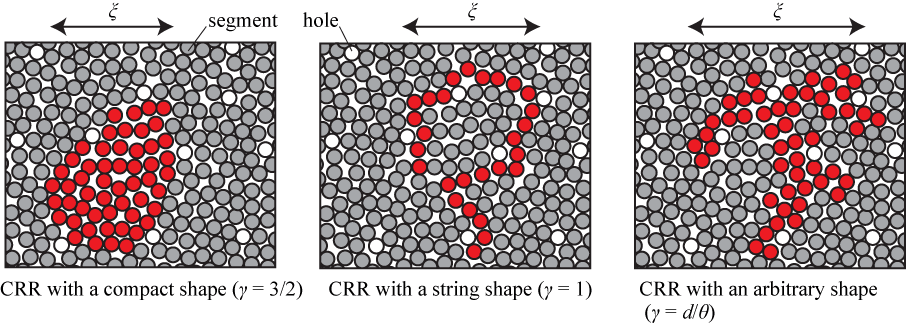
In-depth understanding of the dynamics of supercooled liquids has been a great challenge to most researchers. The basic illustration was first given by Adam-Gibbs in his model based on the configurational entropy of supercooled systems. Thereafter, researchers have made significant efforts to improve the idea and extend it to experimentally investigate other characteristics of supercooled liquids such as cooperativity parameters and its dependence on temperature. Generally, the non-Arrhenius behavior in supercooled liquids results in drastic viscosity rise on cooling and sudden vitrification at glass transition temperature. A fragility parameter (m) can be used to quantitatively evaluate the non-Arrhenius behavior. The cooperativity in dynamics is normally evaluated as the size or number of segments in the assumed cooperatively rearranging region (CRR). Within the region, the molecules can rearrange themselves without impacting on the surroundings.
Most researchers have realized that the glass transition mechanism can be well understood by investigating the dynamic behavior of different materials. To this end, the relationship between fragility and cooperativity at glass transition temperature (Tg) have been investigated to achieve a universal trend save for polymers. Even though polymers have complex interaction between the segments, it has been shown that chemical structures can be used as an alternative way to predict their Tg. Furthermore, polymers with similar chemical structures exhibit a positive correlation between the fragility and the temperature dependence in the number of segments in the CRR at Tg (NCRR(Tg)).
Recently, Japanese researchers at the University of Fukui, Akinori Sato and Professor Takashi Sasaki developed a surface controlled CRR model to investigate the slowdown of supercooled polymer liquids. They hoped to determine the shape of the CRR and predict the temperature dependence of the NCRR. The authors utilized the recently developed cooperatively string model to analyze the experimental results for PS derivatives and polymethacrylic acid esters (PMAEs). Furthermore, an assumption that CRR takes non-compact shape was used in the development of the model. Their work is published in the journal, European Polymer Journal.
For both the PMAEs and PS derivatives polymer systems, the authors confirmed the existence of a positive correlation between the fragility and the cooperativity parameters. . The obtained positive correlation between NCRR(Tg) and m was as a result of considering m as a measure of the energy barrier during molecule rearrangement and evaluating the exponent based on the cooperative string to reproduce the expected fragility. This further showed the significant contribution of the temperature dependence of NCRR to fragility.
Akinori Sato-Takashi Sasaki study has effectively presented a well-formulated understanding of the cooperativity of dynamics and its temperature dependence in supercooled polymeric materials. The surface controlled CRR model (SCC model) was proposed, in which the size of CRR is determined by its surface area. The analysis based on the SCC model showed that CRR assumes a non-compact shape with the relatively higher surface-to-volume ratio in most of the polymers. Additionally, based on the SCC analysis, the authors observed very weak trends in temperature dependencies of the configurational entropy of the smallest CRR for polymers as compared to non-polymeric materials.

Reference
Sato, A., & Sasaki, T. (2018). Cooperativity of dynamics in supercooled polymeric materials and its temperature dependence predicted from a surface-controlled model. European Polymer Journal, 99, 485-494.
Go To European Polymer Journal