Advances in Engineering Advances in Engineering features breaking research judged by Advances in Engineering advisory team to be of key importance in the Engineering field. Papers are selected from over 10,000 published each week from most peer reviewed journals.

Significance Statement
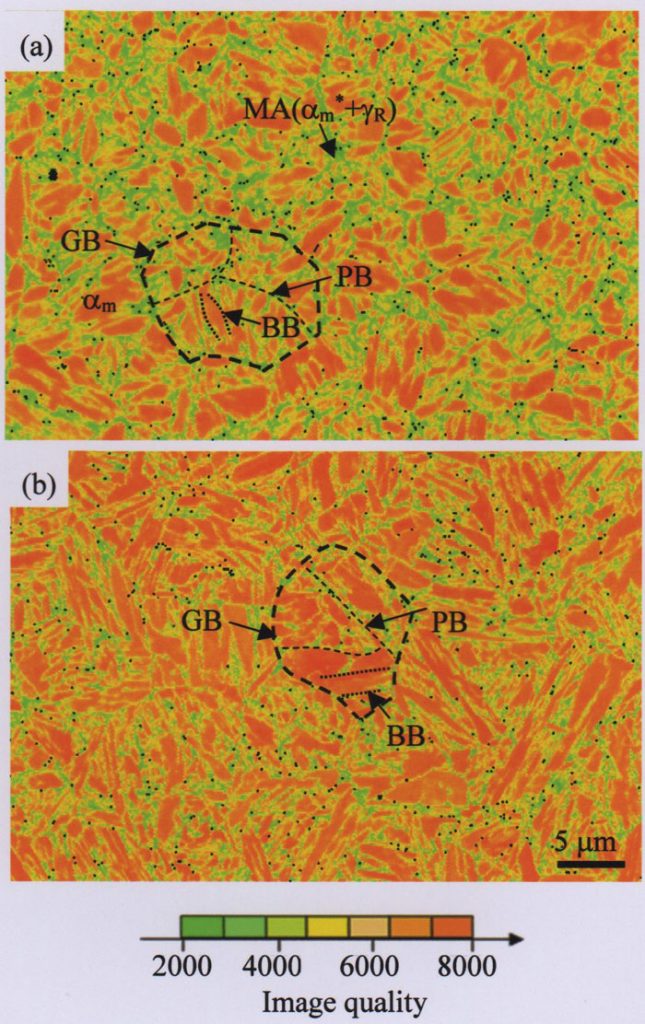
In order to reduce energy consumption, downsizing of transmission precision gears and improvement for high torque capacity is a necessity. To this note, two kinds of transformation-induced plasticity (TRIP)-aided steels with varying lath structure matrices, namely: TRIP-aided martensitic (TM) and TRIP-aided bainitic ferrite (TBF) steels, have been developed as next generation structural steels. Their adaptability is preferred due to their high toughness and notch fatigue strength which can be attained through fine particle peening as opposed to conventional shot peening. Fine particle peening has overtime been seen to enhance the fatigue strength of as-heat-treated TBF steels, however, the effects of fine particle peening on the fatigue strength of the higher tensile strength TM steels have not been reported.
Researchers led by professor Koh-ichi Sugimoto at Shinshu University in Japan proposed a study on the effects of fine particle peening process on the fatigue limits and notch sensitivity of heated-treated C–Si–Mn–Cr–Nb TM steel for application in precision gears. The team also sought to investigate the crack initiation and propagation behavior. They hoped to correlate the fatigue strength with the strain-induced martensite transformation of metastable retained austenite. Their research work is now published in the International Journal of Fatigue.
The research team begun their experimental procedure by vacuum melting, forging and hot rolling steel slabs of specified properties into 13mm diameter bars. They then machined the bars and obtained smooth and notched specimens for tensile and fatigue tests. The team then subjected the specimens to heat-treatment in salt baths to yield the martensitic steel. Fine particle peening process was then undertaken on an electro-polished surface of the specimens under specified conditions. The researchers then inspected the surface roughness and Vickers hardness by laser microscopy. Eventually, they conducted fatigue tests using the rotating bending fatigue testing machine.
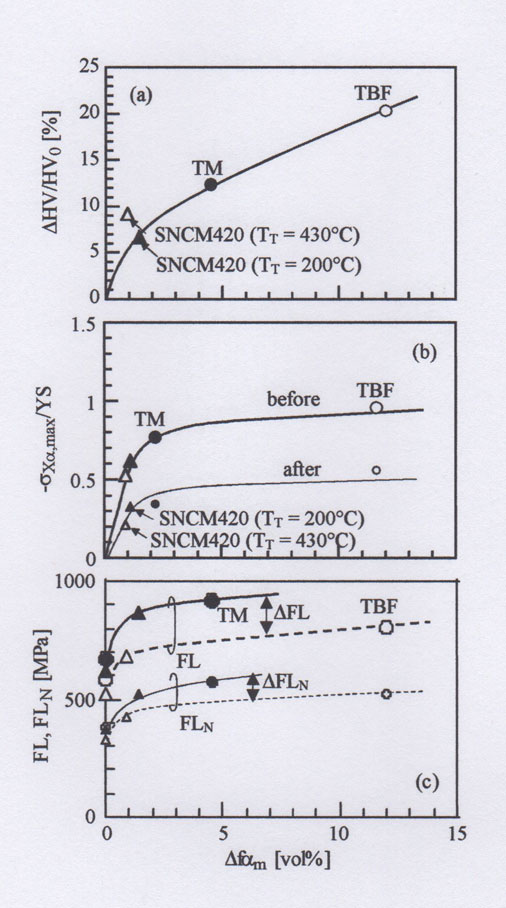
The authors observed that fine particle peening process enhanced the fatigue limits and reduced the notch sensitivity in the TM steel, compared with the commercial martensitic steel. The increased fatigue limits are principally associated with higher hardness and compressive residual stress on and just below the surface, as well as low surface roughness. Additionally, they also noted that fine particle peening process increased ∆Kth in the first stage and also decreased dc/dN in the second stage in the TM steel. More so, they noted that the crack propagation behavior was mainly suppressed by the high hardness and high compressive residual stress. Also, (1) the strain induced martensite transformation of retained austenite and (2) high internal stress resulting from a variation in flow stress between the soft martensite matrix and the finely dispersed hard MA-like phase that developed during fatigue deformation contributed to the same.

Reference
Koh-ichi Sugimoto, Yuta Mizuno, Masahiro Natori, Tomohiko Hojo. Effects of fine particle peening on fatigue strength of a TRIP-aided martensitic steel. International Journal of Fatigue, Volume 100 (2017) page 206–214
Go To International Journal of Fatigue