Advances in Engineering Advances in Engineering features breaking research judged by Advances in Engineering advisory team to be of key importance in the Engineering field. Papers are selected from over 10,000 published each week from most peer reviewed journals.

Significance
Engineered covalently cross-linked nanofibrillar hydrogels are synthesized from nanoscale fibrillar structures that are covalently bonded to form a three-dimensional network, imbuing the material with unique physical and chemical properties that are highly desirable for a range of applications. The nanofibrillar structures in these hydrogels are typically composed of biopolymers or synthetic polymers that mimic the extracellular matrix (ECM) of natural tissues. Common materials include peptides, proteins such as collagen or fibrin, and synthetic polymers like poly(ethylene glycol) (PEG). The covalent cross-linking between these nanofibers is achieved through various chemical reactions, such as Michael addition, click chemistry, or photo-cross-linking, providing stability and integrity to the hydrogel network.
The engineered covalently cross-linked nature of these hydrogels results in several advantageous properties covalent bonds impart significant mechanical strength and elasticity, making these hydrogels robust under physiological conditions. By using biopolymers or biocompatible synthetic polymers, these hydrogels are made to be non-toxic and well-tolerated by living tissues. Moreover, the mechanical and degradation properties can be finely tuned by adjusting the degree of cross-linking, the choice of polymers, and the incorporation of bioactive signals. Additionally, the nanofibrillar architecture allows for controlled porosity, which is crucial for cell infiltration, nutrient diffusion, and waste removal in tissue engineering applications. These hydrogels provide a scaffold that mimics the natural ECM, supporting cell adhesion, proliferation, and differentiation for tissue regeneration. Their porous structure and tunable degradation rates make them excellent vehicles for the controlled release of therapeutic agents. The biocompatible and mechanically robust nature of these hydrogels makes them suitable for advanced wound dressings, promoting healing and tissue regeneration. Their viscoelastic properties enable their use in 3D bioprinting technologies, allowing for the fabrication of complex tissue constructs. While engineered covalently cross-linked nanofibrillar hydrogels hold immense potential, there are challenges to be addressed, such as ensuring uniformity in nanofiber distribution, controlling degradation rates in vivo, and achieving large-scale production. Future research is directed towards enhancing the functionalization of these hydrogels with bioactive molecules to improve their integration with host tissues and expanding their application in regenerative medicine and beyond.
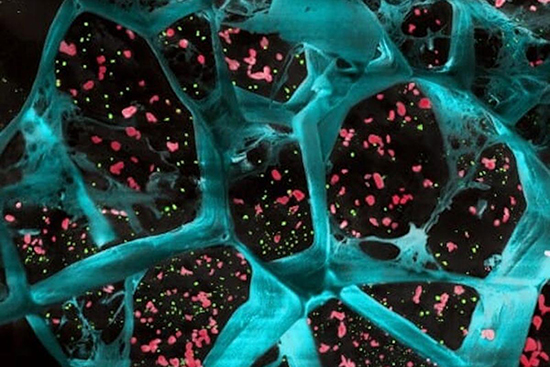
A new study published in Proceedings of the National Academy of Sciences by Elisabeth Prince, Sofia Morozova, Zhengkun Chen, Vahid Adibnia, Ilya Yakavets, Sergey Panyukov, and Professor Eugenia Kumacheva from the University of Toronto together with Professor Michael Rubinstein from Duke University investigated the mechanical behavior of engineered covalently cross-linked nanofibrillar hydrogels derived from cellulose nanocrystals and gelatin. This research is pivotal in understanding the nonlinear mechanical properties of fibrous networks, particularly those formed by biological polymers such as collagen or fibrin, which are integral to various biological systems including the cellular cytoskeleton and the ECM
Fibrous networks in biological systems, such as those forming the scaffold of blood clots or the structure of the ECM, exhibit distinctive nonlinear mechanical behavior. They characteristically stiffen in response to weak shear and elongational strains but soften under compressional strain. This behavior contrasts with the response of networks formed by flexible-strand molecules, highlighting the mechanical asymmetry inherent in the filaments of biological polymers where the stretching modulus vastly exceeds the bending modulus. The study of these nonlinear properties has traditionally been confined to biological hydrogels, limiting the control over network architecture and the detailed understanding of the mechanical properties inherent to these fibrous networks.
The engineered hydrogel developed in this study, synthesized from cellulose nanocrystals and gelatin, serves as a model to replicate and study the nonlinear mechanical behavior of biological fibrillar networks. The hydrogel exhibits both shear-stiffening and compression-induced softening behaviors, consistent with the affine model predictions for networks formed by rigid filaments. This result is significant as it suggests that such nonlinear mechanical properties are a general feature of networks formed by rigid filaments, regardless of their biological or synthetic origins.
The ability to engineer a hydrogel with controlled network architecture and known composition allows for a nuanced exploration of the factors governing the nonlinear biomechanics of fibrous networks. This approach provides a versatile platform for future studies aimed at understanding the biological implications of nonlinear mechanical properties, which are crucial for various biological processes including cell migration, intracellular communication, and the mechanical environment sensed by cells within the ECM.
Furthermore, the study introduces a theoretical model to predict and explain the nonlinear mechanical behavior of fibrous hydrogels. The affine model, accounting for the deformation of the network formed by rigid filaments, offers a foundational framework for understanding the elasticity arising from the bending of constituent filaments. This model is crucial for elucidating the relationship between the structural characteristics of the filaments (such as their diameter, length between junctions, and bending and stretching moduli) and the overall mechanical behavior of the gel.
The experimental results, corroborated by the theoretical model, underscore the significance of the mechanical asymmetry of the constituent filaments in determining the nonlinear mechanical properties of fibrous networks. The study demonstrates that the engineered hydrogel mimics the strain-stiffening behavior and mechanical asymmetry observed in biological fibrillar networks, thereby serving as a biomimetic model for further exploration of the role of nonlinear mechanical properties in biological systems. In conclusion, this study represents a significant advancement in our understanding of the nonlinear mechanical properties of fibrous networks, both biological and synthetic. By developing an engineered hydrogel that recapitulates the key mechanical behaviors of biological fibrillar networks, the researchers have provided a valuable tool for future mechanobiological studies. This work not only enhances our understanding of the structural and mechanical underpinnings of such networks but also opens new avenues for exploring the impact of mechanical properties on biological processes and for developing materials with tailored mechanical behaviors for biomedical applications.


Reference
Prince E, Morozova S, Chen Z, Adibnia V, Yakavets I, Panyukov S, Rubinstein M, Kumacheva E. Nanocolloidal hydrogel mimics the structure and nonlinear mechanical properties of biological fibrous networks. Proc Natl Acad Sci U S A. 2023 Dec 19;120(51):e2220755120. doi: 10.1073/pnas.2220755120.