 Advances in Engineering Advances in Engineering features breaking research judged by Advances in Engineering advisory team to be of key importance in the Engineering field. Papers are selected from over 10,000 published each week from most peer reviewed journals.

Significance
Therapeutic peptides derived from natural marine products exhibit great potential for the treatment of numerous diseases. Thus, it is of best interest to extensively research and understand their molecular properties and bioactivity. From a molecular perspective, researchers have recently established that their bioactivity is related to their chemical reactivity in one way or the other. This has presented more opportunities for researchers to predict molecules’ interactions and understand the chemical reactions between them.
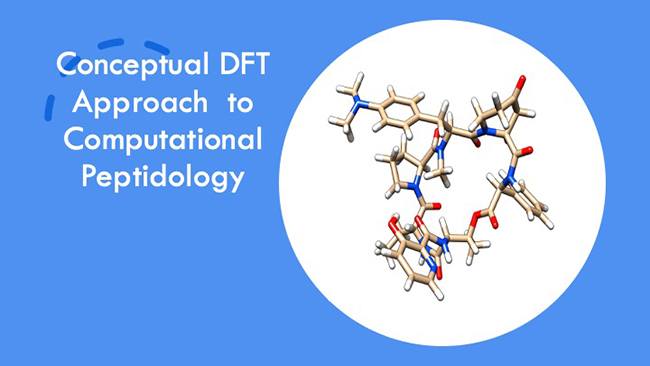
In a recent paper published in the research journal Chemical Physics Letters, Professor Norma Flores-Holguín and Professor Daniel Glossman-Mitnik from Centro de Investigación en Materiales Avanzados in Mexico together with Professor Juan Frau from University of the Balearic Islands in Spain particularly investigated the chemical reactivity of Pristinamycin, a family of antimicrobial peptides, using Conceptual Density Functional Theory (DFT). These concepts in conjunction with the Parr function were used to determine the global and local properties of the peptide necessary for prediction of the active reaction sites.
The reactivity and bioactivity of several compounds have been related based on the DFT concepts. Chemical reactivity of four-member groups of Pristinamycin family of antimicrobial peptides: Pristinamycin IA, Pristinamycin IB, Pristinamycin IIA, and Pristinamycin IIB was evaluated. Based on the chemical hardness values obtained in their previous results, the authors accurately predicted the pKa values of all the individual therapeutic peptides. In addition, the simple methodology successfully distinguished the pKa value of every individual peptide regardless of them having very small differences. It is worth noting that the information from their previous results was useful not only in understanding the chemical reactivity of the peptide but also their solubility in water, and equally important property in their practical applications.
Active reaction sites for both electrophilic and nucleophilic regions were established due to better behavior of the Parr functions. Based on the determined electrophilicity index ω and nucleophilicity index N, it was possible to classify the studied Pristinamycin peptides in different scales as proposed in the literature. Even though all the 4 members were observed to exhibit strong electrophilic properties, only Pristinamycin IIA and IIB exhibited moderate nucelophilic behavior while Pristinamycin IA and IB were regarded as strong nucelophiles.
In summary, a simple methodology for evaluation of the chemical reactivity properties of Pristinamycin peptides based on Conceptual DFT techniques is presented. Their study highlights new insight in understanding the chemical reactivity properties of Pristinamycin molecules that can be used in further exploration of peptides reactivity as well as understanding the toxicity mechanisms associated with them. Furthermore, the research team proved that the presented approach can be used to accurately predict the pKa values of different peptides which can provide useful information for the design and development of new pharmaceutical drugs.



Reference
Flores-Holguín, N., Frau, J., & Glossman-Mitnik, D. (2020). A Fast and Simple Evaluation of the Chemical Reactivity Properties of the Pristinamycin Family of Antimicrobial Peptides. Chemical Physics Letters, 739, 137021.