Advances in Engineering Advances in Engineering features breaking research judged by Advances in Engineering advisory team to be of key importance in the Engineering field. Papers are selected from over 10,000 published each week from most peer reviewed journals.

Significance Statement:
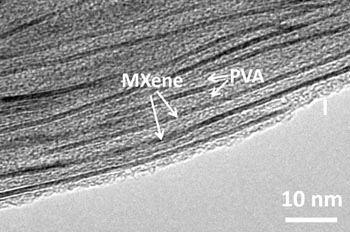
Researchers at Drexel University and their collaborators in Dalian University have chemically engineered a new, electrically conductive nanomaterial that is flexible enough to fold, but strong enough to support many times its own weight. They believe it can be used to improve electrical energy storage, water filtration and radiofrequency shielding in technology from portable electronics to coaxial cables. Two-dimensional transition metal carbides (MXenes) offer a quite unique combination of excellent mechanical properties, hydrophilic surfaces, and metallic conductivity. In this first report (to our knowledge) on MXene composites of any kind, we show that adding polymer binders/spacers between atomically thin MXenes layers or reinforcing polymers with MXenes results in composite films that have excellent flexibility, good tensile and compressive strengths, and electrical conductivity that can be adjusted over a wide range. The volumetric capacitances of freestanding Ti3C2Tx MXene and its composite films exceed all previously published results. Owing to their mechanical strength and impressive capacitive performance, these films have the potential to be used for structural energy storage devices, electrochemical actuators, radiofrequency shielding, among other applications.
Figure: Credit of Drexel University.
Journal Reference
PNAS November 25, 2014 vol. 111 no. 47 16676-16681.
Zheng Ling, Chang E. Ren, Meng-Qiang Zhao, Jian Yang, James M. Giammarco, Jieshan Qiu, Michel W. Barsoum, and Yury Gogotsi.
aDepartment of Materials Science and Engineering, and
bA. J. Drexel Nanomaterials Institute, Drexel University, Philadelphia, PA 19104;
cCarbon Research Laboratory, Liaoning Key Laboratory for Energy Materials and Chemical Engineering, State Key Laboratory of Fine Chemicals, Dalian University of Technology, Dalian 116024, China.
ABSTRACT
MXenes, a new family of 2D materials, combine hydrophilic surfaces with metallic conductivity. Delamination of MXene produces single-layer nanosheets with thickness of about a nanometer and lateral size of the order of micrometers. The high aspect ratio of delaminated MXene renders it promising nanofiller in multifunctional polymer nanocomposites. Herein, Ti3C2Tx MXene was mixed with either a charged polydiallyldimethylammonium chloride (PDDA) or an electrically neutral polyvinyl alcohol (PVA) to produce Ti3C2Tx/polymer composites. The as-fabricated composites are flexible and have electrical conductivities as high as 2.2 × 10⁴ S/m in the case of the Ti3C2Tx/PVA composite film and 2.4 × 10⁵ S/m for pure Ti3C2Tx films. The tensile strength of the Ti3C2Tx/PVA composites was significantly enhanced compared with pure Ti3C2Txor PVA films. The intercalation and confinement of the polymer between the MXene flakes not only increased flexibility but also enhanced cationic intercalation, offering an impressive volumetric capacitance of ∼530 F/cm3 for MXene/PVA-KOH composite film at 2 mV/s. To our knowledge, this study is a first, but crucial, step in exploring the potential of using MXenes in polymer-based multifunctional nanocomposites for a host of applications, such as structural components, energy storage devices, wearable electronics, electrochemical actuators, and radiofrequency shielding, to name a few.