 Advances in Engineering Advances in Engineering features breaking research judged by Advances in Engineering advisory team to be of key importance in the Engineering field. Papers are selected from over 10,000 published each week from most peer reviewed journals.

Significance
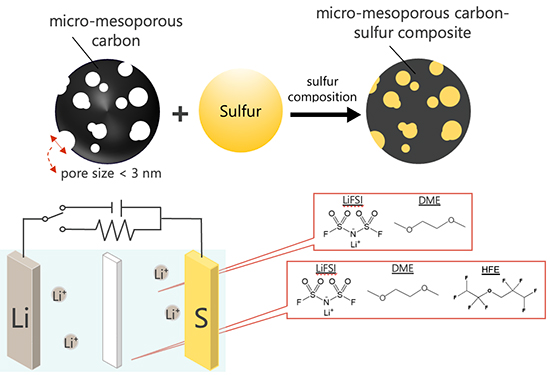
Lithium-sulfur (Li-S) batteries are one of the most exciting advancements in battery technology, with the potential to offer higher energy density than lithium-ion batteries because of the high specific capacity of sulfur as a cathode material. Additionally, they have the advantage of lower cost than their lithium-ion counterparts because sulfur is abundant, cheap, and non-toxic, making the raw materials for Li-S batteries significantly less expensive than those needed for lithium-ion batteries. Moreover, it is more environmentally friendly battery production and disposal processes. The Li-S technology is particularly attractive for applications that demand long-lasting energy sources, such as electric vehicles and portable electronics. Despite their potential, Li-S batteries face significant challenges that need to be addressed before they can achieve widespread commercialization. One of the main challenges of Li-S batteries is their limited cycle life. The batteries tend to degrade quickly over time due to the soluble nature of the lithium polysulfide intermediates formed during discharge. These intermediates can dissolve into the electrolyte, leading to the loss of active material from the cathode and diminishing the battery’s capacity. Moreover, Li-S batteries are prone to self-discharge at a faster rate than lithium-ion batteries. This issue is largely attributed to the shuttle effect, where dissolved lithium polysulfides shuttle between the cathode and anode, causing internal reactions that degrade the battery’s performance. Furthermore, sulfur has low electrical conductivity, which limits the battery’s efficiency. This necessitates the use of conductive additives and complex cathode designs to improve performance. Additionally, during operation, sulfur cathodes undergo significant volume expansion, which can damage the battery’s structure and further reduce its lifespan. Previous strategies have included confining sulfur within mesoporous carbon to kinetically suppress Li2Sx dissolution, but this approach has limitations due to the nonpolar nature of carbon surfaces which cannot completely prevent Li2Sx solubility. To overcome these challenges, a new study published in ACS Applied Materials & Interfaces and led by Professor Masashi Ishikawa from the Kansai University and conducted by Dr. Luna Yoshida, Yukiko Matsui, Minako Deguchi, Takashi Hakari, and Masayoshi Watanabe, the authors conducted a series of experiments aimed at overcoming the limitations associated with high-concentration lithium bis(fluorosulfonyl)imide/1,2-dimethoxyethane (LiFSI/DME) electrolytes in Li-S batteries. These experiments were carefully designed to address the specific challenge of LiFSI reacting irreversibly with lithium polysulfide (Li2Sx) during the charge-discharge cycles. The team’s investigative approach focused on two main areas: the optimization of carbon material pore size for the sulfur composite cathode and the formulation of the electrolyte composition. Initially, the researchers prepared three types of porous carbon-sulfur composites, each with varying pore size distributions: microporous, micro-mesoporous, and mesoporous. These composites were synthesized using a method previously described in literature, and ensured uniform distribution of sulfur within the carbon framework. This preparation step was important for assessing the impact of pore size on the battery’s performance. The authors demonstrated that the carbon material’s pore size significantly influences the electrochemical performance of Li-S batteries. Specifically, carbon with mesopores of 2-3 nm diameter was found to be optimal for sulfur encapsulation, effectively suppressing lithium polysulfide dissolution, a major challenge in Li-S battery efficiency and longevity.
The authors performed extensive material characterization to evaluate the physical and chemical properties of the porous carbons and their sulfur composites. They used advanced analytical techniques including scanning electron microscopy to evaluate the morphology of porous carbons, N2 Adsorption/Desorption Isotherms to analyse pore structures and distributions, X-ray Photoelectron Spectroscopy to determine surface compositions, thermal gravimetric analysis and X-ray Diffraction to measrure the sulfur content and assessing the crystallinity within the composites. Moreover, the team evaluated electrochemical performance of Li-S batteries using the prepared carbon-sulfur cathodes through galvanostatic charge-discharge tests and measured the specific capacities, cycle stability, and coulombic efficiency across various cycles. They used rate capability tests to determine the battery performance under different current densities and electrolyte optimization experiments where the team prepared and tested different electrolyte formulations, including variations in LiFSI/DME concentration and the addition of 1,1,2,2-tetrafluoroethyl 2,2,3,3-tetrafluoropropylether (HFE). The electrolyte’s composition was critical in enhancing the battery’s performance. The researchers showed that a high-concentration LiFSI in a DME/HFE mixture (1:1 by volume) significantly improved the battery’s rate capability and capacity retention. This was attributed to the suppression of lithium polysulfide dissolution, reduced electrolyte viscosity, and the formation of a thin solid electrolyte interface (SEI) on the lithium-metal anode due to HFE dilution.
The new study provided a comprehensive analysis of the physical and chemical interactions affecting Li-S battery performance and offered a novel solution to a longstanding problem, potentially paving the way for the practical application of Li-S batteries in high-energy-density storage systems. The systematic evaluation of carbon materials and electrolyte conditions contributes to the understanding of their effects on both the cathode and anode performance. Furthermore, the research highlights the importance of integrating materials science and electrochemistry to develop more efficient and durable battery technologies. In conclusion, the work of Professor Masashi Ishikawa and colleagues revealed that optimizing both the carbon pore size within the sulfur cathode and the electrolyte composition markedly improved the performance of Li-S batteries. These findings pave the way for the development of Li-S batteries with higher energy densities, improved cycle stability, and increased efficiency, addressing one of the significant hurdles in the commercial application of Li-S battery technology. The authors addressed successfully the key challenges associated with LiFSI/DME electrolytes and optimized the sulfur cathode structure which ultimately will advance high-energy-density battery technologies.

Reference
Yoshida L, Matsui Y, Deguchi M, Hakari T, Watanabe M, Ishikawa M. Improvement of Lithium-Sulfur Battery Performance by Porous Carbon Selection and LiFSI/DME Electrolyte Optimization. ACS Appl Mater Interfaces. 2023;15(31):37467-37476. doi: 10.1021/acsami.3c06624.
