Advances in Engineering Advances in Engineering features breaking research judged by Advances in Engineering advisory team to be of key importance in the Engineering field. Papers are selected from over 10,000 published each week from most peer reviewed journals.

Significance Statement
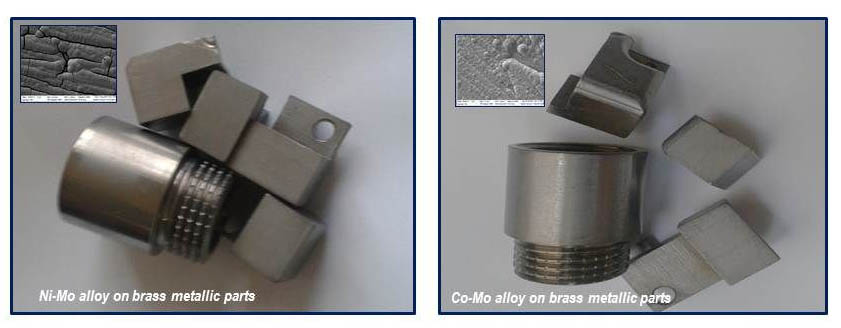
Molybdenum alloys with iron group elements represent valuable engineering materials thanks to their corrosion, wear and thermal resistances. They are considered suitable catalytic electrodes for hydrogen evolution reaction and ecological alternatives to chromium coatings in the automotive or decorative plating industries. Researchers from University Politehnica of Bucharest, Center of Surface Science and Nanotechnology in Romania investigated the feasibility of co-electrodeposition of Ni-Mo and Co-Mo alloy coatings involving choline chloride based ionic liquids under the frame of NANOCOATIL project, under the frame of M-ERA NET Program. The research work is published in the journal Electrochimica Acta.
There are four ways of preparing Ni-Mo alloys, such as powder metallurgy and mechanical alloying, spark plasma sintering, laser cladding and electrodeposition. The electrodeposition of Ni-Mo alloys in aqueous solutions involves the use of several types of electrolytes based on citrate, citrate/ammonia or citrate/ pyrophosphate baths. The addition of ammonia led to increase in current efficiency with a corresponding decrease in Mo content within the alloy. Citrate concentration and pH values significantly influence the alloy coating appearance. The electrodeposition of metals and alloys from aqueous solutions has some limitation like, a narrow electrochemical window, hydrogen evolution, complexity and sometimes toxicity of the baths formulations as well as the needs for additives.
To overcome these limitations, the use of ionic liquids and deep eutectic solvents was introduced as green alternatives due to their favorable characteristics which include low vapor pressure, wide liquid-phase range and greater electrochemical and thermal stability. Deep eutectic solvents are composed of eutectic mixtures of quaternary ammonium salts with either a hydrogen bond donor such as urea, ethylene glycol, glycerol, malonic acid, oxalic acid or metal salt. These binary mixtures have melting points lower than room temperature, are cheaper and easily accessible which make them more attractive.
Researchers demonstrated that Ni-Mo and Co-Mo alloy films can be electrodeposited from novel choline chloride – urea – citric acid ternary mixtures by adding nickel chloride, cobalt chloride and ammonium heptamolybdate as metal precursors. Ni-Mo alloys containing 2-35 wt. % Mo and Co-Mo alloys with 6-63 wt. % Mo have been obtained, controlled by the metallic ions mass ratio and by the value of the applied current density. The alloys morphology is significantly influenced by the operating parameters. The use of choline chloride based ionic liquids facilitated the electrodeposition of nanostructured alloys, with crystallites average sizes in the range of 3-7 nm, as XRD investigations revealed.
The preliminary assessment of corrosion behavior showed that the electrodeposited Ni-Mo and Co-Mo alloys involving choline chloride based ionic liquids as electrolytes are more corrosion resistant as compared to those electrodeposited in aqueous electrolytes. Corrosion current densities in the range of few up to tens of microampers per square centimeter were determined after long-term immersion in 0.5M NaCl aggresive environment.
According to the authors, the formation of passive films on the coating surfaces containing mixed oxides of the metals involved, able to contribute to the corrosion protection improvement, could be taken into consideration. This behavior may be associated with the morphology of coatings during the deposition from ionic liquid system, i.e. a more compact deposit, with a nanocrystalline structure according to XRD patterns. This morphology might prevent the aggressive ion penetration in an enhanced manner.
The authors hope that their findings will contribute to the development of knowledge related to electrodeposition of Mo alloys involving choline chloride based ionic liquid electrolytes considering the complex electrochemical behavior of molybdenum compounds.
Journal Reference
Stefania Costovici1, Adrian-Cristian Manea2, Teodor Visan2, Liana Anicai1, Investigation of Ni-Mo and Co-Mo alloys electrodeposition involving choline chloride based ionic liquids, Electrochimica Acta 207 (2016) 97–111.
[expand title=”Show Affiliations”]- Center of Surface Science and Nanotechnology, University Politehnica of Bucharest, Splaiul Independentei 313, Bucharest, 060042, Romania.
- Department of Inorganic Chemistry, Physical Chemistry and Electrochemistry, Faculty of Applied Chemistry and Materials Science, University Politehnica of Bucharest, 132 Calea Grivitei, Romania, 010737, Romania.
Go To Electrochimica Acta