 Advances in Engineering Advances in Engineering features breaking research judged by Advances in Engineering advisory team to be of key importance in the Engineering field. Papers are selected from over 10,000 published each week from most peer reviewed journals.

Significance
Polymeric materials such as thermoplastic elastomers have a wide range of application in several fields such as medicine, biotechnology, communications and automotive due to their peculiar properties. In response to the high demand of more miniaturized and complex-shaped components, various manufacturing technologies have been developed to address the challenge.
Conventional injection molding has been used to process various polymeric materials such as rigid thermoplastics. However, to keep pace with the advancement in technology which has created a significant need for micro-components, micro-injection molding technology has been designed as an improvement of the conventional one. It is a cost-effective method capable of manufacturing the required micro-components with extremely high accuracy and precision.
Recently, a group of researchers from the Technical University of Denmark, Department of Mechanical Engineering: Ph.D. student Federico Baruffi, Researcher Matteo Calaon and Professor Guido Tosello studied the application of micro-injection technology in the production of thermoplastic elastomer micro rings. They also analyzed the effects of the various parameters of the process on the accuracy and precision of the manufactured micro rings. Their research work was published in the journal Precision Engineering.
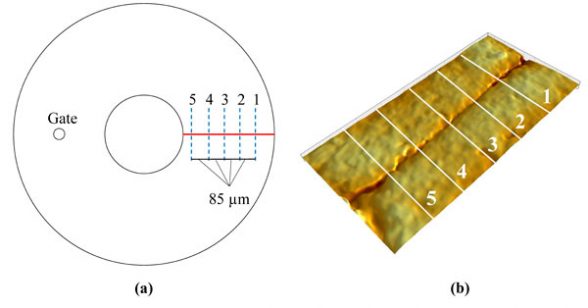
To investigate the accuracy and precision required of the process, the authors used a focus variation microscope to measure different dimensions of the parts such as the internal and external diameters of the micro rings. On the other hand, the mold cavities were dimensionally assessed using a 3D optical coordinate measuring machine.
The research team observed that the process parameter indeed had effects on the accuracy of both the internal and external diameters of the thermoplastic elastomer rings. For instance, the variations induced by the process on outer diameters were inversely proportional to those of the inner diameter. The effects of the holding pressure and the temperature of the mold were intense on the outer diameter while the inner diameter was mainly affected by mold and melt temperatures.
This research is the first to investigate micro-injection molding applied to thermoplastic elastomers. The choice of thermoplastic elastomers (TPE) materials was because of their ability to produce soft and flexible micro-polymer parts. The variations of the process parameters investigated in this study produced an antagonistic result to the measured internal and external diameters of the micro rings. This rendered whole process hard to optimize with respect to the achievement of the designed geometrical specifications.
According to the authors, low values of the clamping force were necessary to minimize the size of defects affecting the micro ring quality such as weld lines and air traps. Moreover, by using the average mold diameter as reference, it was shown that the constrained shrinkage on the inner surface of the ring resulted to a high decrease of the inner diameter as compared to the outer diameter. This was caused by the presence of the central pin that did not allow the inner surface to shrink freely as did the outer one.



Reference
Baruffi, F., Calaon, M., & Tosello, G. (2018). Effects of micro-injection moulding process parameters on accuracy and precision of thermoplastic elastomer micro rings. Precision Engineering, 51, 353-361.
Go To Precision Engineering