Advances in Engineering Advances in Engineering features breaking research judged by Advances in Engineering advisory team to be of key importance in the Engineering field. Papers are selected from over 10,000 published each week from most peer reviewed journals.

Significance
At present, scholars around the globe are working round the clock focused on advancing the existing transport systems. Globally, transport systems are driven by both economic and legislative constraints from which immense pressure is constantly mounting in demand for increased fuel efficiency and reduced carbon dioxide emission. This has triggered a scientific quest whose sole purpose is to satiate these demands. As a result, both researchers and manufactures have been coerced into considering waste heat recovery by means of Organic Rankine Cycle in passenger cars and heavy-duty trucks. Unfortunately, it has proven quite difficult to identify an ideal working fluid which would be flexible in terms of application and condensing temperature, and which can be applicable in real systems. In current literature, the number of working fluids considered is relatively small as typical thermodynamic databases are limited. To this end, there is need for a large-scale screening with the sole purpose of identifying the most appropriate working fluid.
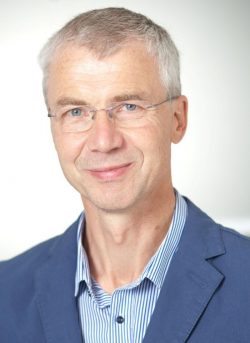
A team of researchers led by Markus Preißinger from the Center of Energy Technology, University of Bayreuth in Germany, who has now a professorship at Vorarlberg University of Applied Sciences in Austria, proposed a study whose main goal was to give a contribution to Organic Rankine Cycle application in real mobile systems by identifying more elaborate working fluids, which would be able to fill the gap so as to realize profitability of such systems. To realize this, they hoped to increase the number of screened working fluids and their chemical classes tremendously compared to group contribution methods or the available thermodynamic databases. Their work is currently published in the research journal, Applied Energy.
The research team initiated the experimental setup by programming the simulation tool to be used in the Matlab© software simulation environment. They then proceeded to acquire thermodynamic properties from the well known PubChem database in combination with COSMOtherm software. The team then put up two Organic Rankine Cycle configurations. The researchers, eventually, investigated three different condensation temperatures with regard to the boundary conditions.
The authors observed that with the compound acetaldehyde, it was possible to identify a thermodynamically optimal working fluid which suited the different Organic Rankine Cycle configurations and condenser concepts. However, they also stated that acetaldehyde couldn’t be applied in real systems due to security aspects. Moreover, the researchers noted that a diverse set of promising candidates for real systems with ethanol being the most versatile working fluid was identified. Organic Rankine Cycle configuration and condensing temperature were also identified to have the highest influence on the overall ranking.
The Markus Preißinger and colleagues study has successfully presented the thorough screening of about 72 million working fluids. This is the first time that such a number of substances has been evaluated based on a multi-criteria approach dependent on industrial boundary conditions and evaluation methods. The results have revealed that some theoretically ideal working fluids are not able to stand the high requirements in real systems. To this note, University of Bayreuth researchers’ work gives a contribution to future Organic Rankine Cycle research as it has identified possible new working fluids and presented trade-offs which should be taken into account for applied fluid selection keeping real systems in mind.
“If you want to screen 72 million working fluids for real world ORC applications, you need strong partners from both academia and industry. Therefore, it was our consortium with ORC experts from the University of Bayreuth, expertise in computational chemistry from COSMOlogic and a strong industrial advisory board, which made this project possible.” Said lead author, Markus Preißinger.


Reference
Markus Preißinger, Johannes A.H. Schwöbel, Andreas Klamt, Dieter Brüggemann. Multi-criteria evaluation of several million working fluids for waste heat recovery by means of Organic Rankine Cycle in passenger cars and heavyduty trucks. Applied Energy 206 (2017) 887–899
Go To Applied Energy