Advances in Engineering Advances in Engineering features breaking research judged by Advances in Engineering advisory team to be of key importance in the Engineering field. Papers are selected from over 10,000 published each week from most peer reviewed journals.

Significance
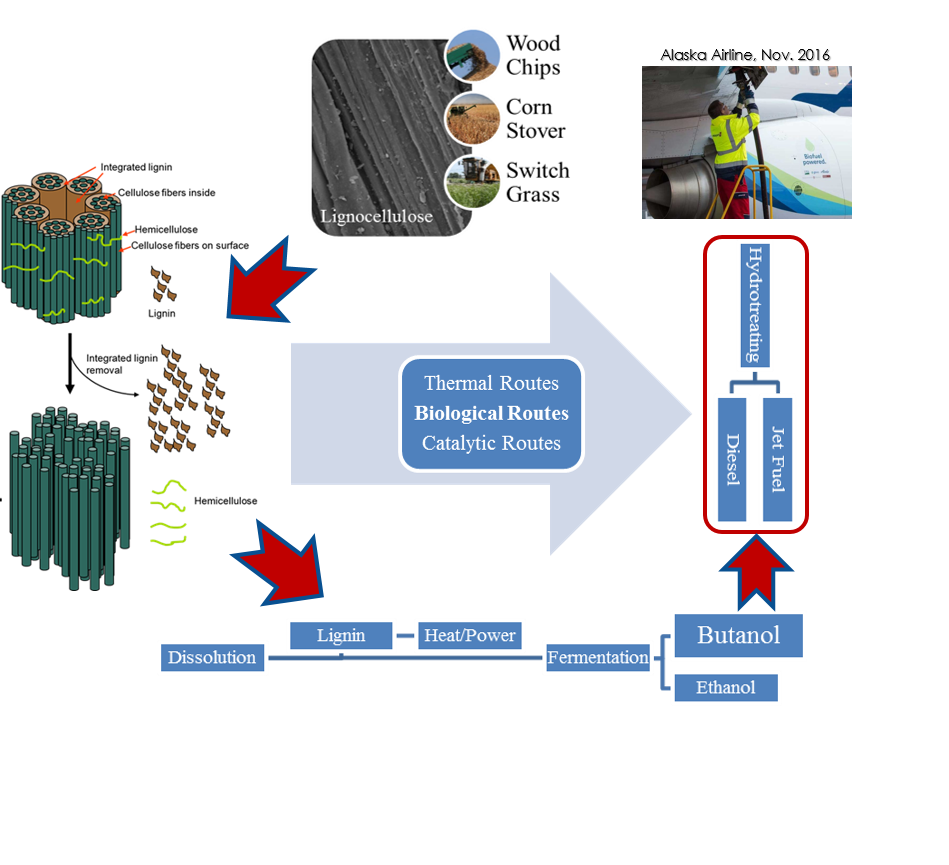
Increasing strict regulations on carbon emissions highly favor the adoption and development of alternative low carbon technologies in an effort to mitigate climate change and global warming. In particular, deployment of biofuels such as biobutanol could reduce carbon dioxide emissions in mobile and distributed application like automobile where controlling carbon oxide emissions have been a great challenge. Butanol specifically has great advantages over ethanol as it can be mixed with ethanol owing to its excellent physical properties. However, several challenges still hinder the full deployment of biobutanol fuels and alternative clean energy.
For instance, generation of biofuels has been classified into three main groups: generation from edible sources by the action of microorganisms, generation from lignocellulosic products obtained from agricultural residues and generation from algae. Whereas the first-generation method poses a great threat to food security, the other two methods have attracted significant attention of researchers since they can be obtained or cultivated on nonagricultural lands. To this end, the development of efficient alternative biobutanol production technologies in highly desirable.
Recent studies have shown that the production of biobutanol from traditional substrates is ineffective due to high initial costs. To this regard, economical substrates such as agricultural residues and wastes have been thoroughly examined recently. Alternatively, anaerobic fermentation of sugar in the presence of various Clostridia species have the potential to produce sustainable biofuel products. However, the low fermentation temperature derails the fermentation activities of the metabolizing bacteria by reducing the enzyme efficiency. Therefore, enhancing the metabolism as well as the thermal stability of bacterial strains will be of great significance in enhancing biobutanol production.
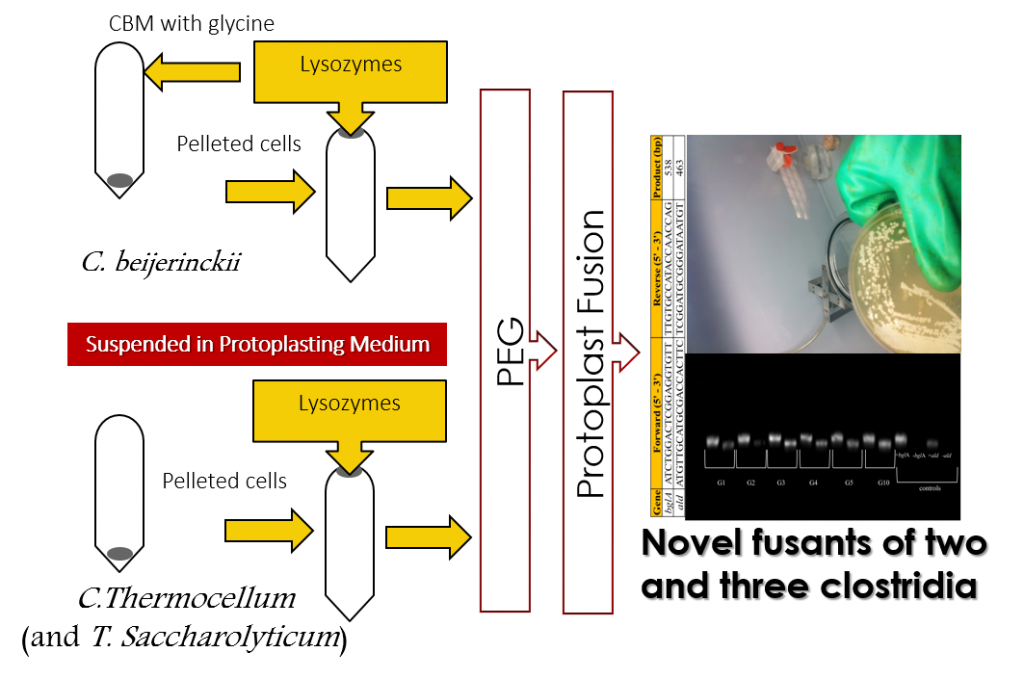
To this note, Dr. Yaser Dahman, the principal investigator from Ryerson University, together with Banafsheh Mohtasebi looked at the feasibility of producing biobutanol using renewable agricultural residues in simultaneous saccharification and fermentation. This work was done in collaboration with Dr. Wensheng Qin and Miranda Maki from Lakehead University. Fundamentally, they utilized protoplast fusion technique to fuse three different anaerobic clostridia: Clostridium beijerinckiIi (Cb), Clostridium thermocellum (Ct) and Thermoanaerobacterium saccharolyticum (Ts). Additionally, they used protoplast clostridial fusants and their constituent co-cultures to examine biobutanol production. Furthermore, they compared the fermentation efficiency obtained using the fusants to that obtained by co-cultures of the individual species. Their work is published in the journal, Biofuels.
The fused strains significantly improved butanol production as compared to its co-culture strains counterparts. For instance, fused strains and co-culture strains produced 12.80 g/L and 6.25 g/L of butanol respectively. This was attribute to the improved thermostability to realize the optimum hydrolysis temperature. Additionally, the need to add enzymes during the hydrolysis process was completely eliminated due to the production of enzymes required for fermentation.
In summary, the Canadian scientists developed novel fusants for enhanced green production of biobutanol energy. To actualize their study, they investigated the genetic stability of the fused strains over several growth cycles. Interestingly, during 10 cycle growth, CbCt fused strains showed genetic stability while CbCtTs did not show clear stability in acetone-butanol-ethanol production. Altogether, the protoplast fusion is a promising solution for enhancing green production of butanol which is a key step in promoting sustainability.

Reference
Mohtasebi, B., Maki, M., Qin, W., & Dahman, Y. (2019). Novel fusants of two and three clostridia for enhanced green production of biobutanol. Biofuels, 1-11.
Go To Biofuels