Advances in Engineering Advances in Engineering features breaking research judged by Advances in Engineering advisory team to be of key importance in the Engineering field. Papers are selected from over 10,000 published each week from most peer reviewed journals.

Significance
Most of the industrial processes produce pollutant phenols. Interestingly, phenol is an intermediate product during the oxidation of aromatic hydrocarbons thus often present in wastewaters. Among the available wastewater treatment technologies, wet air oxidation (WAO) is suitable for high flow rate toxic contaminants and high organic loads. Unfortunately, despite minimal air pollution, its general safety implications and high capital cost limit its use.
Recently, catalytic wet air oxidation (CWAO) have been considered as a promising alternative amongst researchers owing to its effectiveness. For example, it minimizes the reaction severity and allows easier decomposition of pollutants resulting in low treatment costs. However, catalytic oxidation of phenol in mild condition has not been fully explored.
A group of researchers at Babeş-Bolyai University and Indiana University of Pennsylvania: Dr. Raluca Pleşa Chicinaş, Dr. Emese Gál, Dr. Horea Bedelean, Professor Mircea Darabantu and Dr. Andrada Măicăneanu performed catalytic wet air oxidation of phenol in aqueous solution using diatomite, zeolite and xerogel catalysts. Their work is published in the research journal, Separation and Purification Technology.
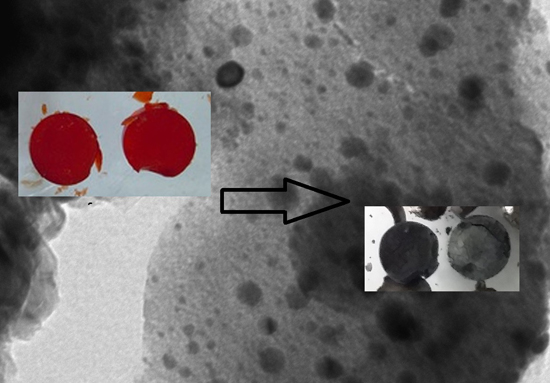
Briefly, the authors prepared metal modified diatomite and zeolite catalysts by impregnation while carbon xerogel catalyst was synthesized by sol-gel and ion exchange technique. They tested and investigated the efficiencies of the catalysts in catalytic wet air oxidation of phenol under low temperatures and ambient pressures. Furthermore, they also identified the reaction pathway for phenol oxidation.
Various metals were used in the preparation of catalysts and the results showed maximum efficiencies as 66%, 54% and 68% for Fe-D, Cu-Z and Co-CX catalysts respectively. Furthermore, for all the three catalysts, mineralization of phenol was dominant during the initial stages of the process. Small traces of oxalic, acetic and (di)carboxylic acids were identified as oxidation intermediate products. Additionally, was established that the kinetics for catalytic wet air oxidation of phenol follows a pseudo-first order model.
As a significant contribution of the study, the obtained results have qualitatively indicated the potential of using diatomite, zeolite and carbon xerogel to prepare catalysts for catalytic wet air oxidation of phenol under mild conditions. They are generally low cost and quite simple to prepare except for carbon xerogels which involves some complex steps. Diatomite can be used as absorbent, catalyst as well as filtering material due to its high adsorption capacity, large surface area, chemical stability, and small particle size. On the other hand, natural zeolites and carbon materials like carbon xerogels also exhibit unique properties which have increased significant interest amongst researchers hence their choice for the study. Therefore, the authors are optimistic that the study will advance treatment of wastewaters.





Reference
Pleşa Chicinaş, R., Gál, E., Bedelean, H., Darabantu, M., & Măicăneanu, A. (2018). Novel metal modified diatomite, zeolite and carbon xerogel catalysts for mild conditions wet air oxidation of phenol: Characterization, efficiency and reaction pathway. Separation and Purification Technology, 197, 36-46.
Go To Separation and Purification Technology