Advances in Engineering Advances in Engineering features breaking research judged by Advances in Engineering advisory team to be of key importance in the Engineering field. Papers are selected from over 10,000 published each week from most peer reviewed journals.

Significance
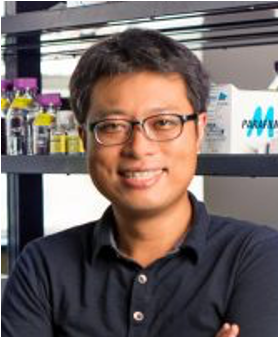
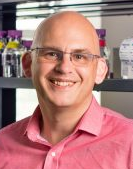
Researchers have been trying for years to turn agricultural residues into useful prebiotic ingredients, and the interest keeps growing. This is because corn stover, wheat bran, and various other crop by-products pile up in huge quantities and, in principle, contain everything needed to make bioactive oligosaccharides. However, once we look closely at the processes that currently dominate the field, we realize how dependent they are on clean, pre-isolated cellulose or xylan. The standard workflow—pretreat, extract, hydrolyze—works, but it funnels you toward the same narrow family of β-(1→4) linked products. Those molecules function as prebiotics, but their simplicity really reflects the constraints of the method rather than any intentional control over structure. As our understanding of the microbiome has expanded, that limitation has started to feel more restrictive. Part of the motivation for revisiting this problem comes from a fairly intuitive observation: probiotic strains differ widely in their transporters and glycosidases, so they “read” carbohydrate structures in different ways. The authors of the present study had already seen how, in strongly dehydrative environments, glucose behaves unpredictably and assembles linkages that rarely appear in nature—α- and β-(1→6), (1→3), and even (1→2). That earlier work made them wonder whether similar chemistry might occur inside lignocellulosic biomass itself. The difficulty, of course, is that cellulose and xylan are tightly embedded within lignin, and most chemical systems that break them apart don’t leave much room for glycosylation to happen simultaneously. The challenge was to find a reaction environment where both processes could coexist long enough to produce something genuinely new. To this end, in a new research paper published in Bioresource Technology and conducted by PhD candidate Meijun Zeng, Assistant Professor Jee-Hwan Oh, Associate Professor Jan-Peter van Pijkeren, and led by Professor Xuejun Pan from the University of Wisconsin-Madison, the researchers developed a one-pot method that converts raw corn stover into oligosaccharides through simultaneous hydrolysis and glycosylation in concentrated sulfuric acid. This approach generates short-chain gluco- and xylo-oligosaccharides (GlcOS, XOS, respectively) featuring unusually diverse glycosidic linkages, including α/β-(1→6), (1→3), (1→2), and (1→1). They verified the mechanism using pure cellulose and xylan, showing that glycosylation is intrinsic to the reaction environment. The resulting mixtures supported probiotic growth as effectively as commercial XOS, demonstrating clear potential as prebiotic ingredients.
The research team began by exposing corn stover to concentrated sulfuric acid at 20 °C, which allowed the substrate to swell and partially liquefy. This step is important to prevent uneven hydrolysis later in the process. After one hour, the mixture was shifted to 50 °C, where the interplay between hydrolysis and glycosylation becomes visible in the product distribution. When the biomass loading was varied, they observed that loadings above 30 % hindered complete liquefaction, which in turn raised insoluble residues. At moderate loadings (around 20 %), the system produced nearly 49 % oligosaccharides—a value strikingly close to the theoretical maximum based on polysaccharide content. The resulting yields suggest that cellulose and xylan were not cleaved into monosaccharides, but they were actively reorganized into soluble oligomers of short to medium DP. Afterward, the authors adjusted the sulfuric acid concentration, which provided further insight into the reaction environment. They found that when the acid strength increased from 68 % to 80 %, the formation of GlcOS and XOS rose sharply. Beyond that point, the harsher conditions encouraged sugar degradation, especially dehydration of xylose to furfural. Indeed, one can see how sensitive the glycosylation process is to dehydration tendencies: a small shift in acid concentration changes whether monosaccharides re-enter condensation or depart the system as degradation products. Additionally, University of Wisconsin-Madison scientists found that lower temperatures favored XOS survival, whereas moderate heating to 50 °C promoted cellulose breakdown and glycosylation to GlcOS. At 60 °C, furfural accumulation increased, suppressing XOS yields. Across these gradients, the authors seemed to be searching for a regime where hydrolytic and glycosylation pathways briefly coexist in a productive equilibrium rather than competing destructively. Their optimal window—20 °C swelling followed by 50 °C for ten minutes—captures this fleeting convergence.
The authors also performed structural analyses and confirmed that the products bore the imprint of both pathways. MALDI-TOF MS demonstrated a broad spread of DP (mostly 2–7 for GlcOS and 2–6 for XOS), and, importantly, the presence of hybrid oligosaccharides containing both glucose and xylose units. HSQC NMR revealed an unexpectedly diverse set of glycosidic linkages: α/β-(1→6), α/β-(1→3), α/β-(1→2), α/β-(1→1), alongside the inherited β-(1→4) bonds. This diversity is not easily produced by conventional hydrolysis and strongly supports the authors’ proposed simultaneous hydrolysis-and-glycosylation mechanism. The team then turned to model substrates (pure xylan and pure cellulose) to verify the mechanistic pathway. Both produced oligomers with new linkage patterns, indicating that glycosylation is intrinsic to the acid environment rather than a peculiarity of corn stover. When these corn stover-derived oligosaccharides were tested in vitro with Lactobacillus brevis, Pediococcus pentosaceus, and Pediococcus acidilactici, each strain displayed measurable growth, often comparable to or better than commercial XOS and distinctly better than isomalto-oligosaccharides (IMO).
In conclusion, the new work of Professor Xuejun Pan and colleagues carries significance well beyond the immediate chemical achievement. By demonstrating that a single, inexpensive reagent such as concentrated sulfuric acid can orchestrate both biomass dissolution and controlled glycosylation, the authors offer an alternative vision for prebiotic manufacturing—one in which agricultural waste becomes an adaptable chemical feedstock rather than an obstacle in need of purification. What stands out is not just the high yield, but the structural variety. Many prebiotics currently on the market rely on narrowly defined glycosidic linkages, which inherently bias the microbiota they support. Here, however, the diversity of α/β configurations and bond positions gives rise to oligomers with differing transport and enzymatic susceptibilities. The in-vitro fermentations hint that such mixtures may offer a more inclusive nutritional profile for gut commensals. There are also interesting implications for the broader biomass-conversion community. Much effort has been spent on minimizing degradation to furans and maximizing sugar release for biofuels. This paper nudges the conversation toward a different value proposition: rather than preserving monosaccharides for fermentation, one might conserve—or intentionally generate—structurally diverse oligomers whose biological function depends on that very complexity. It suggests that the boundaries between “desired product” and “intermediate” in biomass chemistry may be more fluid than assumed. From a biological standpoint, the results encourage continued exploration of how different microbes interpret glycosidic patterns. The variation in growth responses among L. brevis, P. pentosaceus, and P. acidilactici hints that the structural heterogeneity may mimic, to some degree, the natural variety in plant-derived saccharides that reach the colon. It might eventually be possible to tune biomass-derived oligosaccharides toward specific therapeutic profiles, though doing so would require clarifying which linkages or DP ranges favor which microbial or metabolic outcomes.
Over the last several years, Professor Pan’s group has gradually built an international reputation in the prebiotic-carbohydrate scientific community. In their bottom-up work, for instance, they start with the simplest possible building blocks and manage to push glucose, lactose, and similar monosaccharides into forming gluco- and galacto-oligosaccharides through dehydration and glycosylation reactions. Studies published in Green Chemistry (2019), Food Research International (2023), and later in ACS Sustainable Chemistry & Engineering (2023) show just how reliably they can generate glycosidic linkages that are rarely encountered in nature. Moreover, their top-down work demonstrates that cellulose and hemicellulose can be disassembled and reshaped into products with far more structural diversity than classical hydrolysis pathways usually allow. The papers in Separation and Purification Technology (2024) and Bioresource Technology (2025) are good examples: one lays out practical ways to recover and fractionate cello–oligosaccharides, while the other presents a one-pot approach that lets hydrolysis and glycosylation occur within the same reaction environment. Furthermore, what connects all of this is their consistent focus on how structure influences biological function. Their investigations into probiotic utilization patterns (Journal of Food Science, 2024; Comprehensive Reviews in Food Science and Food Safety, 2023) make it clear that the synthetic work is never done in isolation, but with an eye toward creating prebiotics that behave differently—and potentially more usefully—than conventional ones.



Reference
Meijun Zeng, Jee-Hwan Oh, Jan-Peter van Pijkeren, Xuejun Pan, Synthesis of potential prebiotic oligosaccharides with diverse glycosidic linkages from corn stover via simultaneous hydrolysis and glycosylation, Bioresource Technology, Volume 429, 2025, 132486.
RECOMMENDED READING:
-
Meijun Zeng, Jee-Hwan Oh, Jan-Peter van Pijkeren, Xuejun Pan. Synthesis of potential prebiotic oligosaccharides with diverse glycosidic linkages from corn stover via simultaneous hydrolysis and glycosylation. Bioresource Technology, 2025, 429, 132486. https://doi.org/10.1016/j.biortech.2025.132486
-
Meijun Zeng, Xuejun Pan. Purification and fractionation of cellooligosaccharides synthesized from controlled cellulose hydrolysis by sulfuric acid using nanofiltration. Separation and Purification Technology, 2024, 348, 127800. https://doi.org/10.1016/j.seppur.2024.127800
-
Meijun Zeng, Jee-Hwan Oh, Jan-Peter van Pijkeren, Xuejun Pan. Selective utilization of gluco-oligosaccharides by lactobacilli: a mechanism study revealing the impact of glycosidic linkages and degree of polymerization on their utilization. Journal of Food Science, 2024, 89, 523–539. https://doi.org/10.1111/1750-3841.16851
-
Meijun Zeng, Sonali Mohapatra, Jee-Hwan Oh, Theresa Astmann, Jan-Peter van Pijkeren, Xuejun Pan. Novel galacto-oligosaccharides from lactose: chemical synthesis, structural characterization, and in vitro assessment of prebiotic activity. ACS Sustainable Chemistry & Engineering, 2023, 11, 14031–14045. https://doi.org/10.1021/acssuschemeng.3c03170
-
Meijun Zeng, Jan-Peter van Pijkeren, and Xuejun Pan. Prebiotic gluco-oligosaccharides: synthesis, purification, structural characterization, and structure-function studies. Comprehensive Reviews in Food Science and Food Safety, 2023, 22, 2611–2651. https://doi.org/10.1111/1541-4337.13156
-
Meijun Zeng, Ning Li, Theresa Astmann, Jee-Hwan Oh, Jan-Peter van Pijkeren, and Xuejun Pan. Chemical synthesis of gluco-oligosaccharides with mixed glycosidic linkages as potential prebiotics via dehydration condensation of glucose in concentrated sulfuric acid. Food Research International, 2023, 165, 112436. https://doi.org/10.1016/j.foodres.2022.112436
-
Ning Li, Zening Wang, Tianjiao Qu, Joseph Kraft, Jee-Hwan Oh, Jan Peter van Pijkeren, George Huber, and Xuejun Pan. High-yield synthesis of glucooligosaccharides (GlOS) from glucose via non-enzymatic glycosylation as potential prebiotics. Green Chemistry, 2019, 21, 2686–2698.https://doi.org/10.1039/C9GC00663J