Advances in Engineering Advances in Engineering features breaking research judged by Advances in Engineering advisory team to be of key importance in the Engineering field. Papers are selected from over 10,000 published each week from most peer reviewed journals.

Significance
Chemical process design is of great importance in both laboratory and industrial settings. The design often involves selecting and integrating appropriate steps to form a complete manufacturing system. Importantly, the successful design of a chemical process is highly dependent on the efficiency of the transport phenomena associated with the mass and heat transfer between the chemicals. Currently, batch reactors are widely used for the industrial production of chemical products. However, achieving the desired safety, homogeneity, and heat transfer efficiency from a sustainability perspective remains a big challenge for the modern chemical industry.
Traditional approaches to heat transfer in chemical reactors, such as resistive coils and heat exchangers, suffer from serious ecological and fundamental issues that limit their applications in modern chemical industries. Several power-to-heat technologies have been developed to solve the limitation of traditional approaches and as reliable alternatives to achieving the sustainable energy production goal. Ohmic and microwave heating sources are limited by the dielectric nature of the medium; sonochemical heating has the problem of heating inhomogeneity, while photochemical heating experiences versatility limitations.
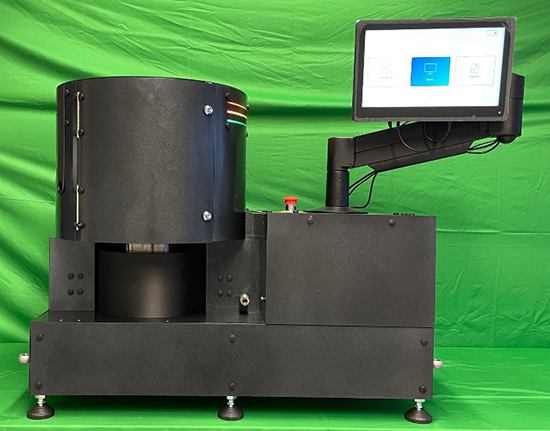
Recently, matrix-in-batch technology has emerged as a promising technology for addressing scalability, sustainability, and efficiency issues. This direct heating technology is designed to discretize reaction volume into smaller and continuous volume cells delimited by matrix points; a new pathway to developing a new matrix-in-batch technology is called OnePot©. It exhibits numerous advantages, including concentration control, temperature, and homogeneity. Due to the rotating thermal spots, high uniformity degrees and heating homogeneity can be achieved. Despite the growing popularity of OnePot©, its thermal performance is still poorly understood.
On this account, Dr. Salvatore Romano and Professor Manuela Oliverio from the University Magna Graecia of Catanzaro, together with Professor Alessio Caravella and Dr. Giuseppe Prenesti from the University of Calabria and Dr. Marco Francardi, CEO of Katakem srl assessed the optimal temperature distribution in the new matrix-in-batch OnePot© reactor using computational fluid dynamic simulations. Besides, the simulations were conducted to study the thermal performance of the OnePot© reactor. Their work is currently published in the peer-reviewed journal, Frontiers in Energy Research.
In their approach, the research team considered two different configurations: uniform configuration consisting of a single uniform equilateral triangular pitch and alternate configuration involving a double-triangle star formed by two alternating and different equilateral triangles. Both configurations comprised seven hot rotating cylinders (known as spots) rotating around the rotation axis with a fixed angular velocity. Their main purpose was to allow precise tuning of the fluid temperature and reduce temperature distribution inefficiencies. Several simulations were performed in the lamina and transient flow conditions considering liquid water and argon gas. The effect of viscosity was also investigated.
The authors showed that the uniform configuration was characterized by an optimal pitch value of about 36% of the vessel diameter for argon gas and liquid water. The results showed maximum thermal mixing efficiency at the highest time value, and the findings could be generalized to many other fluid types. In contrast, the alternate configuration provided better temperature distribution in the reactor than the uniform configuration, more so high viscosity. This was attributed to the inner spots’ ability to counter-balance the effects of large distances from the center, thus preventing the formation of larger coder “islands” around the center. The reported heat transfer coefficient values between the fluid bulk and thermal spots agreed well with the existing literature values.
In summary, the assessment of the optimal temperature distribution in the fluid phase in the novel OnePot© reactor was reported. Besides allowing temperature distribution optimization, CFD simulations allowed analysis of the thermal mixing in the reactors, which would contribute to reducing turbulence problems and achieving precise homogeneity control. The reactor’s main advantage is its modularity. In a statement to Advances in Engineering, the authors stated that the OnePot© reactor opens the door for potential applications in various industrial contexts.



Reference
Caravella, A., Francardi, M., Romano, S., Prenesti, G., & Oliverio, M. (2022). Optimization of temperature distribution in the novel power-to-heat matrix-in-batch OnePot© reactor. Frontiers in Energy Research, 10, 1-18.