Advances in Engineering Advances in Engineering features breaking research judged by Advances in Engineering advisory team to be of key importance in the Engineering field. Papers are selected from over 10,000 published each week from most peer reviewed journals.

Significance
The use of nickel (Ni) in steel alloys is prevalent due to its effectiveness in reducing the ductile-to-brittle transition temperature, thus enhancing cryogenic toughness. Moreover, there is increasing demand for materials that can perform reliably at cryogenic temperatures, particularly in applications such as liquefied natural gas storage and transportation, where materials must withstand the brittleness that accompanies low temperatures. However, the economic and resource challenges associated with Ni have led to the exploration of alternatives. Rare earth (RE) elements, abundant in China, present a viable option. Previous studies have indicated that the addition of RE elements, particularly cerium (Ce), can refine grains, purify the steel matrix, and alter inclusions’ morphology, thereby improving mechanical properties at low temperatures. To addresses the critical issue of substituting Ni with Ce to achieve desired mechanical properties while mitigating costs and resource limitations, a new study published in Steel Research International and led by Professor Qing Liu from University of Science and Technology Beijing and conducted by Dr. Liping Wu from Inner Mongolia University of Technology alongside Junxiong Huang, Jianguo Zhi, Huisheng Wang, the authors investigated the effect of replacing Ni with Ce in cryogenic steels, particularly focusing on the cryogenic toughness and the microstructural evolution of the steel.
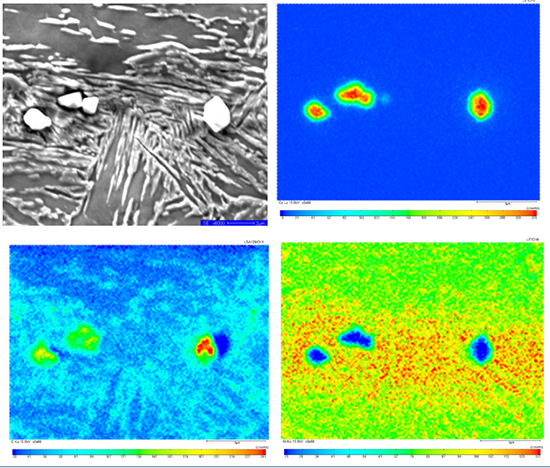
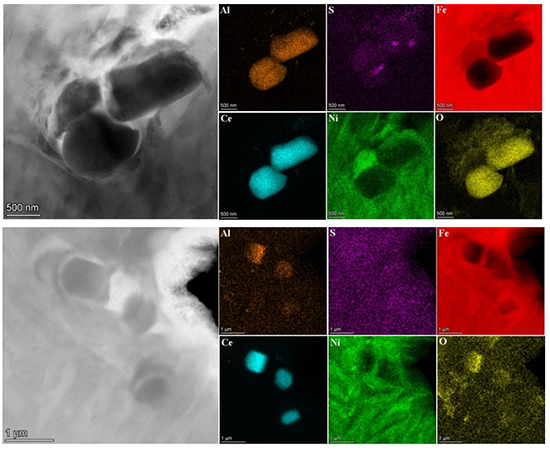
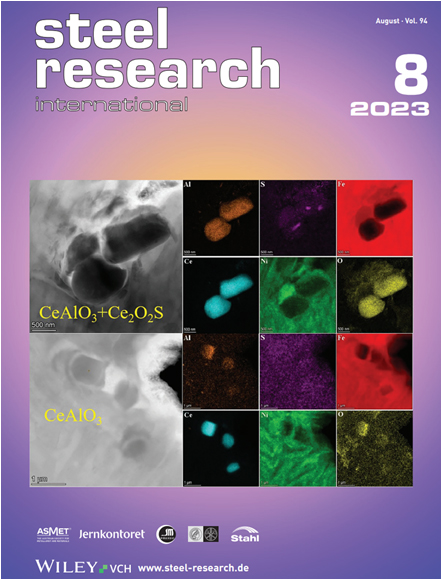
The team prepared 7Ni steel plates with varying contents of Ce. A control sample without RE addition was used for comparison. They produced the under controlled conditions in an induction furnace, where specific amounts of Ni and Ce-Fe alloy were added to the melt before casting. After casting, the steel samples underwent a specific heat treatment regimen, which included high-temperature quenching followed by tempering. This process was important for achieving the desired microstructure conducive to high toughness at cryogenic temperatures. The authors conducted the Charpy impact tests at cryogenic temperatures of -150°C and -196°C to measure the energy absorbed by the material during fracture, which is a direct indicator of its toughness. They also employed a range of sophisticated techniques to characterize the microstructure and inclusion morphology within the steel including field-emission scanning electron microscopy for high-resolution imaging of the microstructure, electron-probe microanalysis for detailed chemical analysis at micro-regions, particularly focusing on the distribution of Ce and Ni, x-ray Diffraction for phase identification within the steel matrix and transmission electron microscopy for an in-depth examination of crystal structures and fine inclusion particles.
The authors’ found that a small addition of Ce (0.0026 wt%) in place of Ni maintained similar cryogenic toughness to that of the 7Ni control steel. This indicates that Ce can effectively replace Ni up to a certain extent without compromising the steel’s performance in cryogenic conditions. Moreover, increasing the Ce content beyond the optimal level (to 0.0265 wt%) resulted in a noticeable decline in cryogenic toughness. They also found that excessive addition of Ce to deteriorate the steel’s mechanical properties at low temperatures, highlighting the importance of precise control over Ce content.
The researchers’ microstructural analysis showed that appropriate levels of Ce could mimic the beneficial effects of Ni, such as refining the steel’s microstructure and promoting a ductile fracture mode. However, excessive Ce led to coarser grains and more pronounced impurity particle formation, which in turn resulted in a transition towards quasi-cleavage fractures, indicative of reduced toughness. Additionally, the inclusion analysis demonstrated that Ce additions altered the morphology and composition of inclusions within the steel matrix. Optimal Ce levels resulted in fine and evenly dispersed inclusion particles, contributing to the steel’s toughness by facilitating plastic deformation around these inclusions. In contrast, higher Ce concentrations led to the aggregation of larger, detrimental inclusion particles that act as stress concentrators and crack initiation sites. In conclusion, the pioneering research of Professor Qing Liu and colleagues conclusively demonstrated that while Ce has the potential to replace Ni in cryogenic steels, achieving the desired mechanical properties requires careful control over the Ce content. Optimal Ce addition can maintain, if not enhance, the cryogenic toughness of steel by refining its microstructure and optimizing inclusion morphology. However, the detrimental effects of excessive Ce highlight the need for a balanced approach to alloy design, aiming for a synergy between cost-effectiveness and mechanical performance in engineering materials for cryogenic applications.


Reference
Liping Wu, Junxiong Huang, Qing Liu, Jianguo Zhi, Huisheng Wang. Effect of Rare Earth Cerium Replacement of Nickel on Cryogenic Toughness of 7Ni Steel. Steel Research International 2023, 94, 2200883.