Advances in Engineering Advances in Engineering features breaking research judged by Advances in Engineering advisory team to be of key importance in the Engineering field. Papers are selected from over 10,000 published each week from most peer reviewed journals.

Significance
With the urgent need for better sustainable energy storage, sodium-ion batteries are increasingly stepping into the spotlight because of sodium’s low cost, broad availability, and minimal geopolitical concerns compared to lithium, it appears—at least theoretically—to be an ideal contender for large-scale energy applications. Yet, in the laboratory and in practical devices, this transition has been far from seamless. One of the biggest obstacles is finding a solid electrolyte that can reliably and efficiently transport sodium ions—without falling apart structurally or underperforming when it matters most. Sodium ions, being larger and more sluggish than lithium, simply don’t move easily through most solid materials and their passage is limited by stronger electrostatic interactions and the lack of adequately wide diffusion pathways.
Liquid electrolytes have long provided a convenient workaround, but their volatility and flammability continue to raise safety concerns, particularly in large-scale or high-performance applications. Solid-state electrolytes promise a safer, more stable alternative, however achieving the high ionic conductivities seen in liquids remains a real scientific challenge. Chalcogenide-based materials—compounds rich in elements like sulfur and selenium—have shown some promise in this area because their soft, polarizable anion networks create gentler landscapes for ions to traverse. However, the heavier homologue, tellurium, with its even greater polarizability, has remained conspicuously underexplored, largely because of the synthetic complexities involved and the limited understanding of its structural chemistry.
In a recent study published in Dalton Transactions, a team of researchers—Dr. Franziska Kamm, Dr. Florian Pielnhofer, Dr. Marc Schlosser, and led by Professor Arno Pfitzner from the Institute for Inorganic Chemistry at the University of Regensburg—successfully synthesized two entirely new sodium tellurosilicate compounds: Na₄SiTe₄ and Na₁₀Si₂Te₉. What makes their work standout is not just the novelty of the compounds, but the unprecedented crystal structures they uncovered in the process. Specifically, Na₄SiTe₄ features a highly symmetric, cubic structure composed of well-separated [SiTe₄]⁴⁻ tetrahedra, a configuration that is favorable for facilitating sodium ion movement. Even more remarkable is the structure of Na₁₀Si₂Te₉, which contains not only the [SiTe₄]⁴⁻ units but also isolated Te²⁻ anions—an arrangement never previously reported in similar materials. This unusual structural combination introduces additional flexibility within the crystal lattice, potentially enhancing the ease with which sodium ions can migrate through the solid framework.
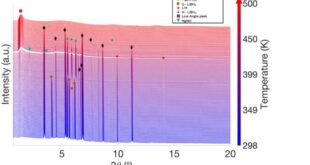
Working under the stringent conditions of an argon-filled glovebox, the experienced research team began by handling the notoriously reactive elements—sodium, silicon, and tellurium—with the kind of precision and caution that only comes from hard-earned laboratory experience. Rather than following the well-trodden path of high-temperature synthesis, which often results in mixed phases and hard-to-control reactions, they chose a more unconventional route. The authors used high-energy ball milling to force these elements to mix on a scale so fine that atomic interactions could take place before heat even entered the equation. Once the precursors were uniformly blended, the team transitioned to carefully controlled thermal treatments where they fine-tuned heating rates and reaction times with exacting precision, knowing that even minor variations could tip the balance between success and failure. Their efforts paid off. From this process emerged two entirely new compounds, Na₄SiTe₄ and Na₁₀Si₂Te₉—materials that had eluded synthesis until now. When subjected to X-ray diffraction analysis, Na₄SiTe₄ revealed a remarkably clean, cubic structure dominated by isolated [SiTe₄]⁴⁻ tetrahedra. Na₁₀Si₂Te₉, however, offered something even more intriguing: alongside the expected [SiTe₄]⁴⁻ tetrahedra, it contained isolated Te²⁻ anions, a structural feature rarely—if ever—seen in similar systems. Afterward, the researchers performed electrochemical impedance spectroscopy across a wide temperature range, and they found that all synthesized compounds displayed measurable sodium ion conductivity, but Na₆Si₂Te₆ stood out for its low activation energy and higher conductivity, even under moderate temperatures. Na₁₀Si₂Te₉ and Na₄SiTe₄ followed closely, reinforcing the idea that tellurium-rich frameworks help lower migration barriers. Curiously, Na₈Si₄Te₁₀, which had a lower sodium content, exhibited markedly poorer conductivity, further confirming that both sodium concentration and anion architecture play critical roles in ion transport. To complete the picture, they turned to density functional theory calculations. These confirmed wide band gaps across the materials and verified that ionic transport dominated over electronic conduction. Interestingly, the electronic fingerprints of the isolated Te²⁻ anions hinted at their clear yet important role in softening the lattice which potentially makes it easier for sluggish sodium ions to find their way through.
In conclusion, the new study, led by Professor Arno Pfitzner and his team, goes well beyond the incremental advances we often see in the field of solid-state electrolytes. In a research landscape that frequently circles around well-known material systems, their research dares to explore less-charted territory and revealed entirely new sodium tellurosilicate structures with unexpectedly favorable ionic transport properties. We believe what makes this particularly attractive is not just the novelty of the new materials synthesized, but the structural motifs they unveiled—isolated [SiTe₄]⁴⁻ tetrahedra coexisting with free Te²⁻ anions. This unique combination represents a structural concept that had simply not been observed before in sodium-based solid electrolytes. More importantly, it points toward a fresh design principle: that introducing highly polarizable and structurally adaptable anions into solid frameworks can create pathways that ease ion migration, effectively lowering the energy barriers that typically restrict sodium ion mobility. From a practical perspective, the discoveries of Professor Arno Pfitzner and colleagues help establish the groundwork for the development of next-generation solid-state sodium-ion batteries and while it’s true that tellurium is neither abundant nor inexpensive enough to be the cornerstone of commercial battery technologies, the real value here lies in the transferable understanding of how heavy chalcogenides impact material behavior. These structural findings can—and should—be translated to more sustainable and economically viable materials systems, such as those based on sulfur or selenium, to achieve similar performance gains without the constraints of resource scarcity.
Reference
Kamm, Franziska & Pielnhofer, Florian & Schlosser, Marc & Pfitzner, Arno. (2024). Enhanced sodium ion mobility in sodium tellurosilicates and crystal structures of Na 4 SiTe 4 and Na 10 Si 2 Te 9 with isolated [SiTe 4 ] 4- tetrahedra and isolated Te 2- anions. Dalton Transactions. 53. 10.1039/D4DT01717J.