Advances in Engineering Advances in Engineering features breaking research judged by Advances in Engineering advisory team to be of key importance in the Engineering field. Papers are selected from over 10,000 published each week from most peer reviewed journals.

Significance
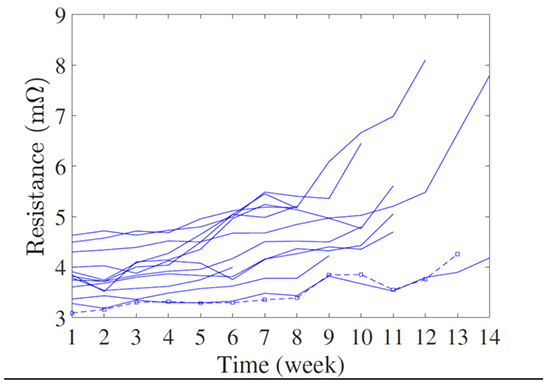
System maintenance is a pre-emptive measure aimed at averting system failure that may result in huge economic losses or even threat to life. Well planned and timely maintenance can reduce maintenance cost and increase production efficiency. The simplest maintenance schedule might be the pure corrective maintenance, where maintenance is only performed upon unexpected failures. To achieve higher values of maintenance, it is usually necessary to determine a preventive maintenance schedule in the case of catastrophic failures. Literature has it that classic preventive maintenance usually consists of two steps: predicting the system failure time based on historical system lifetime data and planning and conducting maintenance actions. As an alternative to the lifetime data that are difficult to collect for many systems, continuously or periodically monitored degradation data can be utilized for better prognostics and health management of the system. The remaining useful life (RUL) estimated from the in-situ degradation data can be useful for online predictive maintenance. In the literature, the RUL is often estimated by assuming a soft-failure threshold for the degradation data. In practice, however, systems may not be subject to the degradation-induced soft failures. Instead, the systems are deemed to be fail when they cannot perform the intended function, and such failures are known as hard failures. Because there are no fixed thresholds for hard failures, the corresponding RUL estimation is not an easy task, which causes difficulties in finding the optimal maintenance schedule.
Therefore, in order to make an appropriate maintenance plan, it is necessary to model the failure behaviors of systems subject to hard failures. On this account, researchers Professor Jiawen Hu from the University of Electronic Science and Technology of China, and Professor Piao Chen from Delft University of Technology, developed a Weibull proportional hazards model to jointly model the degradation data and the failure time data. The underlying idea was that although the degradation does not directly lead to system failure, it may be closely related to the system failure rate. Their work is currently published in the research journal, Reliability Engineering and System Safety.
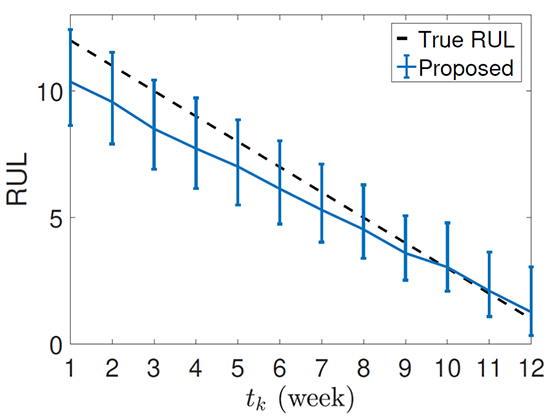
In their approach, the researchers treated the degradation data as the covariates that affect the hazard rate of failure based on proportional hazards model. Although mathematically convenient the general path model cannot reflect the time-varying volatility in the degradation data; this was the motivation for the proposed new joint model for degradation and failure data analysis. Consequently, the two scientists adopted a Wiener process to model the system degradation. Based on the developed proportional hazards model, closed-form distribution of the RUL was derived upon each inspection and the optimal maintenance schedule was then obtained by minimizing the system maintenance cost.
Their study demonstrated successfully modeling of the failure behavior of systems that are subject to aging and degradation. Remarkably, the researchers here developed a predictive maintenance model that determined the optimal maintenance time for the system based on the historical degradation data. To minimize the long run average maintenance cost per cycle, they derived the explicit RUL distribution based on the Brownian bridge theory. Overall, exemplary results were obtained in the implemented case study.
Their work is novel and of great potential interest to practitioners in reliability engineering. It pays attention to a practical problem commonly exists in reliability engineering, which is ignored by most researches. It is one of the first attempt at proposing a general framework to simultaneously analyze the lifetime and degradation data in reliability engineering. In the existing studies, these two types of reliability data are often separately analyzed, while they actually co-exist in many real applications. The proposed framework enables the practitioners to extract critical quality and reliability information from these reliability data. Moreover, the closed-form remaining useful lifetime resulted from the framework offers strong support for the companies/manufacturers in finding the optimal maintenance plans, which has been shown to significantly save the operating costs. As a seminal work, their work attracts many researchers and practitioners in the reliability engineering to follow, and its impact is clearly evidenced by the high citations since the publication. In a statement to Advances in Engineering, the authors say that since some applications may be subject to both hard failures and degradation-induced soft failures, their future research will focus on addressing such.


Reference
Jiawen Hu, Piao Chen. Predictive maintenance of systems subject to hard failure based on proportional hazards model. Reliability Engineering and System Safety; volume 196 (2020) 106707.