Advances in Engineering Advances in Engineering features breaking research judged by Advances in Engineering advisory team to be of key importance in the Engineering field. Papers are selected from over 10,000 published each week from most peer reviewed journals.

Significance
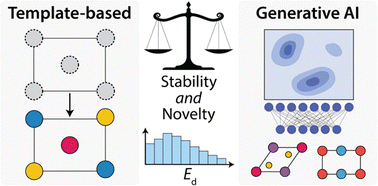
The search for new inorganic crystalline materials has long been central to technological progress, driving advances in energy storage, electronics, and catalysis. Despite vast computational data and decades of electronic-structure calculations, the discovery rate of truly novel materials remains slow. The emergence of generative artificial intelligence (AI) offers a potential breakthrough. Models based on variational autoencoders, diffusion processes, and large language architectures can now propose crystal structures directly, bypassing the need for exhaustive screening of existing compounds. Yet, their true advantages over established heuristic or data-driven methods are still ambiguous. Claims of success are often limited to isolated examples, and systematic benchmarks comparing generative and traditional approaches are rare. The field lacks clear criteria to assess whether these models are genuinely creative or merely sophisticated recombinators of known structural motifs. This uncertainty has deepened because most generative models are trained on open computational databases such as the Materials Project or AFLOW. These repositories supply a rich foundation but also risk circularity when used for both training and evaluation. Moreover, different AI models target distinct objectives: some optimize thermodynamic stability, others maximize structural novelty or tune specific physical properties. Without unified baselines, it becomes difficult to assess trade-offs among these aims or to quantify genuine improvements over traditional discovery methods. To this account, new research paper published in Materials Horizons and led by Professor Nathan Szymanski (currently at the University of California) and Professor Chris Bartel from the University of Minnesota, Szymanski and Bartel developed two baseline frameworks—random enumeration of charge-balanced prototypes and data-driven ion exchange—to benchmark the performance of generative AI in inorganic crystal discovery. They compared these baselines with four modern models: CrystaLLM, FTCP, CDVAE, and MatterGen, using uniform evaluation protocols. A machine-learning filtering step combining CHGNet and CGCNN improved stability and property targeting across all methods. This integrated system provides the first standardized benchmark for balancing stability, novelty, and property optimization in generative materials research.
The researchers first implemented the two baseline approaches. In the random enumeration method, structure prototypes from the AFLOW library were decorated with randomly chosen elements whose oxidation states preserved charge balance. This generated thousands of hypothetical ternary to quinary phases that were chemically consistent but structurally constrained by known templates. The second approach, ion exchange, used the Materials Project database to substitute ions in stable compounds according to probabilistic substitution rules derived from experimental data. This yielded hypothetical materials similar in framework to known structures but potentially distinct in composition. All generated materials—whether from baselines or AI models—were subjected to density functional theory (DFT) relaxation to evaluate thermodynamic stability relative to the convex hull of competing phases. The authors assessed novelty through structure matching against the Materials Project database, and any unmatched compound was classified as new. Machine learning potentials (CHGNet) were applied as low-cost filters to predict stability before DFT validation, while graph neural networks (CGCNN) predicted band gaps and bulk moduli to assist in property targeting. The comparisons revealed clear distinctions. Ion exchange achieved the best stability performance, with a median decomposition energy of 85 meV per atom and roughly 9% of materials lying on the convex hull. Random enumeration yielded far fewer stable outcomes (median 409 meV per atom, only about 1%). Among the generative AI models, MatterGen produced the most stable materials (3%), followed by CrystaLLM, CDVAE, and FTCP, which each hovered near 2%. However, only the AI models generated structures untraceable to known prototypes, achieving up to 8% structural novelty—something the template-based methods could not do. Post-generation filtering improved performance across the board. CHGNet-based screening elevated stability rates to 22% for FTCP, 17% for CrystaLLM, and around 8% for diffusion-based models, while random enumeration improved to 7%. In targeted property generation, FTCP excelled in producing materials with band gaps around 3 eV, reaching a 61% success rate, compared to 37% for ion exchange and 11% for unguided enumeration. When targeting extreme mechanical stiffness (bulk modulus above 300 GPa), all methods struggled, achieving success rates below 10%, reflecting limited training data for such rare materials.
In conclusion, the research work of Professor Nathan Szymanski and Professor Chris Bartel represents one of the most rigorous comparative studies to date between generative AI and traditional computational methods for materials discovery. Its value lies not in proposing another algorithm but in defining clear baselines that make future evaluations meaningful. Their new findings challenge inflated expectations of generative AI by showing that conventional ion-exchange strategies still outperform current models in producing stable materials. However, the generative approaches demonstrate something unprecedented: they can propose entirely new lattice frameworks beyond any recorded prototype, providing a foundation for long-term innovation once stability prediction improves. The study also demonstrates the power of coupling generative and predictive models. Machine learning filters such as CHGNet and CGCNN, when applied after generation, substantially increase success rates while keeping computational costs low. This hybrid workflow bridges brute-force exploration and intelligent refinement, turning generative design from an exploratory exercise into a guided process. Such a pipeline could be readily adapted to other objectives—superionic conductivity, magnetism, or catalytic activity—by conditioning models and filters on relevant properties. Equally important is the methodological shift this study introduces. By defining explicit metrics for novelty, stability, and targeted property success, Szymanski and Bartel move the field toward quantitative benchmarking. They expose the inherent tension between stability, novelty, and functionality: maximizing one often compromises another. The authors suggest that enlarging and diversifying training datasets—especially to include metastable and non-oxide systems—will be crucial for improving model generalization. Expanding datasets beyond current biases may allow AI to explore underrepresented regions of chemical space where undiscovered stable compounds may exist.


Reference
Szymanski, Nathan & Bartel, Chris. (2025). Establishing baselines for generative discovery of inorganic crystals. Materials Horizons. 12. 10.1039/D5MH00010F.