 Advances in Engineering Advances in Engineering features breaking research judged by Advances in Engineering advisory team to be of key importance in the Engineering field. Papers are selected from over 10,000 published each week from most peer reviewed journals.

Significance
Microchip development is becoming intricate with time where much of the available cross-section is being increasingly occupied by metallic lines thereby diminishing the available space for insulation. As a result, significant delays, parasitic cross-talking and dynamic power consumption have set in due to the now inherent parasitic capacity. The most adoptable solution is by decreasing the dielectric permittivity value of the insulating material. Two techniques are available for doing this in an industrial set up: by introducing porosity into the structure of silicon (iv) oxide or by substituting some of the oxygen atoms by terminating methyl groups. However, intense modification of the silicon(iv) oxide structure can considerably change its electronic structure, which in turn could affect the functionality of the insulating layer in the microchip. This may in turn results in the development of other defects. In view of this, it has become critically necessary to advance studies on the redistribution of valence and conduction band states, depending on the technique of modification of the silicon (iv) oxide structure.
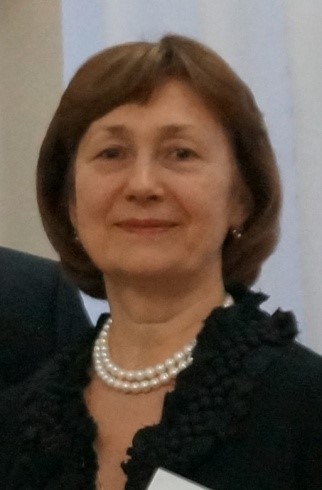
Aleksei Konashuk and Professor Elena Filatova from the St. Petersburg State University in Russia proposed a study on the effects of introducing porosity and the insertion of methyl groups in silicon (iv) oxide tetrahedra on the distribution of valence and conduction band states of silicon (iv) oxide using high-resolution near edge X-ray absorption fine structure spectroscopy and soft X-ray photoelectron spectroscopy. Their goal was to carefully analyze the energy positions of the top of the valence band and at the bottom of the conduction band, depending on the introduction of porosity and the insertion of methyl groups into the silicon (iv) oxide structure. Their work is now published in the research journal, Phys. Chem. Chem. Phys.
Briefly, to understand the redistribution of valence and conduction band states, depending on methods of modification of the silicon (iv) oxide structure, the research team have analyzed together a-quartz, am- silicon (iv) oxide, por- silicon (iv) oxide and organosilicate glass (OSG) films prepared by selfassembly (SAT) and conventional plasma enhanced chemical vapor deposition (PECVD-1) technology. The researchers jointly studied the samples using high-resolution near edge X-ray absorption fine structure spectroscopy and soft X-ray photoelectron spectroscopy in identical empirical conditions.
The authors were able to observe that the insertion of methyl groups into silicon (iv) oxide tetrahedra lead to a noteworthy shift of the top of the valence band to smaller binding energies due to the decrease of the electronegativity of the nearest surrounding neighbors of the silicon atoms. The two researchers also noted that the position of the bottom of the conduction band was affected by neither the introduction of porosity nor the insertion of methyl groups.
Konashuk and Filatova study has successfully presented an in-depth analysis on valence formation and conduction band states of silicon (iv) oxide depending on the introduction of porosity and the insertion of methyl groups into its structure. It has been found that the bottom of the conduction band was not affected by introduction of porosity and by altercation of the electronegativity of the nearest surrounding neighbors of silicon atoms. This work represents a crucial step towards comprehending the regularities of electronic structure formation in silicon (iv) oxide-based low-dielectric permittivity value (low-k) dielectrics, which is necessary for the reduction of energy dissipated in semiconductor integrated circuit.


Reference
A. S. Konashuk and E. O. Filatova. Redistribution of valence and conduction band states depending on the method of modification of SiO2 structure. Phys. Chem. Chem. Phys., 2017, volume 19, pages 26201-26209.
Go To Physical Chemistry Chemical Physics