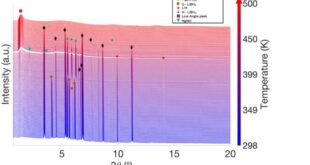
Size dependent lattice constant change of thiol self-assembled monolayer modified Au nanoclusters studied by grazing incidence x-ray diffraction

Significance Statement

From previous research, it has been discovered that lattice constant varies with metallic cluster sizes. However, little or no study evaluated size dependency of lattice constant change of metal nanoclusters as a result of the inadequate handling of their cluster size.

Professor Toshihiro Kondo and colleagues studying the size dependent lattice constant change of self-assembled monolayer modified gold nanoclusters assembled on Au(111) surface using grazing incidence x-ray diffraction coupled with electrochemical treatments. The research work appeared recently in peer-reviewed journal, Electrochemical Communications.

The authors implemented this study with the aid of a grazing incidence x-ray diffraction after each electrochemical treatment which provided information on cluster sizes, lattice constants and charge densities.

Cyclic voltammograms of Au(111) electrode modified with gold nanoclusters based on poly (allylamine hydrochloride) confirmed the oxidative decomposition of thiol self-assembled monolayers as redox waves of ferrocene/ferrocenium Fc/Fc+ couple at a value of 0.35V decreased by repeat of potential cycles between 0 and 1.30V. Results also showed increase in oxidation and reduction current with the number of potential cycles with respect to formation and reduction of gold oxide.

Due to oxidative decomposition of self-assembled monolayers, the cluster size and lattice constant of gold nanoclusters decreased from 16Å and 4.19Å to 12Å and 4.01Å respectively, which led to an increase in charge density for reduction of gold oxide and decrease in charge density of ferrocene/ferrocenium couple.

With further oxidative decomposition of self-assembled monolayers, cluster size of gold nanoclusters increased to ca. 17Å with decrease in lattice constant to ca. 3.93Å as increase in charge reduction of gold oxide (at the 8th cycle) was also observed.

After the complete removal self-assembled monolayers, bare gold nanoclusters were seen. The cluster size and lattice constant increased to ca. 35Å and ca. 4.07Å respectively. There was still a further increase in charge reduction of gold oxide as that of ferrocene/ferrocenium couple became zero at the 12th cycle.

At the 50th cycle, cluster size of gold nanoclusters was ca. 40Å but lattice constant remained almost the same at around 4.08Å. Charge density for reduction of gold oxide also showed an increase up to the 30th cycle and 50th cycle. This results show that changes in size dependent lattice constant can only be observed when gold nanoclusters were approximately smaller than 35Å.

The results showed consistency with previous reports on relationship between cluster size and lattice constant of gold nanoclusters thereby proving its validity. This study expand our understanding on properties of nanoclusters in view of the crystal size and lattice constant which are very important in catalytic activity
About the author

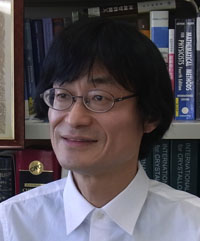
Toshihiro Kondo is a Professor of Chemistry Division in Ochanomizu University, Japan since 2010. He received his B. Eng. and M. Eng. degrees from Waseda University in 1987 and from Tokyo Institute of Technology in 1989, respectively. He received Ph.D. from Tokyo Institute of Technology in 1993. He worked in Hokkaido University as Research Associate between 1991 and 2002 and in Ochanomizu University as Associate Professor between 2002 and 2009.

His research focuses on electrochemistry, surface science, and interfacial physical chemistry and has lectures about analytical chemistry and instrumental analysis. 

About the author

Takuya Masuda is currently a senior scientist of the Research Center for Advanced Measurement and Characterization of National Institute for Materials Science (NIMS), Japan. He joined NIMS as an adjunct researcher in the Global Research Center for Environment and Energy based on Nanomaterials Science (GREEN) in April 2010, and was promoted to be the current position in April 2014. He is also a visiting associate professor at the Graduate School of Chemical Sciences and Engineering of Hokkaido University from October 2014. His research interest centers on the development of in situ techniques to observe a wide range of electrochemical events taking place at the solid/liquid interfaces and their applications to energy materials such as fuel cells, photocatalysts and rechargeable batteries.

 Prior to joining NIMS, Takuya Masuda earned a doctorate in chemistry from Hokkaido University. He worked as a postdoctoral research fellow in Arizona State University and an assistant professor in Hokkaido University.

 October 2012 – March 2016, Takuya Masuda was selected as a researcher of the Promoting Individual Research to Nurture the Seeds of Future Innovation (PRESTO) which is a funding program to promote fundamental research, conducted by Japan Science and Technology Agency (JST).  

About the author

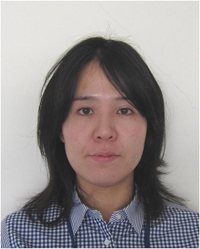
Motoko Harada received a B.S and M.S. degrees in Hokkaido University, Japan in 2006 and 2008, respectively. She joined Hitachi, Ltd., Hitachi Research Laboratory in 2008, where she studied electrochemistry and analytical techniques and so on until 2012. After she studied electroless plating for printed board, she moved to battery research department in 2013.

She has been studying separator for lead-acid batteries for Idling-Stop vehicles until today. Ms. Harada is a member of the electrochemical Society of Japan. 

About the author

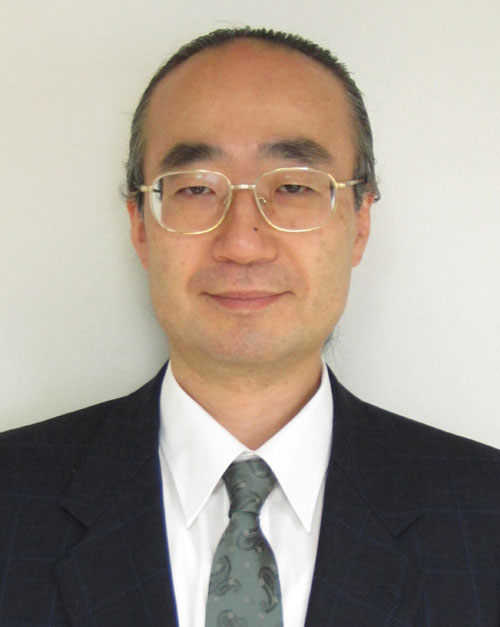
Osami Sakata received the Ph.D. degree with a major in materials science from the Tokyo Institute of Technology, Yokohama, Japan. He has investigated structures of surfaces and thin film interfaces since 1984. He extended dynamical X-ray diffraction for such crystal surfaces using synchrotron X-ray experiments performed at the Photon Factory from 1984 to 1998. He studied surfaces with Northwestern University, Evanston, IL, USA, and Advanced Photon Source, Argonne, IL, USA, from 1998 to 2000. His research place has moved to the SPring-8 since 2000. At first, he was involved in construction of the beamline BL13XU for surface and interface structures.

He moved to the National Institute for Materials Science (NIMS) as the station director at the beamline BL15XU since 2011. His research is in interfaces, thin films, and nanoparticles using synchrotron X-rays.  

About the author

Yohio Katsuya is a principal engineer at the Synchrotron X-ray Station at SPring-8 of National Institute for Materials Science. He received M.S. (1986) and D.Sc. (1989) in Macromolecular science from Osaka University. He started his career as a protein crystallographer but then become an engineer of synchrotron beamline and x-ray diffraction equipment for the last 10 years. 

About the author

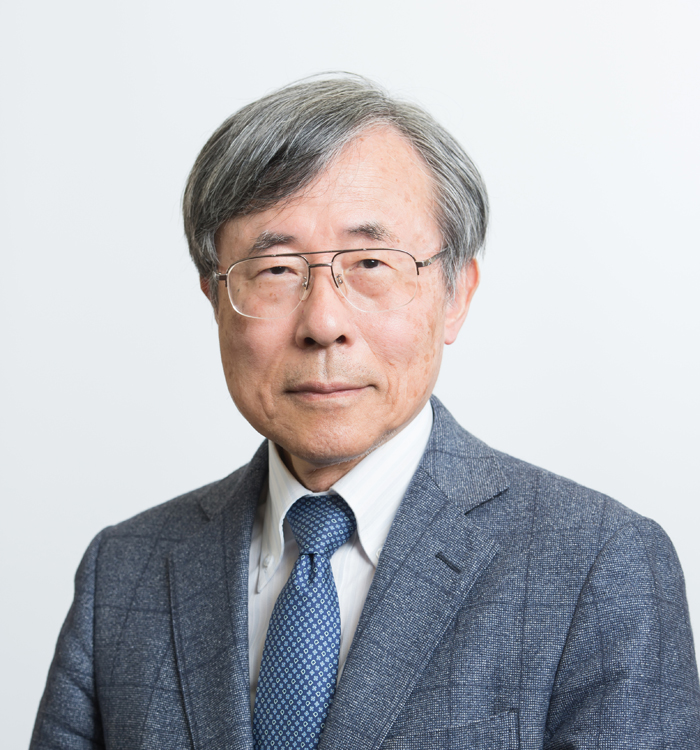
Kohei Uosaki is a Fellow, an Executive Adviser to the President, Director of Center for Green Research on Energy and Environmental Materials, Director of Global Research Center for Environment and Energy based on Nanomaterials Science (GREEN), and Principal Investigator International Center for Materials Nanoarchitectonics (MANA) of the National Institute for Materials Science (NIMS) and an Adjunct Professor of the Graduate School of Chemical Sciences and Engineering and Professor Emeritus of Hokkaido University. He received his B. Eng. and M. Eng. degrees from Osaka University in 1969 and 1971, respectively, and Ph.D. from the Flinders University of South Australia in 1976. He worked in Mitsubishi Petrochemical and Oxford University before his appointment in Hokkaido University as Assistant Professor at the Chemistry Department in 1980. He was promoted to Associate Professor in 1981 and Professor in 1990.He joined NIMS in 2010.

He has published more than 400 original papers and 100 review articles and book chapters on the subjects in wide ranges of surface physical chemistry including semiconductor electrochemistry, bioelectrochemistry, self-assembled monolayers, electrocatalysis, development and application of novel techniques for solid/liquid interfaces such as scanning probe microscopy, non-linear spectroscopy, surface x-ray scattering and x-ray absorption spectroscopy using synchrotron radiation.

Currently, he is leading “Specially Promoted Research for Innovative Next Generation Battery, Advanced Low Carbon Technology R & D Program (ALCA-SPRING)” of Japan Science and Technology Agency (JST) as Program Officer. He was awarded BCSJ Award and the Society Award of the Chemical Society of Japan, Special Lectureship Award of the Japanese Photochemistry Association, the Society Award of the Surface Science Society of Japan, Distinguished Alumni Award and Honorary Degree of Doctor of Science of the Flinders University of South Australia. He is Fellow of the Royal Society of Chemistry, the International Society of Electrochemistry, the Electrochemical Society, and the Chemical Society of Japan. He acted as Editor and Advisory Board Member of various international journals. His current interests include interfacial energy conversion.  

Journal Reference

Toshihiro Kondo1, 2, Takuya Masuda1, Motoko Harada3, Osami Sakata4, Yoshio Katsuya4, Kohei Uosaki1,3,5. Size dependent lattice constant change of thiol self-assembled monolayer modified Au nanoclusters studied by grazing incidence x-ray diffraction, Electrochemistry Communications 65 (2016) 35-38.
[expand title=”Show Affiliations”]
  1.  Global Research Center for Environmental and Energy Based on Nanomaterials Science (GREEN), National Institute for Materials Science (NIMS), Tsukuba 305-0044, Japan.
  2.  Graduate School of Humanities and Sciences, Ochanomizu University, Tokyo 112-8610, Japan.
  3.  Division of Chemistry, Graduate School of Science, Hokkaido University, Sapporo 060-0810, Japan.
  4.  Synchrotron X-ray Station at SPring-8, Research Network and Facility Service Division, National Institute for Materials Science (NIMS), Hyogo 679-5148, Japan.
  5.  International Center for Materials Nanoarchitectonics (MANA), National Institute for Materials Science (NIMS), Tsukuba 305-0044, Japan.
[/expand]


Go To Electrochemistry Communications

Check Also

Bridged charge transfer in Mn-doped CdS nanorods with noble-metal-free metal hydroxide co-catalysts

Significance  Reference MacSwain, Walker & Hu, Xia & Wu, Rongzhen & Li, Zhi-Jun & Vanshika, …