Advances in Engineering Advances in Engineering features breaking research judged by Advances in Engineering advisory team to be of key importance in the Engineering field. Papers are selected from over 10,000 published each week from most peer reviewed journals.

Significance
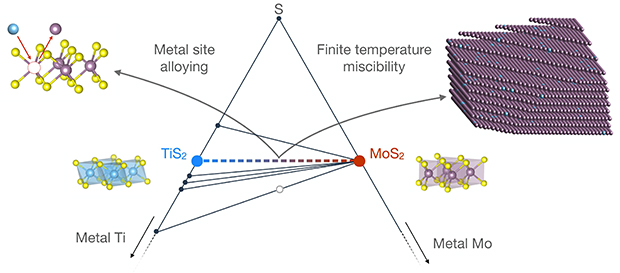
2D materials have widespread applications that range from solid lubrication, nanostructured electronics to Li-and Na-ion batteries, credit to their unique structural and electronic properties. A review of published literature reveals that the majority of available theoretical and experimental studies tend to focus on the electronic and mechanical properties, while as phase behaviour of low dimensional materials which is equally important to inform synthesis strategies and understand service life, remains highly unexplored. To be specific, mesoscale experiments recently revealed that Ti-doped composite coatings possess better oxidation resistance compared to pristine MoS2 while preserving low friction coefficients. Previous research put forward an argument to rationalise good frictional behaviour in terms of vibrational properties. In their work, the low-frequency optical phonon modes taken to be associated with the perfect shear of two layers were extrapolated along the sliding path and taken as an indication of low energy barriers for sliding modes. Consequently, by assessing such descriptors across the transition-metal dichalcogenide (TMD) chemical space, the authors identified layered 2H-Ti1/4 Mo3/4S2, where a quarter of TM sites within the TM-S2 layers was seen to be occupied by Ti, as a candidate material with enhanced frictional properties compared with other analysed TMDs. However, despite the interest attracted by this compound, the exact structure and chemistry remain debatable.
In general, 2D materials have in recent times attracted considerable interest credit to their exotic electronic and mechanical properties; however, their phase behaviour is still vaguely understood. To address this, researchers from the University of Southampton: Andrea Silva (PhD candidate), Professor Tomas Polcar and Professor Denis Kramer investigated the phase behaviour of a compound that has captured the interest of the tribology community: i.e. (Mo:Ti) S2 alloys that have been identified as a promising material with enhanced tribological properties both by experiments and computational investigations. In particular, these (Mo:Ti) S2 binary alloys have shown good performance in solid lubrication applications. Their work is currently published in the research journal, Computational Materials Science.
In their approach, electronic structure calculations and statistical mechanics were used to predict a phase-separating behaviour for the system and trace its origin to the energetics of the d-band manifold due to crystal field splitting. The authors reported that their model, which was based on electronic-structure calculations and statistical mechanics was able to predict full phase separation in the system across hosts.
Remarkably, the solubility limits inferred from the MC simulations were in good agreement with the high-temperature synthesis of Ti-doped 2H-MoS2 as previously reported in preceding studies. More so, the phase behaviour of the system was understood in terms of a general electron-lattice coupling mechanism that the researchers argued could apply to other members of the TMD family and, if strong enough, lead to stable orderings and/or miscibility in other binary compounds.
In summary, the study presented a (Ti:Mo) S2 phase diagram resulting from considering TM substitutions within the native hosts of the pristine compounds. Interestingly, comparison between 3D bulk and 2D convex hulls revealed interlayer coupling and system dimensionality, at the origin of sought-after exotic electronic behaviour, were negligible regarding phase stability of the binary alloys. In a statement to Advances in Engineering, the authors explained that based on their observations, one could argue that their findings can be applied to most 2D materials in which phase stability is governed by the similar in-plane electron-lattice effect, while more subtle behaviour could arise in presence of magnetic or Coulombic interactions.
Reference
Andrea Silva, Tomas Polcar, Denis Kramer. Phase behaviour of (Ti:Mo) S2 binary alloys arising from electron-lattice coupling. Computational Materials Science: volume 186 (2021) 110044.