Advances in Engineering Advances in Engineering features breaking research judged by Advances in Engineering advisory team to be of key importance in the Engineering field. Papers are selected from over 10,000 published each week from most peer reviewed journals.

Significance Statement
Aerobic Oxidative Synthesis of Benzazole Heterocycles from the Greener Alcohols Catalyzed by an Earth-Abundant Metal Catalyst
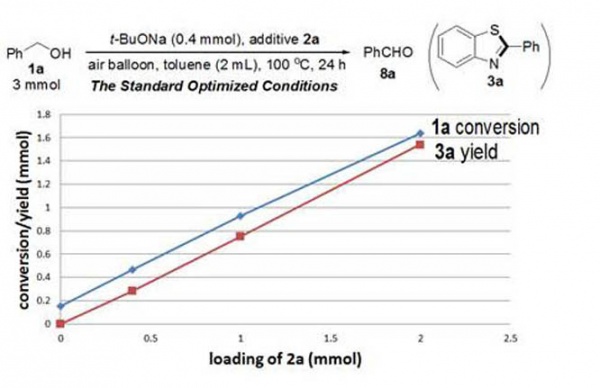
Developing green and efficient methods that can use greener, cheaper, and more available substrates and catalysts, and those can avoid mutagenic and waste-producing reagents, unnecessary steps, and energy waste, has been a major target in modern sustainable chemistry, pharmaceutical, and even chemical industry. Benzazole heterocycles (benzothiazoles, benzoxazoles, benzimidazoles), the important building blocks in pharmaceuticals, bioactive molecules, natural products, agrochemical compounds, and materials, were traditionally obtained from the reactions of carboxylic acid derivatives, alkyl polyhalides, aldehydes, etc., but harsh conditions such as high temperature, strong dehydrating reagents, toxic reagents, transition metal catalysts, stoichiometric oxidants were generally required. Since alcohols are cheaper and largely available chemical feedstocks, as they were also frequently used for preparation of organohalides, aldehydes, carboxylic acid derivatives, and etc., the use of alcohols instead of above reagents should be an excellent alternative for benzazoles synthesis. Now we developed a simple and practical, green and efficient method to synthesize benzazoles via a direct aerobic oxidative cyclocondensation reaction of o-thio/hydroxy/aminoanilines with the alcohols, in which an earth abundant metal catalyst t-BuONa can be used in catalytic amounts and the green, safe, and economic air as the sole oxidant (Figure 1). In this new method, no transition metal catalysts/ligands other than t-BuONa are required and no undesired waste products other than the water are generated, which make the protocol a much more economic and greener process very easy-to-handle. Besides, a wide range of substrates can also be tolerated in the method, giving generally good to high yields of the target benzazoles. More interestingly, preliminary mechanistic investigation revealed that the substrate o-thio/hydroxy/aminoanilines largely contributed to promote the initial step of t-BuONa-catalyzed aerobic oxidation of the alcohols by air (Figure 2). In contrast, t-BuONa alone is a very weak catalyst for aerobic oxidation of primary alcohols. These results indicated that an interesting mechanism deserving more and deeper research may be involved in the reaction. In a word, this is not only a green and novel academic research contributed greatly to the advance of benzazole heterocycle synthesis, but may also have more insightful implications in pharmaceutical synthesis, chemical industry, and chemical engineering.
Figure 1. Synthesis of Benzazole Heterocycles by t-BuONa-Catalyzed Direct Aerobic Oxidative Cyclocondensation of o-Thio/Hydroxy/Aminoanilines with Alcohols under Air
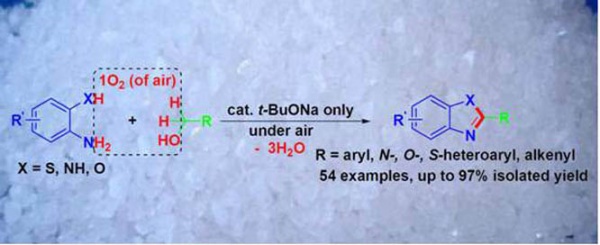
Figure 2. Substrate-Promoted t-BuONa-Catalyzed Aerobic Oxidation of Alcohol by Air.**
** Xinkang Shi, Junmei Guo, Jianping Liu, Mingde Ye, Qing Xu.* Unexpectedly Simple Synthesis of Benzazoles by t-BuONa-Catalyzed Direct Aerobic Oxidative Cyclocondensation of o-Thio/Hydroxy/Aminoanilines with Alcohols under Air. Chem. Eur. J. 2015, 21 (28), 9988-9993. Copyright Wiley-VCH Verlag GmbH & Co. KGaA. Reproduced with permission.
Journal Reference
Chemistry. 2015 Jul 6;21(28):9988-93.
Shi X1, Guo J1, Liu J1, Ye M1, Xu Q2.
[expand title=”Show Affiliations”]- Zhejiang Key Laboratory of Carbon Materials, College of Chemistry and Materials Engineering, Wenzhou University, Wenzhou, Zhejiang 325035 (P. R. China).
- Zhejiang Key Laboratory of Carbon Materials, College of Chemistry and Materials Engineering, Wenzhou University, Wenzhou, Zhejiang 325035 (P. R. China). [email protected].
Abstract
tBuONa-catalyzed direct aerobic oxidative cyclocondensation reactions of readily available alcohols and o-thio/hydroxy/aminoanilines under air have been developed and provide an efficient, practical, and green method for the synthesis of benzazoles. Mechanistic studies revealed that o-substituted anilines promote the initial aerobic alcohol-oxidation step, which explains the high reactivity and success of this unexpectedly simple and practical cyclocondensation method.
© 2015 WILEY-VCH Verlag GmbH & Co. KGaA, Weinheim.
Go To Chemistry.