Advances in Engineering Advances in Engineering features breaking research judged by Advances in Engineering advisory team to be of key importance in the Engineering field. Papers are selected from over 10,000 published each week from most peer reviewed journals.

Significance
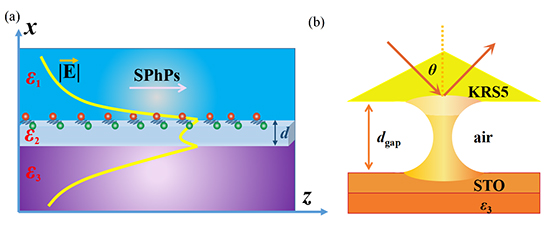
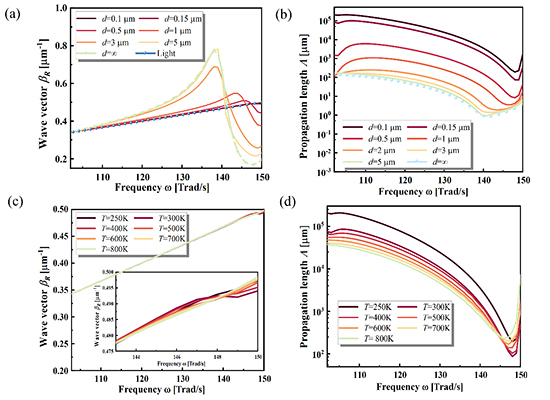
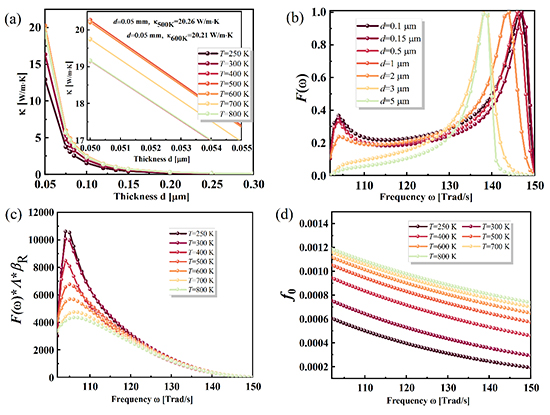
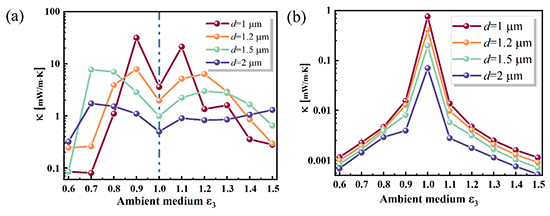
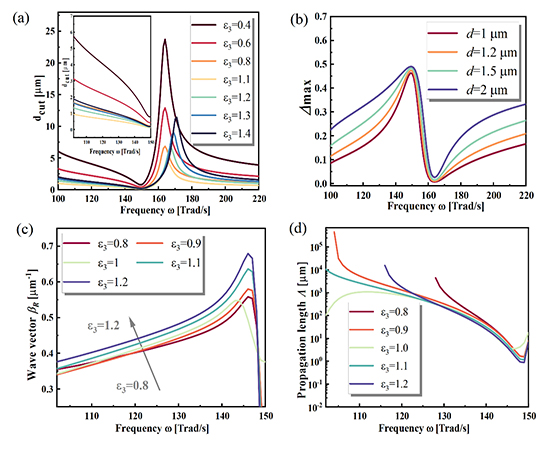
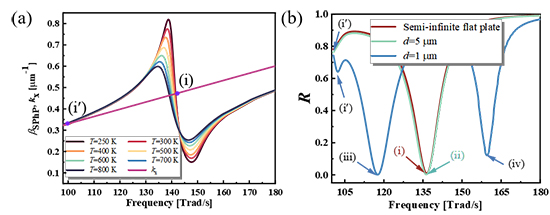
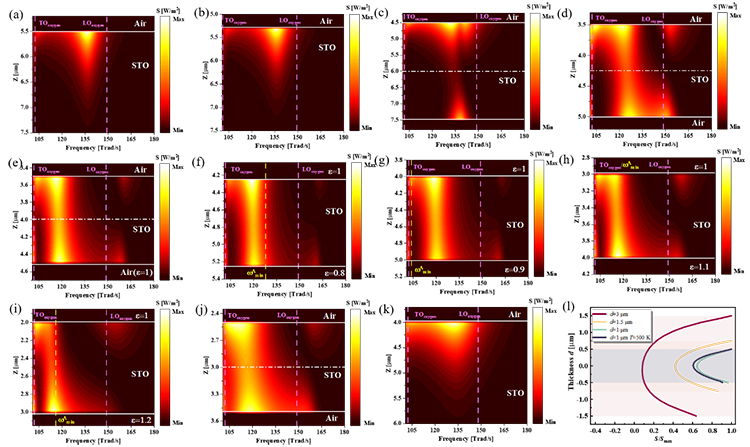
Managing heat is one of the biggest obstacles in the fast-evolving world of nanoscale technology and this is especially noticeable in microelectronics and nanophotonics, where excessive heat can mess with how devices work, hurt their stability, and shorten their lifespan. Traditional methods of heat dissipation lean heavily on lattice thermal conductivity, which depends on acoustic phonons to move heat around. But here’s the catch: as materials shrink down to the nanoscale, their ability to conduct heat drops significantly because of increased phonon scattering at the edges, interfaces, and boundaries. This makes finding new ways to handle heat effectively at such small scales an urgent need. Strontium titanate (SrTiO3), a type of perovskite oxide, stands out as a material that might hold some answers. Known for being stable, having a large band gap, and being highly polarizable, it’s already a go-to for applications that demand solid thermal and electrical properties. Despite this, its potential for managing heat has not been explored nearly as much as its optical or electrical capabilities. This lack of exploration opens up an exciting opportunity, especially when it comes to leveraging surface phonon polaritons (SPhPs). These surface electromagnetic waves form when optical phonons couple with electromagnetic fields, and they have the power to boost heat transfer along the surface of materials like SrTiO3. Unlike traditional acoustic phonons, SPhPs can travel far distances and are less affected by challenges like thin material layers or high temperatures. A study led by Professor Jia-Yue Yang, and co-authored by PhD candidate Tao Cheng and researchers Huanhuan Zhao and Linhua Liu at Shandong University, tackled this very topic. Published in the International Journal of Thermal Sciences, the research aimed to dig deep into how SPhPs could enhance thermal conductivity. While there’s been progress in showing how SPhPs help other polar materials move heat, their specific impact on SrTiO3 membranes was largely a mystery. The researchers investigated in depth the thermal conductivity of SrTiO3 membranes, paying close attention to how SPhPs help with in-plane heat transfer. They looked at how factors like membrane thickness, temperature, and the dielectric properties of the surrounding environment influence SPhP behavior. To tackle this, they used a mix of advanced computer simulations and theoretical models, relying on tools like the Boltzmann transport equation and Maxwell’s equations to get a handle on what happens at the nanoscale. They started with symmetric systems, where the media above and below the membrane had matching dielectric properties. One of their key findings was that thinner membranes had much higher in-plane thermal conductivity. For example, at 300 K, a 100-nanometer-thick SrTiO3 membrane achieved a thermal conductivity of 18.60 W/mK, which was over twice what bulk SrTiO3 could manage. This was thanks to SPhPs, which had longer propagation lengths and stronger resonance in thinner membranes. On the flip side, as membranes got thicker, energy dissipation became more pronounced, and thermal conductivity dropped significantly. These results underscored just how important membrane thickness is for fine-tuning thermal performance, especially in nanoscale devices. Temperature played another big role. As the temperature went up, the polarizability of SrTiO3 decreased, mostly due to more phonon scattering. Even so, SPhPs still made a noticeable impact on thermal conductivity, particularly at higher frequencies. Interestingly, the in-plane thermal conductivity of a 100-nanometer membrane nearly increased tenfold when the temperature climbed from 250 K to 800 K. This surprising result was due to SPhPs being able to propagate over a wider frequency range, proving their ability to resist the usual temperature-induced scattering that affects conventional phonons. In systems where the dielectric properties of the surrounding media were different, things got more complicated. A mismatch in dielectric constants changed how SPhPs resonated, affecting their propagation and energy dissipation. For small mismatches, thermal conductivity went up as the dielectric constant of the upper medium increased. But with larger mismatches, conductivity started to drop, revealing a delicate balance between tuning resonance and managing energy loss. This suggests that adjusting the dielectric environment could be a powerful way to enhance SrTiO3’s thermal performance. The authors also showed that SPhPs made the biggest impact in specific frequency ranges, especially within the Reststrahlen bands. These bands are where the material’s optical phonons couple most strongly with electromagnetic waves. Low-frequency polaritons in these bands were found to be especially effective at boosting thermal conductivity, as they traveled farther and lost less energy than their high-frequency counterparts. By mapping energy distribution within the membranes, the researchers spotted thermal hotspots at the interfaces that dissipated inward, with the intensity of dissipation varying depending on the thickness and temperature of the membrane.
In conclusion, the new study by Professor Jia-Yue Yang and colleagues represents an important advancement in our understanding of thermal management at the nanoscale and that electromagnetic surface waves can significantly enhance in-plane thermal conductivity, overcoming the inherent limitations of lattice thermal transport in ultrathin materials. One of the most striking implications is the study’s demonstration that SPhPs can remain efficient even under conditions that typically degrade thermal transport, such as elevated temperatures and reduced material thickness. This makes them particularly valuable for next-generation technologies, where components are increasingly miniaturized and subjected to extreme thermal loads. For instance, the ability of SrTiO3 membranes to achieve thermal conductivities far exceeding their bulk lattice counterparts suggests that polar dielectric materials could play a transformative role in heat dissipation for microelectronic devices, photonic systems, and other nanoscale applications. Furthermore, the study highlights the importance of precise engineering of material properties and surrounding environments to optimize SPhP performance. The findings on dielectric mismatch in asymmetric systems suggest that careful tuning of the surrounding media can modulate SPhP resonance and energy dissipation, offering a new dimension of control in the design of high-performance thermal materials. This could lead to the development of tailored thermal interfaces, where materials are designed to exploit specific SPhP behaviors for targeted heat transport solutions.


Reference
Tao Cheng, Huanhuan Zhao, Linhua Liu, Jia-Yue Yang, Temperature-dependent in-plane thermal conductivity of SrTiO3 membranes enhanced by surface phonon polaritons, International Journal of Thermal Sciences, Volume 202, 2024, 109077,