Advances in Engineering Advances in Engineering features breaking research judged by Advances in Engineering advisory team to be of key importance in the Engineering field. Papers are selected from over 10,000 published each week from most peer reviewed journals.

Significance Statement
The use of titanium alloy despite their advantages in biomedical applications such as replacement of hard tissues faces certain challenges due to dissimilarities in the surface features of the alloys and bone tissues.
A commonly used silanization technique which involves biofunctionalization of prosthetic surface layers, immersion silanization, also needs to be worked upon due to a need for surface preparation coupled with its uneven distribution of lowly concentrated amine functional groups.
In a recent research led by Professor Gustavo Guinea and published in the journal, Applied Surface Science, investigations were made on a newly developed activated vapor silanization technique for the effective biofunctionalization with amine layers of Ti-6Al-4V alloy.
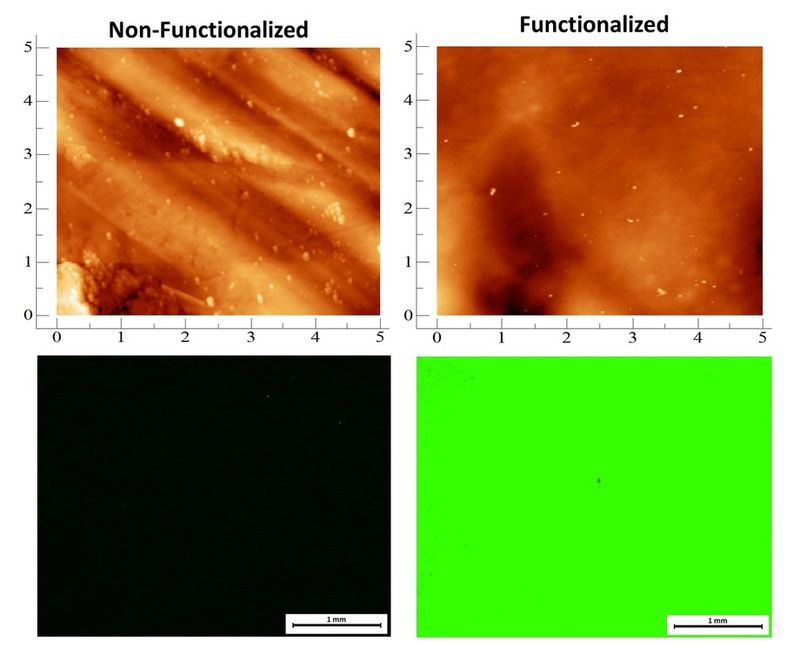
The authors used atomic force microscopy to characterize the topography of the bare and biofunctionalized amine layer on the Ti-6Al-4V alloy. A fluorescent microscopy, which involves the use of fluorescein isothiocynate, was used to determine the density of the amines at the surface. Osteoblast-like murine MC3T3-31 cells were modeled to investigate their compatibility response to the bare and biofunctionalized amine layer of the Ti-6Al-4V alloy. The stability of the modeled cells was also checked after cell culturing for a seven-day period.
Results observed from cell structures in the non-functionalized samples of Ti-6Al-4V at three different degrees of roughness showed attached cells which were scantily spread on the bare Ti-6Al-4V substrates at 4 h. However, at a longer period of 48 h, a completely spread polygon-shaped cells on the surface were observed. The cells implanted on the polystyrene wells which serve as control had similar features but higher density compared to the three samples of the Ti-6Al-4V substrates. The control samples also had a higher number of viable cells and similar number of dead cells compared to the three samples of the Ti-6Al-4V substrates.
At different degrees of roughness, the same proliferation rate of cells observed on each sample of the Ti-6Al-4V substrates for seven days and the authors considered the smoothest Ti-6Al-4V samples for functionalization.
Results from biofunctionalization with amine layers on the surface of the 4000 Ti-6Al-4V samples by means of the activated vapor silanization technique confirmed the deposition of amine layers on the Ti-6Al-4V samples, which were uniformly spread on the surface, thereby reducing the roughness values. Further results from the atomic force microscopy measurements confirmed the presence of high density amines with higher contact angle values and a perfect reproducibility of the deposited biofunctional layers.
Cell structures on the functionalized Ti-6Al-4V samples showed an adhered and completely spread cells on the surface. They also had a higher number of viable cells compared to the non-functionalized samples at the same period of 4 h. The number of dead cells was also considerably lower compared to the non-functionalized samples.
Similar number of viable cells and responses was also found in both functionalized and non-functionalized samples at 48 h, which indicates that the deposited functional amine layer does not inhibit cell proliferation. After cell culturing, for a period of seven days, the biofunctionalized amine layer of Ti-6Al-4V substrates maintained its integrity with the presence of a high density of amines.
This study was able to generate a homogenous and stable biofunctional amine layer on Ti-6Al-4V alloy surface with the use of the activated vapor silanization technique. The biofunctional layer may be of relevance to subsequent covalent immobilization of biomolecules, in order to improve the biocompatibility of Ti6Al4V prostheses.







Reference
Rezvanian, P1,2, Arroyo-Hernández, M1,2, Ramos, M1, Daza, R1,2, Elices, M1,2, Guinea, G.V1,2, Pérez-Rigueiro, J1,2. Development of a Versatile Procedure for the Biofunctionalization of Ti-6Al-4V Implants, Applied Surface Science 387 (2016) 652–660.
[expand title=”Show Affiliations”]- Centro de Tecnología Biomédica, Universidad Politécnica de Madrid, 28223 Pozuelo de Alarcón, Madrid, Spain
- Departamento de Ciencia de Materiales, ETSI Caminos, Canales y Puertos, Universidad Politécnica de Madrid, 28040 Madrid, Spain
Go To Applied Surface Science