 Advances in Engineering Advances in Engineering features breaking research judged by Advances in Engineering advisory team to be of key importance in the Engineering field. Papers are selected from over 10,000 published each week from most peer reviewed journals.

Significance
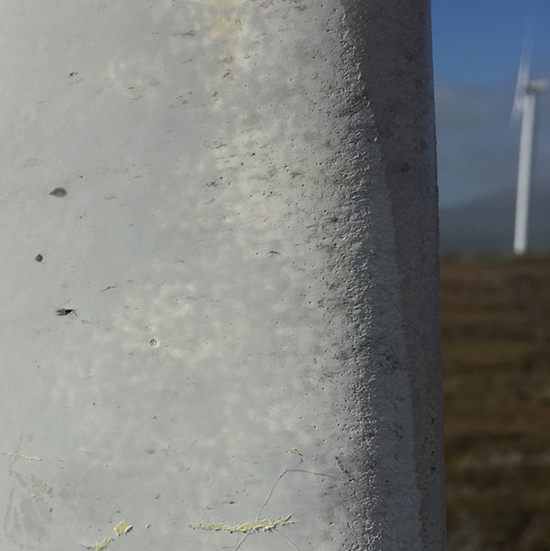
Leading edge erosion, or rain erosion, is a significant issue for wind turbine blades. Pitting is created on the surface of these large blades by rain droplets, which can develop into more substantial damage and ultimately reduce the efficiency of the overall system. The reduced power output is a major concern for windfarm operators, who require a cost-effective, long-term solution – and fast! To combat this issue, researchers have been looking at alternative measures to mitigate rain erosion and enhance the properties, durability and performance of coating materials.
Among the protective measures taken to limit rain erosion, polymeric coating materials have been widely used due to their affordability. The current coatings are generally made from epoxy or polyester, which are used for structural components of the turbine blade, but while these materials offer advantages in structural stiffness and strength, they are not appropriate for leading edge protection. For many years, making the surface harder was seen as the means of improving rain erosion resistance, and while this may hold true for metals, it has the opposite effect for polymers. Softer polymers, like polyurethane, can effectively absorb and dissipate the impact energy from the droplet, before returning to their original shape in advance of the next droplet impact. This viscoelastic behavior, among other material properties, is currently not entirely understood, and in order to develop the next generation of leading edge protection systems there is a need to better understand the relationship between various material properties and the erosion resistance.
Mr. Anthony O’Carroll, Dr. Mark Hardiman, and Prof. Trevor Young at the University of Limerick, Ireland in collaboration with Dr. Edmond Tobin at the Institute of Technology Carlow, have investigated the rain erosion resistance of several polymeric materials with different mechanical properties. They subjected the materials to rain erosion conditions in a custom designed chamber to rank their erosion resistance. In conjunction, a nanoindenter was used to assess key mechanical and surface properties. The study’s main objectives were to investigate what material or surface properties, if any, have a relationship with the resistance to rain erosion for the selected polymers. The research is published in journal, Wear.
Based on the experimental results, the authors observed that there were several correlations between the erosion resistance and specific mechanical properties of the polymer materials. For instance, a reduction in indentation hardness and elastic modulus indicated a clear correlation with improved rain erosion resistance. Consequently, a lower elastic modulus leads to a lower acoustic impedance, which plays a key role in the damage mechanics of rain erosion. Through nanoindentation, it was found that materials which responded quickly to an applied load performed better than materials that had a delayed response. The creep and relaxation behavior of the polymers were extensively investigated using analytical and numerical methods, showing much promise for future studies.
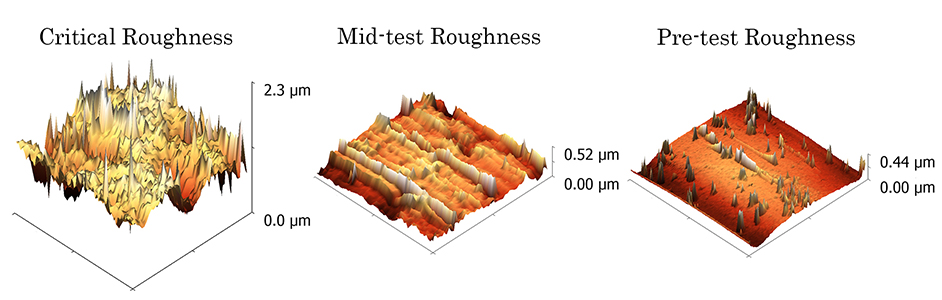
The roughness of the materials was also assessed to elucidate how the repeated impacting of rain droplets affects the surface of the target material. It was found that the materials were roughened up to a critical point, at which time pieces of the target material would be ripped from the surface. One interesting observation was that the rate at which the surface was initially roughened correlated to the rate of mass loss of the target material, which is in a different segment of the rain erosion cycle.
According to the authors, the study provides an empirical insight into the damage mechanisms produced by repeated droplet impacts on polymeric materials, of which there is limited information in the public domain. It is suggested that this will benefit the wind industry by enabling blade manufacturers to fine-tune their coating materials based on mechanical and surface properties, which will reduce maintenance costs and failures of these materials, thus enhancing their performance and lifespan.





Reference
O’Carroll, A., Hardiman, M., Tobin, E., & Young, T. (2018). Correlation of the rain erosion performance of polymers to mechanical and surface properties measured using nanoindentation. Wear, 412-413, 38-48.
Go To Wear