 Advances in Engineering Advances in Engineering features breaking research judged by Advances in Engineering advisory team to be of key importance in the Engineering field. Papers are selected from over 10,000 published each week from most peer reviewed journals.

Significance
Nano-scale silver paste materials make one of the highly used thermal interface material today owing to its thermal, electrical and mechanical properties. Although good results have been obtained in most of the research work done on nano-scale silver plates concerning their structural preparations, properties, and sintering processes, little have been however exposed about the ratcheting behaviors of such materials. Ratcheting behavior in material occurs when the materials are affected by the accumulation of inelastic deformation after being subjected to high enough cyclic stress with non-zero mean stress. Therefore, understanding of the whole-life ratcheting deformation behavior in nano-scale pastes is necessary as it can help in predicting fatigue failures in such materials.
Research work done by Professor Gang Chen and his graduate student Xiaochen Zhao at Tianjin University, School of Chemical Engineering ang Technology in China, proposed a model for simulating temperature-dependent and the whole-life ratcheting behaviors in nano-scale silver paste materials. The developed module comprised of a damaged variable visco-plastic coupled together with a temperature-dependent component. Their work is published in the research journal, Microelectronics Reliability.
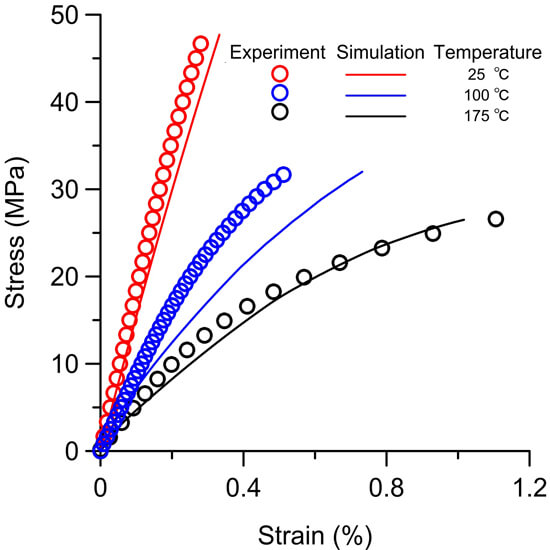
Briefly, the authors based their study on the principle that for sintered silver plates under monotonic and cyclic loading.,For instance, the strength of the sintered silver paste film is inversely proportional to its temperature and increases with a decrease in the temperature. The deformation of sintered silver filmsunder cyclic loading can be as well represented as a decrease in their elastic modulus. Non-kinematic hardening rule devised earlier by Ohno-Wang, and Armstrong Fredrick was employed in the construction of the model for investigating the whole-life ratcheting behaviors in the materials. Besides, they determined the parameters of the developed model which they, in turn, used to simulate the ratchetingretching behaviors for the various loading conditions. Eventually, the authors successfully observed that developed model could be used to adequately simulate the whole-life ratcheting behaviors of materials especially for sintered nano-scale silver pastes.The accuracy of the results was affirmed by the agreement between the simulation results and the available experimental data.
According to Professor Gang and MrZhao, the evolution of the damage caused in the sintered silver plate material is profoundly affected by the decrease in the unloading elastic modulus for every loading cycle, and the accumulated damage rule could be distinguished into three phases that are, the shortest initial stage, a more stable secondary stage and lastly a tertiary stage which signifies the end of the evolution of the damage. As a result, a function was used to describe the damaged evolution during the experiment because it has a high physical clarity. In a bid to accurately predict the temperature-dependent ratcheting behavior of the sintered platepaste material, it was a good idea to modify the damage-coupled model by using Arrhenius Power law for the cases of flow rule hence enhancing its capability of predicting monotonic tensile and whole-life ratcheting behaviors of the silver paste material under various loading and temperature conditions.


Reference
Chen, G., & Zhao, X. (2018). Constitutive modelling on the whole-life uniaxial ratcheting behavior of sintered nano-scale silver paste at room and high temperatures. . Microelectronics Reliability, 80, 47-54.
Go To Microelectronics Reliability