Advances in Engineering Advances in Engineering features breaking research judged by Advances in Engineering advisory team to be of key importance in the Engineering field. Papers are selected from over 10,000 published each week from most peer reviewed journals.

Significance Statement
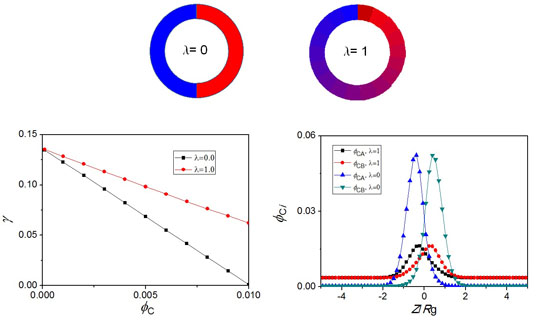
Copolymers can be used as polymeric surfactants to decrease the interfacial tension, to improve adhesion between homopolymers, and to enhance the mechanical strengths of polymer blends. Interfacial properties of blends containing the ring copolymers are apparently different from those of blends containing the linear counterparts due to the absence of free chain ends. In this work, researchers at Dankook University studied for the first time how the interfacial properties of binary homopolymer blends can be monitored and controlled through the addition of a ring copolymer with a composition gradient.
Journal Reference
Langmuir, 2014, 30 (22), pp 6596–6601. Dachuan Sun , Junhan Cho *
Department of Polymer Science and Engineering and Center for Photofunctional Energy Materials, Dankook University, 152 Jukjeon-ro, Suji-gu, Yongin, Gyeonggi-do 448-701, South Korea.
Abstract
The change in interfacial properties of the blends of immiscible linear A and B homopolymers by the addition of A–B ring gradient copolymers is investigated through a self-consistent field theory. The length of the composition gradient along copolymer chain contours is signified by a gradient number λ spanning 0 to 1. It is shown that the ternary blends with the ring copolymers are affected by screening unfavorable A/B contacts, the doubling-back of copolymer conformations, and the solubility of copolymers in homopolymer-rich phases. Upon the interplay of these effects, interfacial tension and thickness along with the surface adsorption of the copolymer chains in the blends yield mostly a monotonic dependence on λ with some peculiar λ regions, where the former two properties reveal a reverse trend. Discrepancies in such interfacial properties between the blends with the ring copolymers and with the corresponding linear copolymers are attributed again to the action of those determining effects.
Copyright © 2014 American Chemical Society