Advances in Engineering Advances in Engineering features breaking research judged by Advances in Engineering advisory team to be of key importance in the Engineering field. Papers are selected from over 10,000 published each week from most peer reviewed journals.

Langmuir, 2014, 30 (13), pp 3913–3921 .
Mohammad R. Alenezi *§†, Abdullah S. Alshammari§‡, Talal H. Alzanki †, Peter Jarowski §, Simon John Henley §, and S. Ravi P. Silva *§
§ Nanoelectronics Center, Advanced Technology Institute,University of Surrey, Guildford GU2 7XH, U.K and
† College of Technological Studies, PAAET, P.O. Box 42325, Shuwaikh, Kuwait and
‡ Department of Physics, College of Science, University of Hail, P.O. Box 2440, Hail, KSA.
Abstract
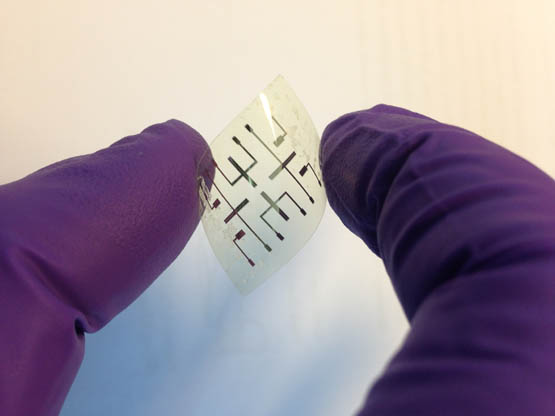
The fabrication of highly functional materials for practical devices requires a deep understanding of the association between morphological and structural properties and applications. A controlled hydrothermal method to produce single crystal ZnO hexagonal nanodisks, nanorings, and nanoroses using a mixed solution of zinc sulfate (ZnSO4) and hexamethylenetetramine (HMTA) without the need of catalysts, substrates, or templates at low temperature (75 °C) is introduced. Metal–semiconductor–metal (MSM) ultraviolet (UV) detectors were fabricated based on individual and multiple single-crystal zinc oxide (ZnO) hexagonal nanodisks. High quality single crystal individual nanodisk devices were fabricated with inkjet-printed silver electrodes. The detectors fabricated show record photoresponsivity (3300 A/W) and external quantum efficiency (1.2 × 10⁴), which we attribute to the absence of grain boundaries in the single crystal ZnO nanodisk and the polarity of its exposed surface.
Copyright © 2014 American Chemical Society.